Read More
China's yuan ended the domestic session at a near one-month low against the dollar on Wednesday, as markets held their breath for US President Donald Trump's announcement of tariff plans due later in the day.
ADVERTISEMENT
SCROLL TO CONTINUE WITH CONTENT
The onshore yuan closed at 7.2719 per dollar, the weakest such close since March 4.
Its offshore counterpart was fetching 7.2793 per dollar around 1630 HKT.
Developments in trade relations with the United States have kept investors on edge this year.
The Washington Post reported, citing unnamed sources, that White House aides have drafted a proposal to impose tariffs of around 20 percent on most imports to the United States.
The White House is due to announce the levies on Thursday at 0400 HKT and they are expected to take effect immediately after Trump announces them.
Rong Ren Goh, a portfolio manager in the fixed income team at Eastspring Investments, said selling interest in the Chinese currency has picked up, with the spot rate weakening about 0.5 percent to the dollar over the past two weeks.
"A half percent move in renminbi actually is considered quite big, given that the fixing is stable," Goh said.
"This is on the back of I guess some hedging going through people taking a cheap punt on maybe something negative on China being announced on the second of April."
Prior to the market opening, the People's Bank of China (PBOC) set the midpoint rate, around which the yuan is allowed to trade in a 2 percent band, at 7.1793 per dollar, the weakest level since January 20 and 870 pips firmer than a Reuters' estimate of 7.2663.
The central bank has set its official guidance on the firmer side of market projections since mid-November, which analysts and traders see as a sign of unease over the yuan's decline.
Although Trump's new tariff plan is due later in the day, market participants expect more trade negotiations to take place in coming weeks.
"Trump emphasized that such tariffs will also consider non-tariff barriers, such as VAT, allowing the administration more flexibility in determining individualized tariff rates for US trading partners, including China," said Serena Zhou, senior China economist at Mizuho Securities.
"Given this heightened trade uncertainty, we expect the PBOC to delay rate cuts and maintain moderately tight yuan liquidity conditions both onshore and offshore to support the yuan in the coming weeks."
REUTERS
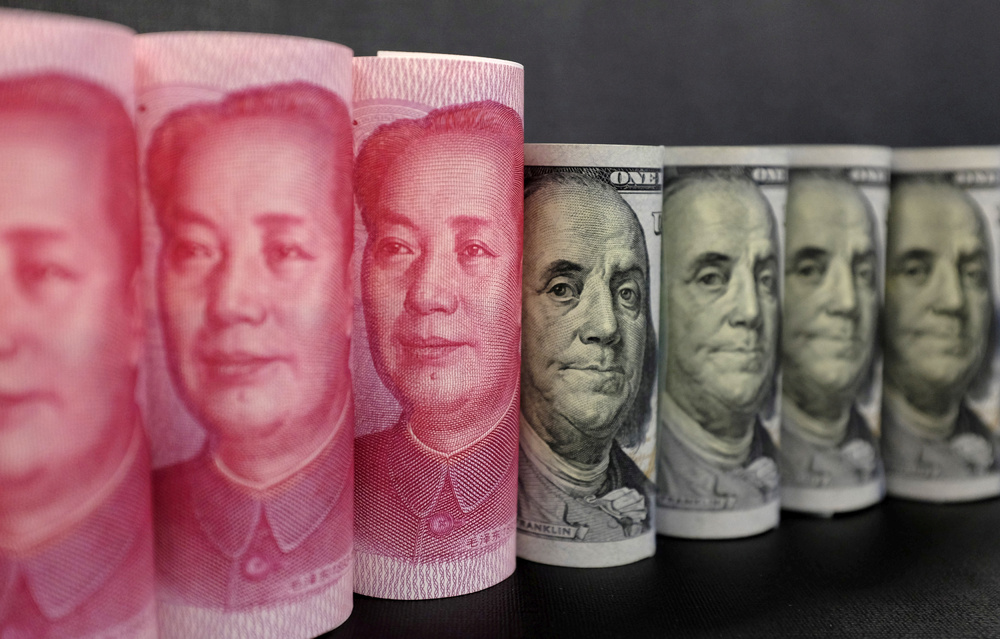
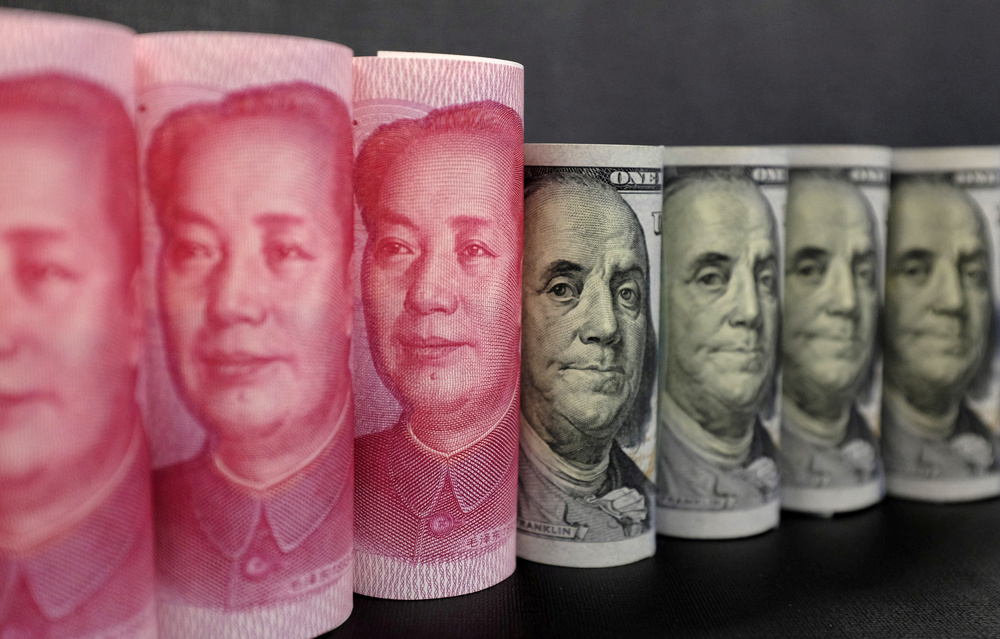
US 100 dollar banknotes and Chinese 100 yuan banknotes are seen in this picture illustration in Beijing, China, January 21, 2016. REUTERS