Read More
The Bank of England cut interest rates on Thursday as it halved its growth outlook for this year and said a jump in inflation will prove temporary, while two officials unexpectedly voted for an outsized rate cut.
ADVERTISEMENT
SCROLL TO CONTINUE WITH CONTENT
The quarter-percentage-point cut to 4.5 percent was in line with expectations in a Reuters poll of economists but investors were surprised by the dissenting votes from external members Catherine Mann and Swati Dhingra for a bigger cut to 4.25 percent.
Mann until now had generally opposed rate cuts though she previously said that a switch to more active policy loosening would be needed at some point.
Sterling weakened against the dollar to trade 1 percent lower on the day. Two-year British government bond yields dropped as investors priced in a slightly greater chance of further BoE rate cuts this year.
"The fact that two MPC members voted to deliver a bumper 50 basis-point cut, despite revising up near-term inflation forecasts, gives a sense of how concerned some policymakers are about the headwinds to growth," said Luke Bartholomew, deputy chief economist at fund manager abrdn.
Governor Andrew Bailey said the central bank would be "monitoring the UK economy and global developments very closely and taking a gradual and careful approach to reducing rates further" - a shift from December's language where he spoke only of a "gradual" approach.
Hit by worries about finance minister Rachel Reeves' tax increases for employers, the risk of a global trade war led by US President Donald Trump and rising costs, the British economy has barely grown since mid-2024. The BoE warned that it likely contracted by 0.1 percent in the fourth quarter.
Thursday's rate cut is only the third since the BoE started lowering borrowing costs from a 14-year high in August and leaves British rates among the highest for advanced economies and just above the U.S. Federal Reserve's range of 4.25-4.5 percent.
Last month, economists polled by Reuters had forecast the BoE would make four quarter-point rate cuts this year, lowering its main interest rate to 3.75 percent, while more recently markets saw cuts to 4 percent as more likely.
Minutes of February's decision showed some policymakers wanted a "cautious" approach to future rate cuts because of weak productivity that could push up inflation, while others saw less of a risk of persistent above-target inflation but said the BoE still needed to be "careful".
DARKER OUTLOOK
The outlook for Britain's economy is worse than when the BoE published its last full set of forecasts in November.
Inflation - already above target at 2.5 percent - is expected to peak at around 3.7 percent in the third quarter of this year due to higher energy prices and expected increases in regulated water bills and bus fares, up from a previous forecast peak of 2.8 percent.
The BoE does not expect inflation to fall back to its 2 percent target until the final quarter of 2027, six months later than it had forecast before.
The central bank also halved its forecast for growth this year to 0.75 percent - reflecting weak business and consumer sentiment and more sluggish productivity growth - although forecasts for annual growth in 2026 and 2027 were revised fractionally higher to 1.5 percent from 1.25 percent.
The BoE said it was unclear exactly how any future US tariffs would affect inflation in Britain, but said higher global tariffs were likely to cause slower growth, even if Britain was not specifically targeted.
These forecasts were based on market expectations for a slower pace of rate cuts than in November, with interest rates dropping to around 4.25 percent by the end of this year versus about 3.75 percent expected before.
The two policymakers who voted for an immediate cut in rates to 4.25 percent had different reasoning. The minutes did not say which view was linked to Mann or Dhingra, although one of the policymakers was described as supporting an "activist" approach, the language previously used by Mann.
For the "activist" policymaker, voting for a bigger rate cut would give a clearer signal to markets, although she expected monetary policy would still need to stay restrictive for some time.
For the other policymaker, weak growth was likely to ensure that inflation would return to target in the medium term.
REUTERS
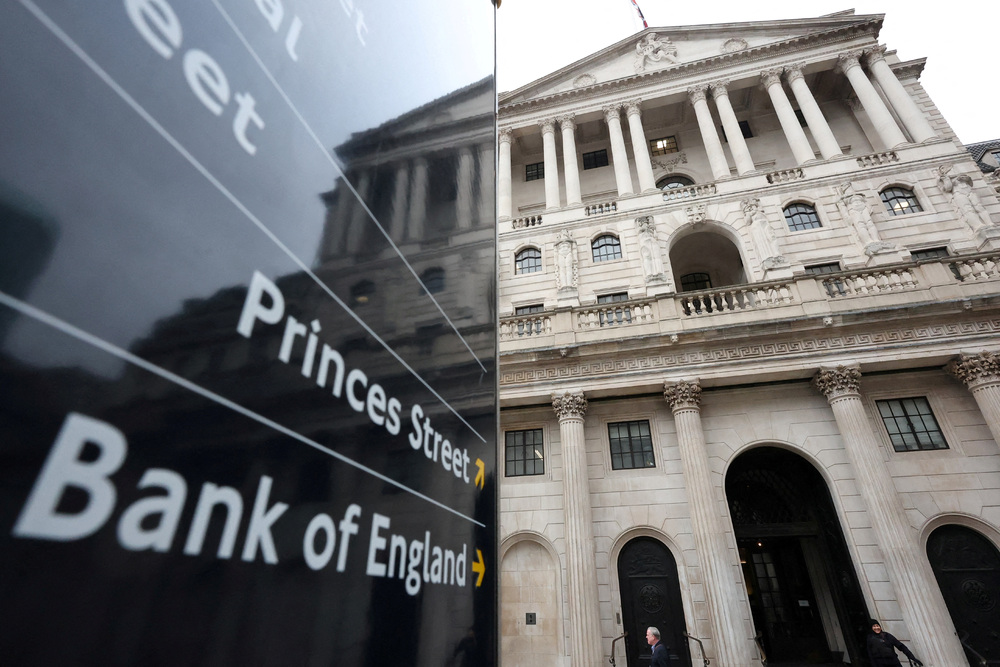
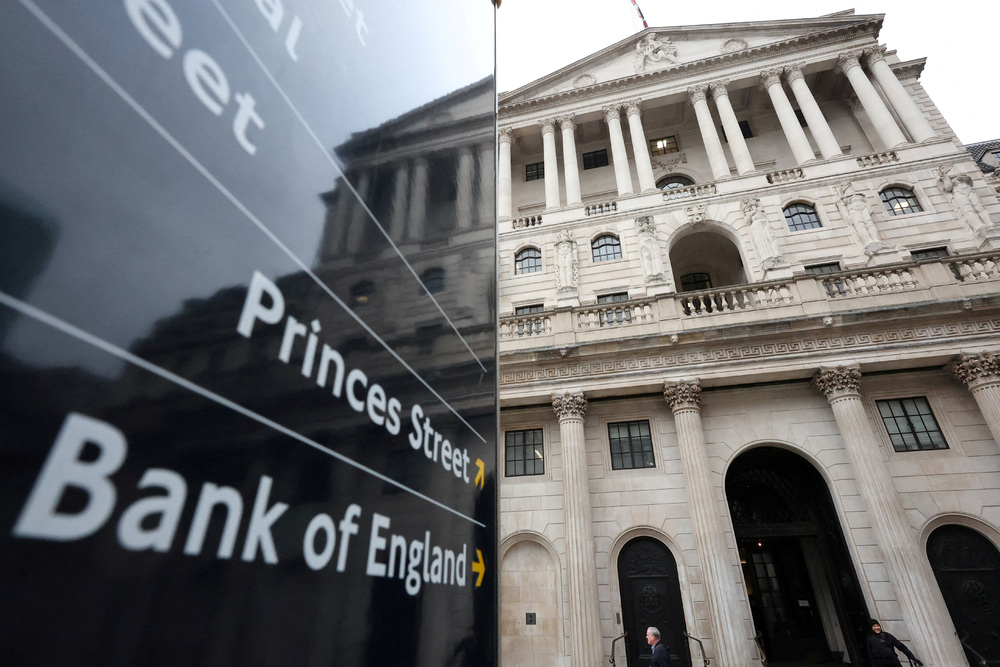
The Bank of England building in London. Reuters