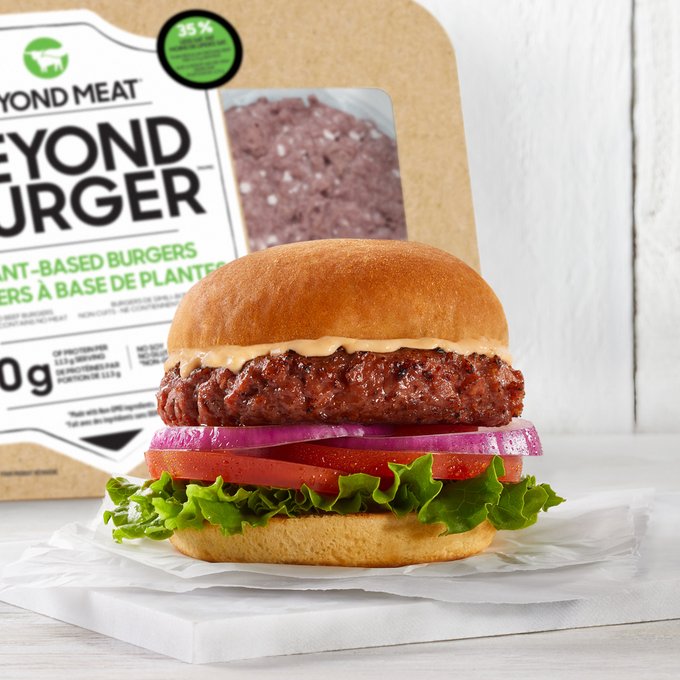
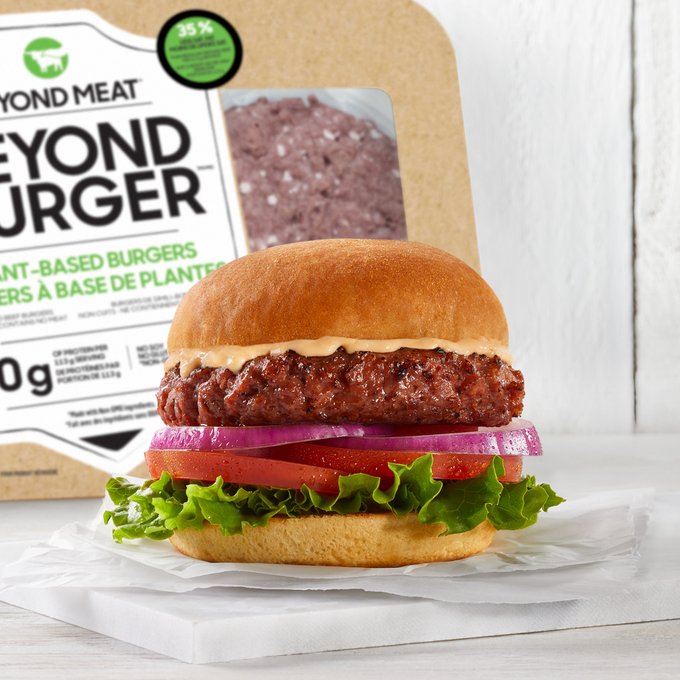
Beyond Meat on Tuesday reported its U.S. grocery sales nearly tripled in the second quarter as more consumers cooked its meatless burgers and sausages at home, but extra costs related to the coronavirus global pandemic resulted in a quarterly loss, CNBC reports.
Shares of the stock fell by 7 percent in extended trading on Wall Street.
Beyond reported a second-quarter net loss of US$10.2 million, or 16 US cents per share, wider than its net loss of US$9.4 million, or 24 US cents per share, a year earlier. Excluding costs related to the virus and the early extinguishment of debt, the company lost 2 US cents per share.
Analysts surveyed by Refinitiv expected the company to lose 2 US cents per share, but it is not clear how that compares to the company’s reported loss.
Beyond spent US$5.9 million repackaging its products to be sold at grocery stores, rather than at restaurants, since many are temporarily shuttered.
“We had to make a decision. Did we want to sit and try to weather this, and potentially take a step back in our growth trajectory, or did we want to go very aggressively toward the retail sector even if it curved more expensive doing so?” Chief Executive Ethan Brown said in an interview.
Beyond also spent an additional US$1.6 million to donate more than 1 million of its meatless burgers to food banks and frontline workers and US$1.5 million on early debt extinguishment costs stemming from its refinanced credit arrangements.
Net sales grew by 69 percent to US$113.3 million, topping expectations of US$99.7 million, and crossing US$100 million in quarterly revenue for the first time.
Its U.S. grocery sales soared 194.9 percent. In the last two weeks of the quarter, Beyond began selling value packs of its meat-free burgers at Walmart, Target and other retailers, with pricing that was more competitive with traditional beef burgers.
“We had a lot of help from the beef industry itself, because they’ve been experiencing some very high pricing,” Brown said.
“You will see us to continue to push pricing,” he added. “We believe that through the continuing maturity of our supply chain, particularly around the protein costs, a lot more protein supplies are coming in the market as well as the own growth of our own operations in the U.S. and globally.”
While Beyond’s quarterly grocery sales surged, its U.S. food service sales, which include restaurants and universities, plunged 60.7 percent during the quarter because of the virus’ impact. Brown attributed the decline to smaller restaurant chains and independent establishments, which account for about 58 percent of its food service sales. Those eateries have struggled to recover, while national fast-food chains have bounced back more quickly.
Outside of the United States, Beyond saw similar trends play out in its grocery and food service divisions. Globally, grocery typically accounts for roughly half of its sales, but that ratio shifted to 88% in the second quarter after Beyond shifted production away from food service.
“If you look at some of the trends, that was the right thing to do, because the consumer continues to look for our products irrespective of whether they’re shopping in food service or in retail,” Brown said. “We had a household penetration rate that increased 40 percent between January and June.”
About half of Beyond’s customers are now repeat buyers, Brown said.
International sales made up only about 15 percent of Beyond’s quarterly revenue, but the company is expanding its footprint. It launched in mainland China through a partnership with Starbucks in April and has since entered grocery stores and more restaurant chains there. Brown said that the company is starting to work with smaller Chinese restaurants. In July, Beyond launched in Brazil.
The company did not reissue an outlook for 2020, citing the uncertainty of the pandemic’s duration, magnitude and effects. Beyond pulled its forecast in February.