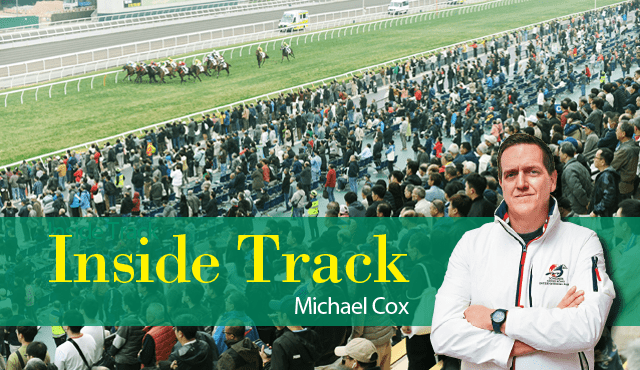
Think about running a race on the beach. You wouldn't go through the soft, dry sand if you didn't have to. You'd get down near the water's edge where the sand is packed hard and firm. It's faster. It's easier. Track bias in horse racing is exactly the same idea. Most people watching just don't think to look for it.
Turf tracks are living things. They wear unevenly. They respond to rain, to traffic and to maintenance. At almost every meeting there is a part of the track that is better to be on – and a part that will cost you lengths.
A lot of it in Hong Kong is also barrier-draw related. When you draw wide at Happy Valley on the wider configurations – the C or C+3 – it is very, very hard to win. It favors the inside draws. That's a structural thing built into the shape of the track before you even think about the surface.
Then there's the surface itself. Take this past weekend on the C rail at Sha Tin – it was a huge leaders' track. Most horses from behind simply could not make up ground. If you were back in the field you had to stay on the inside and save every inch of ground you could. Zac Purton's two winning rides illustrated it perfectly. He was back in the field on both winners but hugged the fence throughout, saved every inch of ground and waited for his moment. Both rides were brilliant. Zac rides bias very well. He's one of the better jockeys in Hong Kong for that.
One thing that also happens when a track is clearly biased: most trainers overreact. Every trainer suddenly wants their horse on pace. So, it's not just the track changing – it's the pace dynamic changing too. They go too hard too early, and the bias that was hurting the backmarkers actually starts to bring them back into it. The pressure created by the overreaction sets it up for a horse saving ground from the rear.
So how do you identify a biased track early? Start looking after race one. You're looking at where the placegetters are coming from. Are the horses finishing first, second and third the ones who were one, two and three around the turn? Are there long-price runners in the placings who have no business being there on ability? That's the track talking. If a favorite fails, where was he in the run? A lot of the time he has failed because of track bias.
Before the meeting even starts, I'm already looking. I've kept a written record of every Hong Kong meeting for twenty years – every rail placement, every observation. People think there are two turf tracks in Hong Kong: Sha Tin and Happy Valley. There are many more than that, because the different rail positions all act differently and have their own characteristics and patterns. Rail placements and track surfaces do change over the years. That's why you keep records.
But even with recordkeeping, sometimes a track will surprise you. You have done all of the work, done the form and the races start – and your strategy needs to change after race one because of track bias.
This article first appeared in Idol Horse as: Shane Dye On Track Bias, Wet Ground And Veandercross.
𝗗𝗼𝘄𝗻𝗹𝗼𝗮𝗱 𝗧𝗵𝗲 𝗦𝘁𝗮𝗻𝗱𝗮𝗿𝗱 𝗔𝗽𝗽 ↓