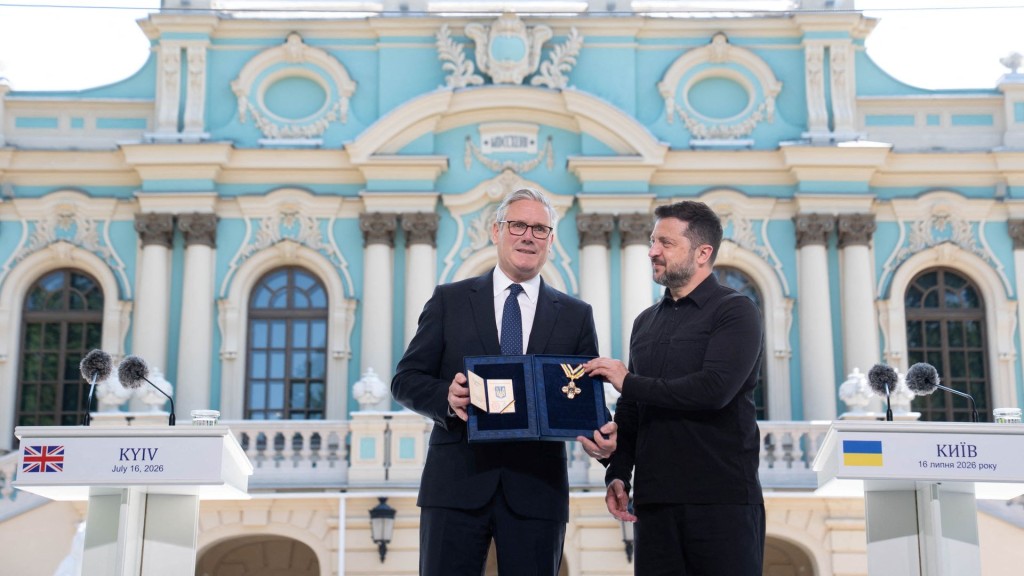
Keir Starmer was facing his biggest challenge yet on Wednesday when his health minister was reportedly readying his resignation to try to trigger a contest to replace a British prime minister who had sought some respite to set out his government's agenda.
As Starmer and his ministers stood in silence to hear King Charles read out that agenda, the ceremony was overshadowed by what could be the most dangerous threat to the prime minister since lawmakers began urging him to resign over one of Labour's worst defeats in last week's local and regional elections.
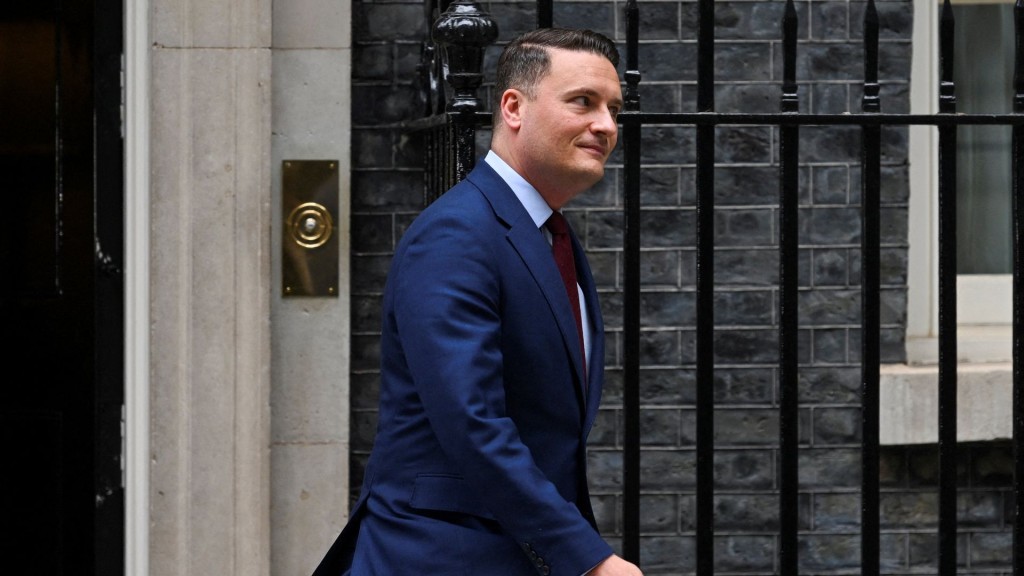
The report in the Times newspaper that health minister Wes Streeting was preparing to resign as early as Thursday to mount a formal leadership challenge could mean the Starmer government's agenda, outlined by Charles amid much pomp and ceremony, might never be implemented.
British government borrowing costs jumped on the report, though they later eased back, moving away from multi-decade highs hit on Tuesday amid the ongoing political turmoil.
Streeting's office did not respond to a request for comment on the report. Starmer's spokesperson said the prime minister had full confidence in his health minister but declined to comment on an earlier meeting between the two men.
The health minister's team said he would also not comment on that meeting, which took place at Starmer's Downing Street office, to ensure he did not distract from the King's Speech.
Streeting later took to X to promote his achievements in tackling waiting times for Britain's state-run health service. "Lots done, lots to do," he wrote, failing to address the report.
LEADERSHIP RACE COULD BE TRIGGERED
Starmer has tried to brush off the challenges to his authority, and the King's Speech - written by the government and delivered by the monarch - announced plans to boost economic growth, energy security and defence.
However, in a later speech in parliament, Starmer did joke about how on "difficult days" such as these the input of opposition Conservative leader Kemi Badenoch was "a ray of sunshine" after she accused him of being "in office but not in power".
Badenoch also took a swipe at Streeting, accusing him of failing to reduce hospital waiting lists and saying: "I suppose the health secretary has been a bit distracted lately, hasn't he? ... Why don't you just do your job?"
Streeting would need the support of 81 Labour lawmakers to launch a leadership bid.
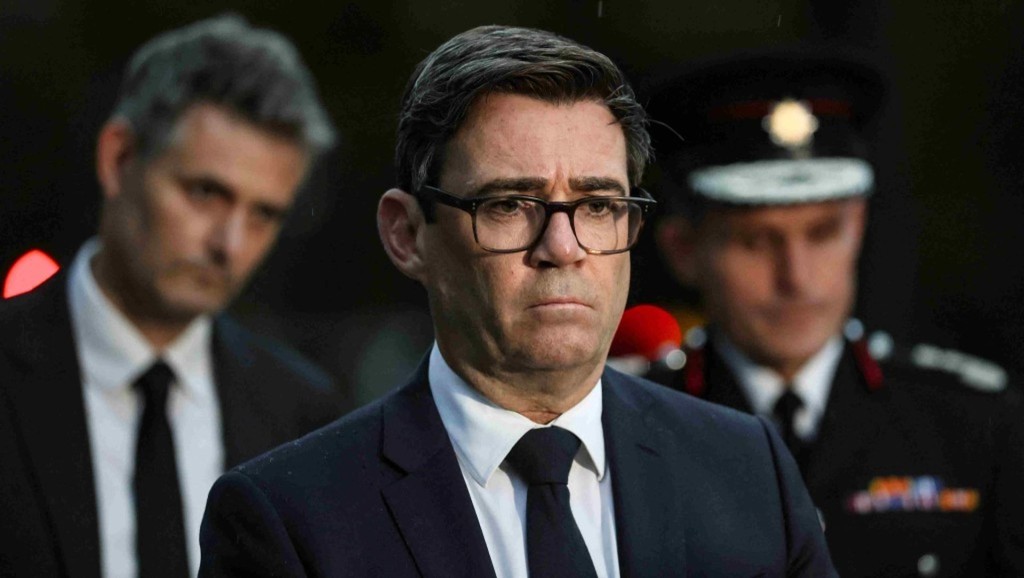
That could encourage other rivals to enter the race, although two potential challengers, Greater Manchester mayor Andy Burnham and former deputy prime minister Angela Rayner, have to overcome hurdles before they would be able to run.
Burnham does not have the necessary seat in parliament to mount a challenge and Rayner has yet to fully resolve the tax issues that prompted her resignation from office last year.
Streeting is viewed as being on the right of the Labour Party, while both Burnham and Rayner hail from its "soft left". Some investors are nervous over the possible election of a more left-wing, tax-and-spend Labour prime minister.
Labour lawmakers have said Ed Miliband, the minister for energy security and net zero, could stand in the place of Burnham or Rayner in any leadership contest to represent the left of the party.
STARMER HOPED TO SHORE UP AUTHORITY
Starmer had hoped to shore up his waning authority by unveiling his government's agenda. But it offered little new to the more than 90 Labour lawmakers who have called on him to set a timetable for his departure. They say he would only lead Labour to defeat in the next national election, due in 2029.
In the preface to the King's Speech, Starmer repeated that the world "today is more volatile and dangerous than at any point in our lifetimes" and that his government had to break with a tradition of looking to the "status quo" for answers.
"Our response this time must and will be different, a complete break," he told parliament, promising "an urgent, activist Labour government".
However, the King's Speech was mostly the formalisation of previously announced policies, including an attempt to spur anaemic economic growth by building closer ties with the European Union.
Arriving at parliament from Buckingham Palace in a grand carriage procession, Charles led a ceremony, with some of its traditions harking back to the 16th century, that delivers the government's agenda in line with Britain's constitutional division of powers.
Addressing lawmakers in the House of Lords, the upper house of parliament, the king, wearing the Imperial State Crown and the Robe of State, said: "My ministers will take decisions that protect the energy, defence and economic security of the United Kingdom for the long-term."
But the usually sombre occasion could not escape the furore over Starmer's future.
When a parliamentary official knocked three times at the door of the lower house of parliament, as tradition demands, one lawmaker, referencing Burnham, shouted to nervous laughter: "Not now Andy!"
Reuters