Roxanne Li
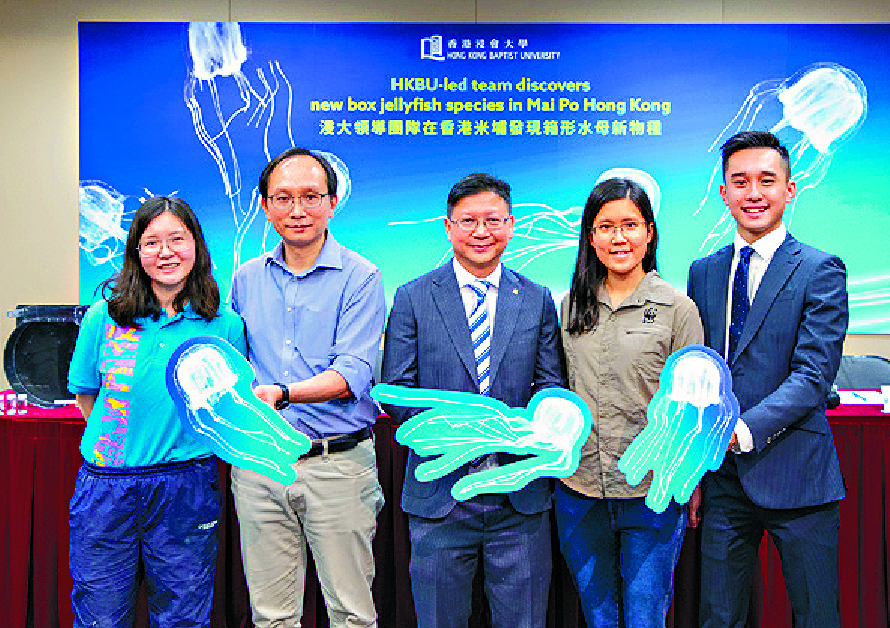
It's not every day that a new species is found so when Hong Kong Baptist University researchers discovered a never-seen-before box jellyfish with 24 eyes and 12 tentacles, it made headlines in all major local newspapers.
A team led by Qiu Jianwen found the new species in Mai Po Nature Reserve after they collected samples from a brackish shrimp pond - or gei wai - where they spent three summers from 2020 to 2022.
"The team used DNA analysis and morphological examination to confirm that the new species was distinct from other known box jellyfish," said Qiu.
Their new discovery, named Tripedalia maipoensis after the place it was found, is only the fourth of the family Tripedaliidae in the world after Tripedalia binate Moore (1988), Copula sivickisi (1926),and Tripedalia cystophora (1897).
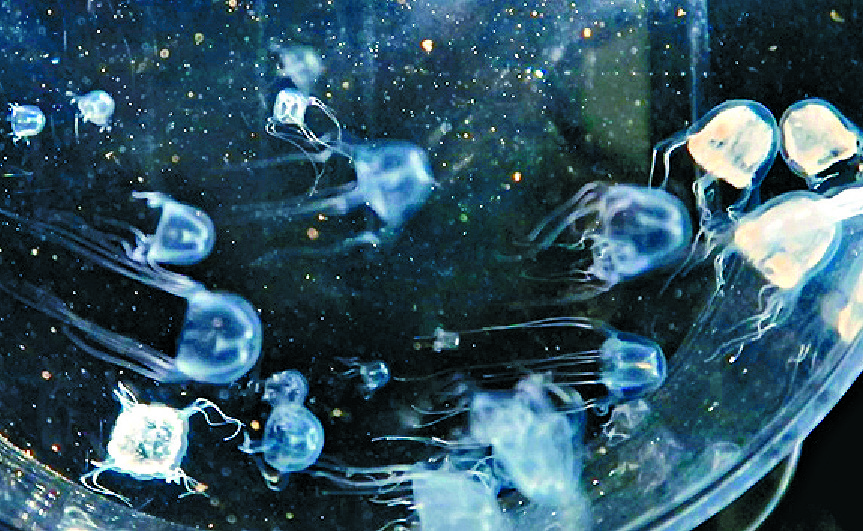
These cnidarians have box-shaped bells and long, trailing tentacles. They are known for their venom, which can seriously harm humans and other animals.
Relatively little is known about the biology and behavior of box jellyfish. This is partly because they are difficult to study in the wild, as they are often found in deep waters and can be dangerous to approach.
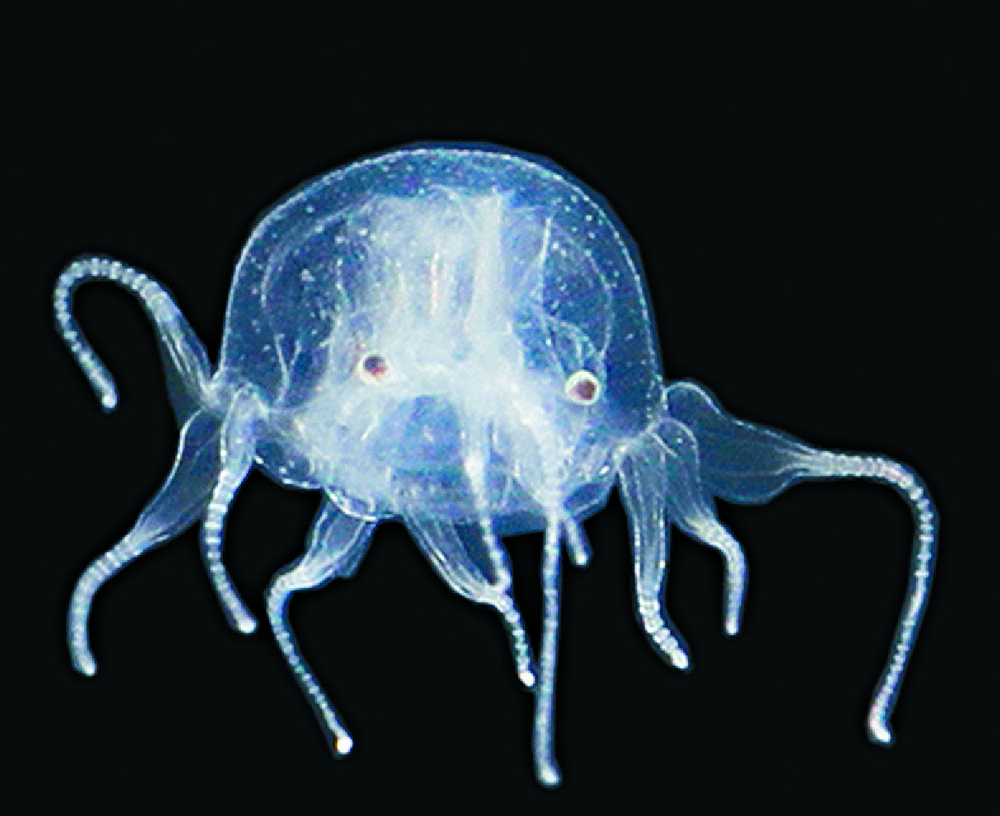
Box jellyfish also have a velarium, a membranous and muscular sheet that constricts the opening of the bell. There are canals in the velarium, which run along the bell margins and allow water to enter the bell. In the new species discovered, the velarial canals are biforked into multi-branches, which sets it apart from others of the same genus.
Tripedalia maipoensis, like other box jellyfish, possesses 24 eyes evenly divided into four groups. Each group of six eyes is situated inside a sensory depression called a rhopalium on either side of the bell.
The researchers believe that two of the eyes in each group have lenses that facilitate image-forming, while the other four are only capable of sensing light.
One intriguing characteristic of this new box jellyfish species is the presence of three tentacles, which are up to 10 centimeters long, at each of the colorless creature's four corners. The researchers have speculated that the species feeds on radiopods, a small crustacean plankton.
The box jellyfish uses pedalia, a flat pedal-shaped structure at the base of each tentacle that looks like a boat paddle, to generate powerful thrusts when they contract their bodies, allowing them to swim faster than other kinds of jellyfish.
Although it is currently known only in Mai Po, Qiu said, the new box jellyfish species may also be found in the adjacent waters of the Pearl River Estuary as the gei wais are connected to the estuary through a tidal channel.
"The discovery of this new jellyfish species is the first time a new species has been found in Chinese waters and has been observed by researchers on a laboratory scale, which is particularly exciting," said Qiu, adding that the discovery of a new jellyfish species suggests that there may be many more undiscovered species in the region.
The new discovery also contributes significantly to the public's awareness of the biodiversity of the environment, the professor said.
"Mai Po is already an intensively studied area, but we are still finding new species here," he said. "We are likely to find more creature species for some waters we haven't visited before but there may also be more diversity for some places we already know well."
Besides, Qiu added that the discovery broadened the spectrum of further research on the box jellyfish.
Box jellyfish can be dangerous to humans, causing pain, paralysis, and even death with their venomous stings.
While Tripedalia maipoensis has not yet been tested for its venomous properties, its discovery highlights the need for continued research into the potential health risks posed by box jellyfish in Hong Kong waters.
In early May, the research team seized more live samples of the new box jellyfish species and they plan to conduct further study into its toxicity, habits and how this brainless creature captures prey and observes it through its eyes.
roxanne.li@singtaonewscorp.com