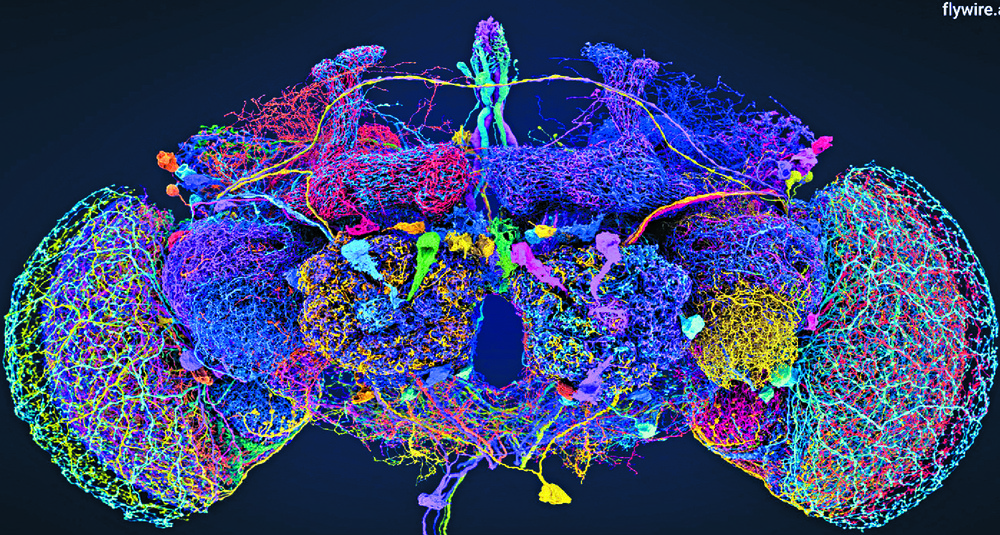
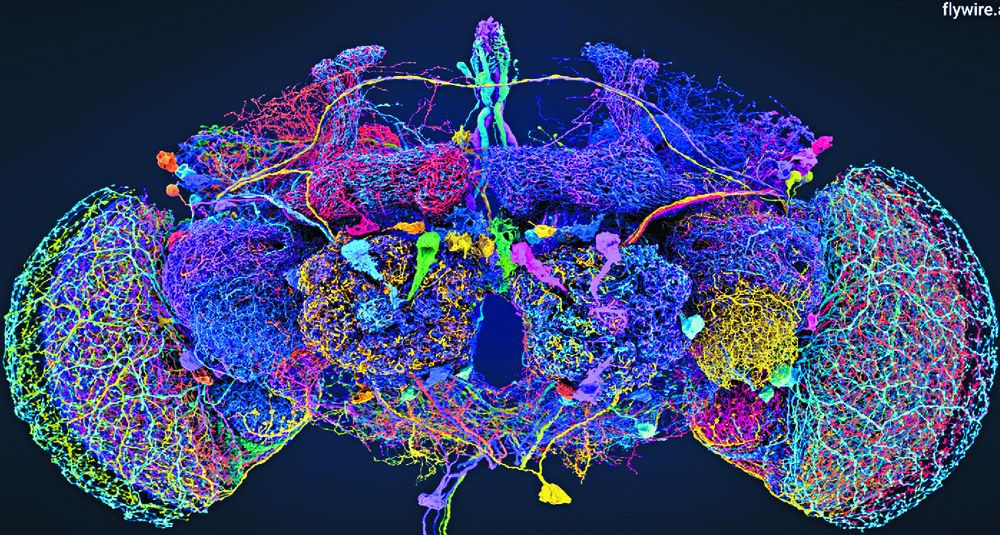
Scientists announced yesterday a milestone in neurobiological research with the mapping of the entire brain of an adult fruit fly, a feat that may provide insight into brains across the animal kingdom, including people.
The research detailed more than 50 million connections between more than 139,000 neurons - brain nerve cells - in a species called Drosophila melanogaster that is often used in neurobiological studies.
The research sought to decipher how brains are wired and the signals underlying healthy brain functions. It could pave the way to mapping other species' brains.
"It's beautiful," said University of Cambridge co-leader Gregory Jefferis.
"You might be asking why we should care about the brain of a fruit fly. My simple answer is that if we can truly understand how any brain functions, it's bound to tell us something about all brains," said Princeton University professor Sebastian Seung, a co-leader of the work published in a series of studies in Nature.
The map devised by the researchers provided a wiring diagram, known as a connectome, for the brain.
"One of the major questions we're addressing is how the wiring can give rise to animal behavior," said Princeton co-leader Mala Murthy. "And flies are an important model system for neurosciences. Their brains solve many of the same problems we do They're capable of sophisticated behaviors like walking and flying, learning and memory behaviors, navigation, feeding and even social interactions, which is a behavior that we studied in my lab."
Researchers analyzed brain circuits underlying walking, tasting, grooming; how its eyes process motion and color information; and fashioned a map tracking the organization of the hemispheres and behavioral circuits inside the fly's brain.
REUTERS
AFP