Read More









John Lee and CY Leung lead pallbearers for Tung Chee-hwa
20-09-2026 15:54 HKT

HKO forecasts showers Tuesday, tracks possible cyclone east of Philippines
21-09-2026 17:31 HKT
Is pricey Hong Kong nearly 10 times costlier than China?
A video posted by a user highlights the perception gap, with many mainlanders arguing that a monthly salary of HK$30,000 in Hong Kong holds the same purchasing power as 3,000 yuan (HK$3,249) in the mainland due to high expenses.
His friend pointed out that living expenses in Hong Kong, including rent of about HK$10,000 and additional costs for transportation and food, make it difficult to save much. Even with a monthly income of HK$30,000, there wouldn't be significant savings left over.
While salaries in Hong Kong are generally higher than in the mainland, the high cost of living makes saving money a challenge even for well-paid workers.However, the content creator countered that claim, stating that after rent and daily expenses, his savings still surpass his mainland friend's 8,000-yuan salary. His rent is only HK$5,000, he eats cheap two-dish-rice meals every day and travels to Shenzhen for consumption or other places on holidays, he said.
The debate underscores the ongoing challenge of balancing income and expenses in Hong Kong, where high rents and living costs often offset higher wages.Some users think that claiming HK$30,000 has the same purchasing power as 3,000 yuan is an exaggeration. They argue that earning HK$30,000 in Hong Kong is more like the standard of living associated with earning 10,000 yuan in the mainland.
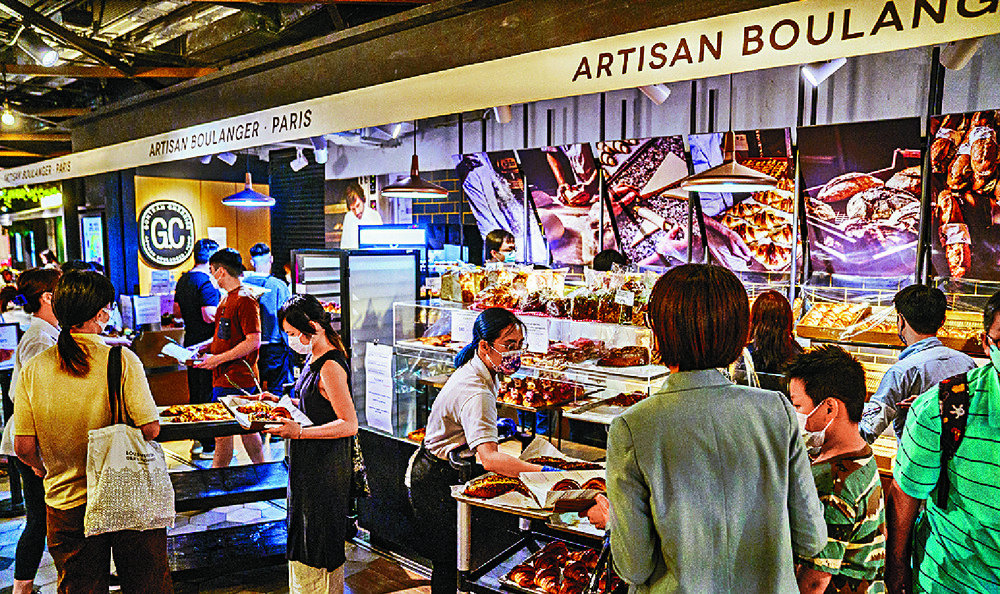
While some argue that HK$30,000 barely covers necessities, others note that single individuals can still maintain a decent lifestyle.A growing number of professionals have adopted a "cross-border lifestyle," earning in Hong Kong but spending and renting in Shenzhen, where prices are significantly lower.
Some commented that the cost of living in Hong Kong is excessively high and don't pay attention to prices while shopping in Shenzhen.This trend reflects a broader shift in spending patterns as more Hong Kong workers leverage the lower cost of living in the Greater Bay Area.
As inflation and housing costs remain high in Hong Kong, cross-border consumption is likely to persist, reinforcing the region's economic interconnectivity.