Read More
Nearly 1.2 million people cast their ballot in the election, a record-low 27.54 percent turnout for a race that was limited to patriots, although the pro-establishment camp said Beijing would accept it.
ADVERTISEMENT
SCROLL TO CONTINUE WITH CONTENT
A total of 1,193,193 out of 4.3 million eligible voters cast their ballot, the Electoral Affairs Commission said.
This was significantly lower than the district council election in November 2019 - when the turnout was 71.23 percent of 2.94 million people - at the peak of civil protests.
For comparison, the turnout was 30.2 percent in the 2021 Legislative Council election following its reform.
According to new rules announced in May to reform the district council, which was established in 1982, the number of seats that could be directly elected was slashed to 88 from 462, with the other 382 seats controlled by the city leader, government supporters and rural landlords.
Immigration Department statistics also showed that more than 234,000 Hongkongers traveled to the mainland on Sunday - the second-highest figure after the eve of the Chung Yeung Festival on October 22 - while more than 380,000 returned to the city from the mainland.
Pro-Beijing political commentator Lau Siu-kai, a consultant to the Chinese Association of Hong Kong and Macau Studies, said the turnout rate is "acceptable," adding that "almost all patriots" in the city cast their ballot.
He added that the voting rates in previous district council elections were low.
"I believe the central government would have a relatively sober and pragmatic understanding of the turnout rate in this district council election," Lau said.
"[Beijing] will not blindly think that through the Hong Kong government and this large-scale mobilization of patriotic forces the turnout rate could be pushed to a relatively high level."
Pro-Beijing giant Democratic Alliance for the Betterment and Progress of Hong Kong won 109 seats in the election, which Lau said was the result of the party's community work in previous years.
"Many of DAB's candidates are not famous political figures, so they would need to rely on the party's background," he said.
Another commentator, Hui Ching, research director at think tank Hong Kong Zhi Ming Institute, said the turnout rate was actually "shockingly high," which showed that the pro-establishment camp and the government could engage their supporters.
Hui said the pro-establishment camp's supporters accounted for around 30 to 40 percent of the total votes in previous elections, and he expected the turnout rate would be around 18 to 28 percent if some 60 percent of those supporters cast their votes.
"The turnout rate this time was very close to the upper limit," Hui said.
Speaking on a radio program, Chinese Association of Hong Kong and Macau Studies vice president Tam Yiu-chung said the 27.54 percent turnout was in line with expectations and that people believed the Legislative Council had more weight than the district councils.
"Another reason is that many people went overseas ... so fewer people cast their vote," he said.
eunice.lam@singtaonewscorp.com
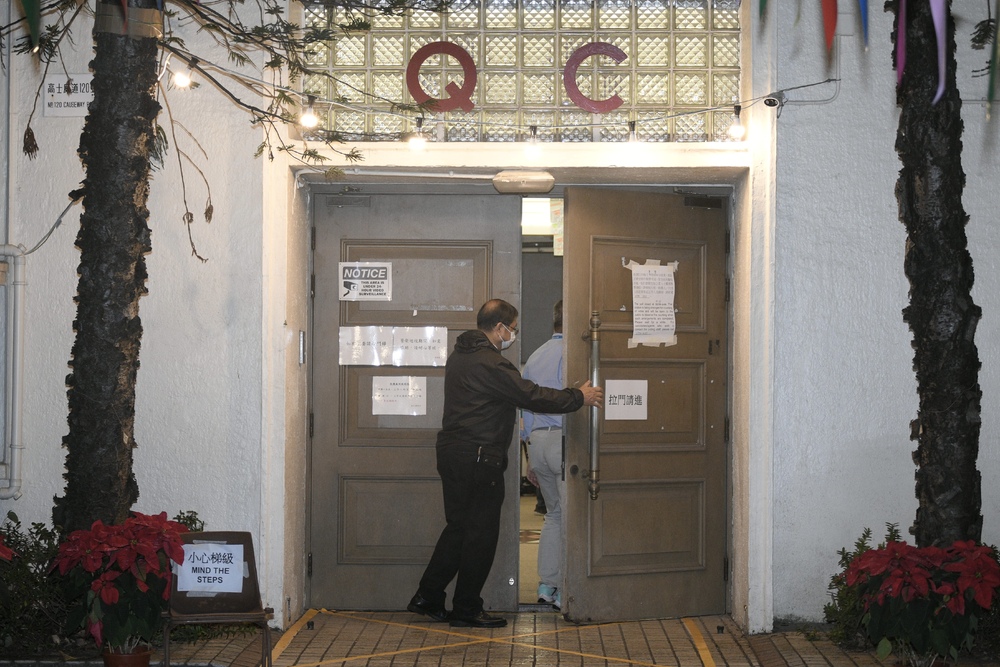
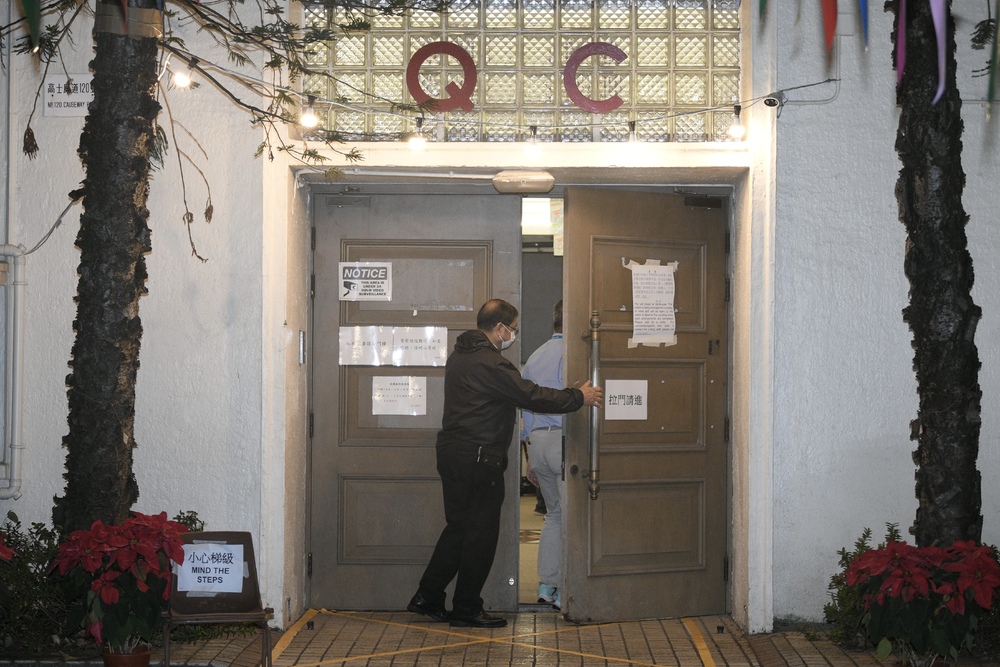
A voter beats the deadline as the polling center in Queen's College closes. SING TAO