Hong Kong aims to harness its position as a global financial hub to bolster national green initiatives and safeguard its natural heritage, said Secretary for Environment and Ecology Tse Chin-wan, as he outlined a strategy focused on intensifying ecological conservation efforts.
In his latest blog post, Tse reported that authorities have recently launched the next 10-year phase of the Hong Kong Biodiversity Strategy and Action Plan (BSAP), building on work initiated in 2016.
He explained that the enhanced BSAP aims to deepen the protection of local biodiversity and contribute to national and global conservation targets.
Notably, a key focus will be promoting "nature-based solutions," such as integrating active conservation concepts into the planning of the Northern Metropolis and developing the Sam Po Shue Wetland Conservation Park to enhance the Deep Bay wetland system.
The plan also emphasises cross-border collaboration, including establishing ecological corridors, combating wildlife crimes, and improving habitat management along species migration routes.
Furthermore, the city will utilize green financing tools to steer market capital toward eco-friendly projects and optimise conservation programmes.
Citing the city's unique strength as an international financial hub to support the nation's green transition, Tse called on all sectors of society to collaborate in protecting Hong Kong's invaluable natural heritage.
Four Peak Tourism
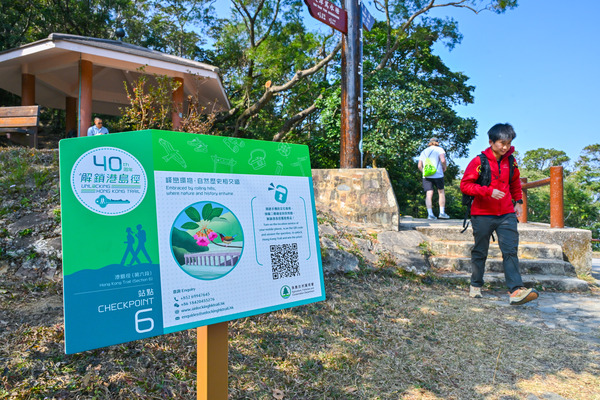
To encourage public engagement with the city's natural treasure, the government last year announced the phased "Four Peaks" tourism initiative, which aims to spotlight Tai Mo Shan, Lantau Peak, Sai Kung Hoi and Victoria Peak, by creating more accessible hiking routes to help disperse visitor crowds.
As the route on Victoria Peak overlaps with the first section of the Hong Kong Trail, the Agriculture, Fisheries and Conservation Department (AFCD) is upgrading trails and facilities around High West and collaborating with nearby tourism stakeholders.
The goal is to create a variety of themed green itineraries that appeal to varied visitor preferences, offering routes that vary in specialty, duration, and difficulty while seamlessly connecting resources such as the Peak Tram, landmarks, and specialty foods.
Authorities anticipate the facility enhancements and related green tourism products will be in place by the end of this year, aligning with promotional efforts by the tourism industry.