A local female student in her twenties was arrested for entering into a bogus marriage with a non-local resident in exchange for money to pay off more than HK$100,000 in credit card debt, the Immigration Department said.
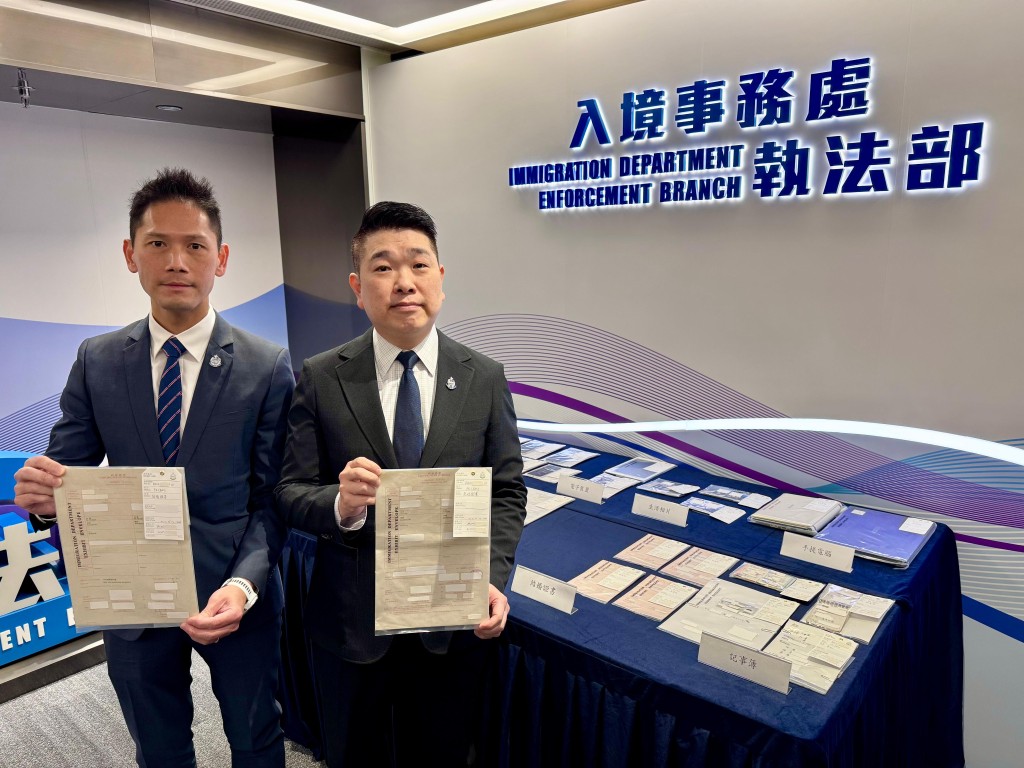
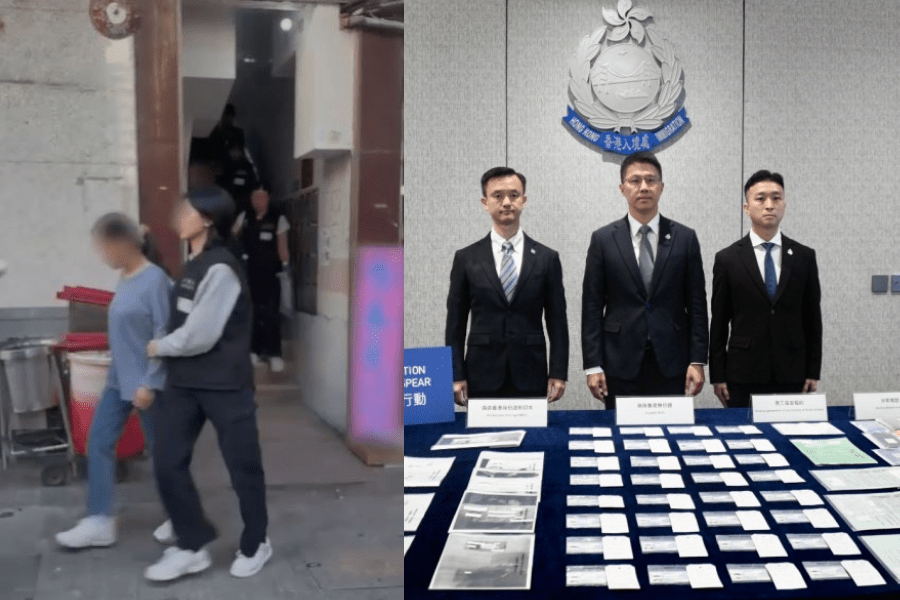
The arrest followed “Flashspear 2025,” a joint operation launched last November by the Immigration Department and the Guangdong Provincial Public Security Department, which dismantled a cross-border sham-marriage syndicate and led to the arrest of 47 people.
According to investigators, the student turned to the scheme after being overwhelmed by credit card bills. She came across an online advertisement on a second-hand trading platform promising HK$100,000 within three days in return for marrying a non-local resident.
The syndicate arranged for her to apply for a Certificate of Absence of Marriage Record from the Immigration Department and escorted her to the mainland to complete the marriage registration.
However, she was paid only HK$30,000, with the syndicate saying the remaining HK$70,000 would be released after her supposed spouse obtained a One-way Permit and moved to Hong Kong. Despite realizing she had been misled, she continued cooperating with the syndicate and was later arrested following intelligence-led investigations.
In another case, a man in his fifties who had accumulated heavy gambling debts was recruited through a friend and a so-called marriage agent to enter a sham marriage for HK$30,000.
After his arrest, he was diagnosed with a serious illness and tried to divorce his uncontactable spouse, fearing the arrangement could affect the distribution of his estate.
Assistant Principal Immigration Officer Hui Chi-kin said syndicates have shifted their recruitment tactics in recent years to online platforms such as dating apps, instant messaging services, online trading platforms and social media.
They often promote the schemes using slogans such as “quick money making” and disguise bogus marriages as job opportunities, including roles described as “marriage coordination consultants” or “marriage assistants.”
He said syndicates usually promise HK$80,000 to HK$100,000, but victims typically receive only a fraction of that amount.
With cross-border marriages now subject to more stringent questioning in Hong Kong, Hui said many syndicates arrange the marriages on the mainland instead.
He added that the number of sham marriage cases has declined in recent years, a trend he attributed to stronger enforcement.
Under an existing notification mechanism with mainland authorities, once a bogus marriage is confirmed, the non-local spouse’s right of abode is revoked and repatriation procedures begin. However, the process can take anywhere from one to several years.
Hui warned that people who take part in sham marriages face not only criminal charges but also civil risks, including prolonged divorce proceedings and potential claims over alimony and property.
Chief Immigration Officer Tang Wai-yip, meanwhile, said syndicates typically prepare “cheat sheets” containing personal details of the fake spouse to help couples answer questions from officials. They also arrange staged photos of daily life together in advance in case they are asked to provide proof of a relationship