As the global digital economy shifts toward immersive, personalized experiences, Hong Kong has emerged as a critical testing ground for the next generation of artificial intelligence. By blending advanced deep learning with world-class visual artistry, local innovators are moving beyond traditional chatbots to create "Digital Humans" that can see, hear, and interact with emotional nuance. This evolution is a strategic response to regional challenges, such as labour shortages and an aging workforce, providing enterprises with scalable solutions that maintain a human touch. Central to this transformation are Pantheon Lab and Digital Domain, two industry leaders leveraging the ecosystem built by the Hong Kong Science and Technology Parks Corporation (HKSTP) to redefine how we engage with technology.
Pantheon Lab: Redefining Enterprise Interaction through Digital Personas
The landscape of Generative AI in Hong Kong is being redefined by pioneers like Pantheon Lab. Founded in 2019, the firm specializes in the end-to-end development of automated synthetic visual content—specifically "Digital Humans" that serve as brand ambassadors or unique intellectual properties. Under the leadership of Co-Founder and CEO Ivan Lau, Pantheon Lab has moved beyond simple image generation to creating sophisticated AI teammates capable of complex human-computer interaction.
Their technology addresses critical regional "pain points," such as an aging population and labour shortages, by deploying digital personas in high-traffic sectors like banking, public transit, and F&B. These AI agents handle repetitive inquiries at railway stations or bank branches, allowing human staff to focus on higher-value tasks. A key achievement lies in their "Agentic AI" ecosystem, which incorporates strict guardrails and LLM fine-tuning to ensure interactions are friendly, human-like, and brand-safe.
Supported by HKSTP, Pantheon Lab has successfully scaled its R&D efforts, expanding across the Asia-Pacific, Europe, and Oceania. By reducing the "time cost" of traditional media production, it enables brands to react to market trends with unprecedented speed.
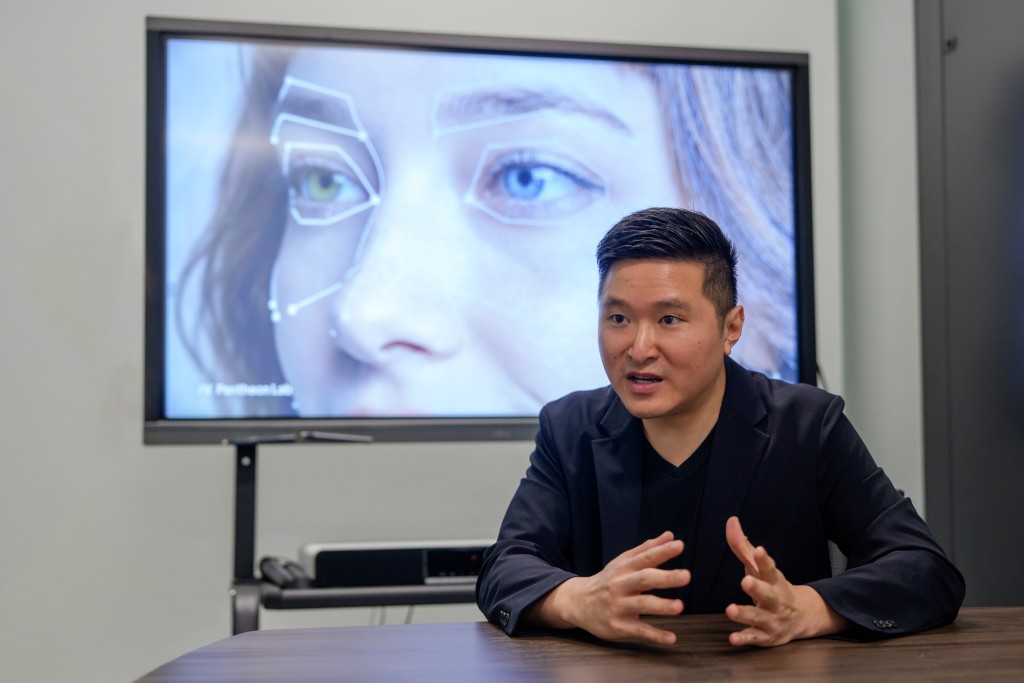
Pantheon Lab CEO: Ivan Lau
From Hollywood to Hyper-Realism: The Evolution of Digital Domain
While Pantheon Lab excels in scalable enterprise solutions, Digital Domain brings Hollywood prestige to the functional AI space. Originally founded by James Cameron for the film Titanic, the studio has transitioned its Oscar-winning visual effects pedigree into "Real-time and Interactive" virtual humans. Chairman of the Board William Wong emphasizes that their competitive edge is "Emotional Intelligence"—the ability to mimic subtle micro-expressions, eye movements, and body language to create a soulful user experience.
This high-fidelity approach is particularly effective in the B2B2C sector, where Digital Domain is transforming customer service into an immersive experience. Their AI agents do more than provide data; they build trust, making digital interfaces accessible to elderly users who prefer speaking to a "person" rather than navigating an app.
Currently operating out of HKSTP to leverage local R&D and business matching, Digital Domain is integrating Generative AI as "rocket fuel" to accelerate its technology. From virtual guides in theme parks that interact with children to AI trainers that simulate customer scenarios for corporate staff, Digital Domain is blurring the line between the cinematic and the everyday.
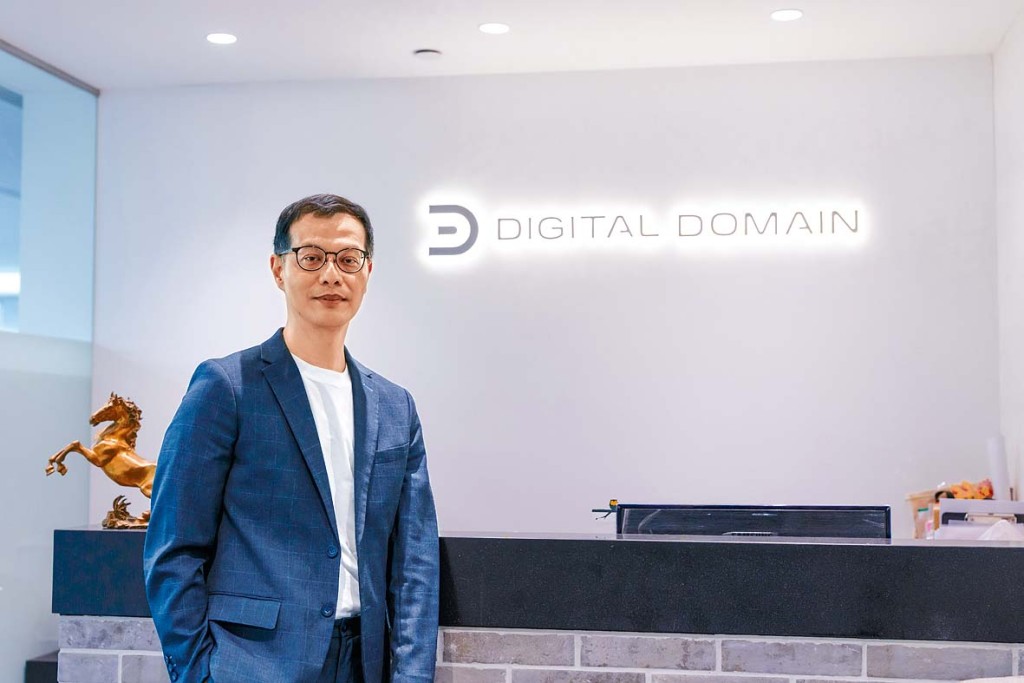
Digital Domain Chairman of the Board: William Wong
Conclusion: A Unified Vision for AI Integration
Though they originate from different backgrounds—an agile tech startup and a Hollywood VFX giant—both firms are converging on a shared mission: solving real-world labour shortages through high-quality AI interaction. By leveraging the HKSTP ecosystem, both have transitioned digital humans from novelty concepts into practical business tools that enhance inclusivity and operational efficiency.
To further this momentum, HKSTP is fast-tracking INNOPOLE at the San Tin Technopole, a 20-hectare hub in the Northern Metropolis. Slated for 2027, the project utilizes an "AI+" strategy to transform sectors like life health, new materials, and microelectronics. This infrastructure directly supports the work of companies like Digital Domain and Pantheon Lab. By providing the scale needed for hyper-realistic content, INNOPOLE bridges the gap between R&D and commercial use in banking, retail, and tourism. Ultimately, it serves as a launchpad for AI-enabled industries to drive Hong Kong’s high-quality economic growth.