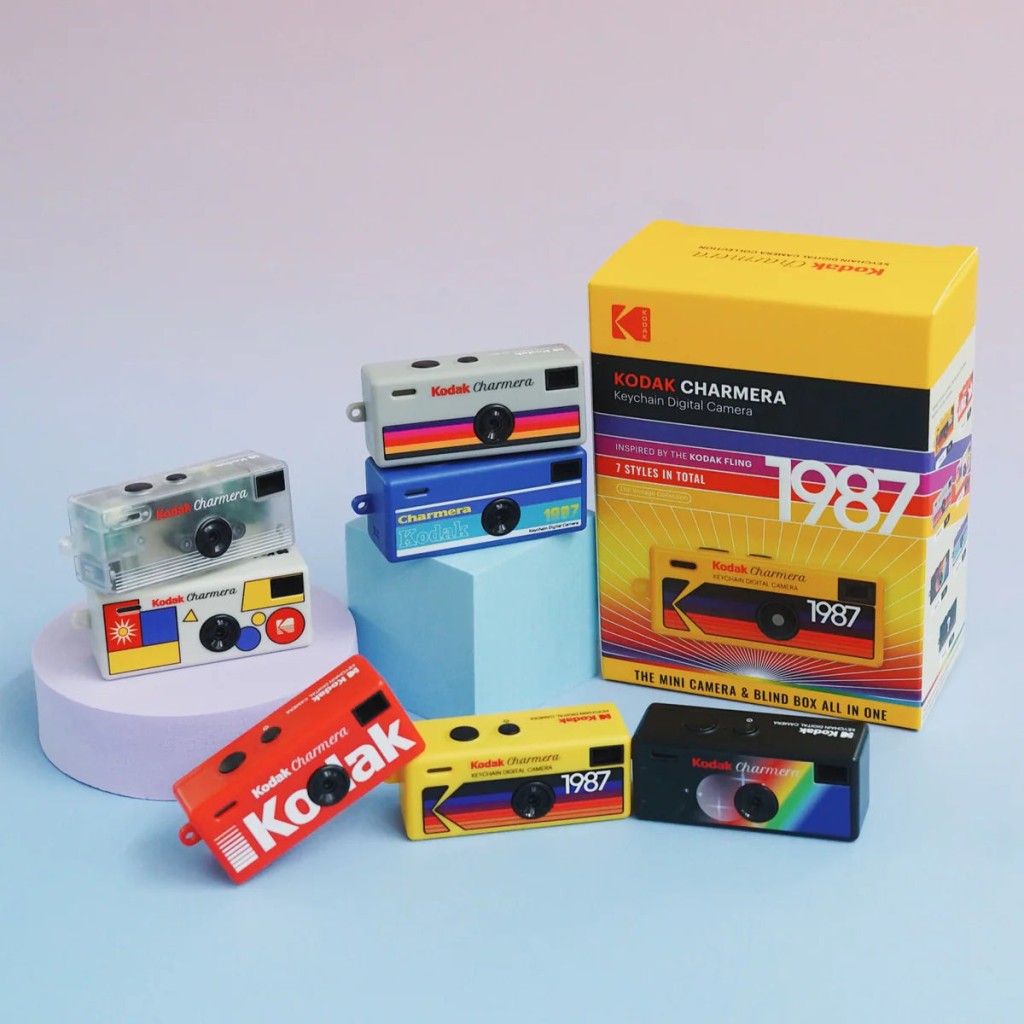
Blind-box mini digital cameras are taking the world by storm – but Kodak’s “Charmera” craze may do little to lift the debt-laden company out of crisis.
A century-old icon once synonymous with photography, Kodak has unexpectedly found itself back in the spotlight – this time thanks to a palm-sized digital gadget that has captivated Gen Z and nostalgic millennials alike. The Charmera, sold in blind boxes and featuring a retro design, has gone viral across social media platforms, from TikTok to Instagram, where users eagerly unbox mystery editions and show off vintage-style snapshots, according to East Week magazine, a sister publication of The Standard.
In Hong Kong, the Charmera has been flying off shelves within hours of arrival. Some stores have seen customers lining up overnight, hunting for the rare transparent “hidden edition” that has fetched over HK$2,000 online – ten times its retail price. The product’s mix of mystery-box excitement, miniature aesthetics, and throwback charm has turned it into an unlikely global sensation.
Kodak says the camera’s design was inspired by its 1987 Fling disposable model. Shrunk to fit in the palm of a hand, the Charmera pairs old-school aesthetics with modern convenience. It offers seven retro filters, four photo frames, a modest 1.6-megapixel sensor, and video recording capability.
Images can be shared instantly via USB-C or microSD – perfect for a generation obsessed with online sharing.
The “blind box” element, a trend borrowed from collectible toys like Labubu, has proven irresistible. It taps into what China’s youth culture calls the “goods economy” – or an industry that focuses on merchandise and collectibles derived from popular culture such as anime, comics, and games.
The viral buzz has given Kodak a rare moment of cultural relevance. But financially, the impact is minimal.
Charmera and related consumer brands account for barely two percent of Kodak’s revenue. The company’s core business – printing – still makes up nearly 70 percent of total sales, but remains sluggish. In the second quarter of this year, Kodak’s revenue slipped 1 percent to US$263 million (HK$2.05 billion), while profit swung from a US$26 million gain to a US$26 million loss.
Kodak now faces nearly US$690 million in maturing debt within a year and has few financing options. It has proposed freezing its pension plan to free up US$300 million in cash – a desperate move to stay afloat.
In fact, Kodak’s history is one of missed turns. Founded in 1882 by George Eastman, the firm once dominated the US film market, commanding nearly 90 percent of it by the 1970s. Ironically, Kodak engineers built the world’s first digital camera in 1975 – but management failed to embrace it, fearing it would cannibalize film sales. When rivals such as Canon and Sony went digital, Kodak fell behind, filing for bankruptcy protection in 2012.
After restructuring, the company shifted focus to digital printing, advanced materials, and imaging technology. It even flirted with cryptocurrency in 2018, launching “KodakCoin” and a blockchain platform for photo rights – both fizzled.
For now, the Charmera craze has revived Kodak’s nostalgic glow, but only time will tell if this viral hit is just another bright moment before the next fade-out.