





Read More

WORLD RACING WEEKLY: Japan feels natural now to Damian Lane
17-04-2026 07:01 HKT


Andy Lau awarded honorary doctorate by HKBU
10-08-2026 21:09 HKT


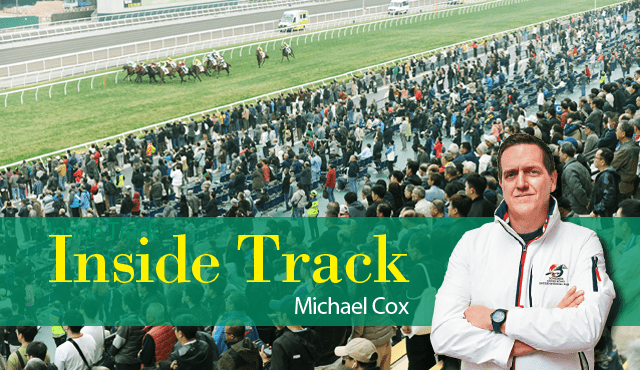
Zac Purton says he was “a little bit bemused” after Maureen Haggas called him “a big sissy” following his ride on Lake Forest in the King Charles III Stakes at Randwick last weekend. The insult was as dated as it was bizarre – part throwback, part tantrum and entirely unnecessary. His reaction, though, was typical Purton: calm, dry and, dare we say it, dignified.
Haggas chose an unusual moment to make global racing headlines – between races at Kempton, of all places. “It was about the worst ride I’ve ever seen in my entire life. I was appalled, absolutely appalled,” she said, before adding that Purton had ridden “like a big sissy.” The remarks were flung across continents but certainly traveled faster than any horse on the card.
It was also a strange attack. In 2025, who still equates masculinity – or a supposed lack of it – with the ability to ride a horse? Racing is one of the few major sports where men and women compete directly. That it tests balance, judgment and nerve, not just muscle, should be celebrated.
What jarred most wasn’t just the language but the tone – an unmistakable whiff of the old world looking down its nose at the new. For some in Britain and beyond, Hong Kong racing still sits on the fringes: an exotic outpost rather than the center of excellence it has become. You sensed the same condescension before The Everest, when Ka Ying Rising was spoken of as if he were an overhyped curiosity from abroad.
His 13-race winning streak, the rivals he’d thrashed, the clock-splitting sectionals at Sha Tin – it was all there for all to see. Yet the whispers persisted: Was he sound? Was he fit? Was he really that good? Even when logic said otherwise, doubt lingered like fog on a cold night at Kempton.
David Hayes and Zac Purton didn’t bite. Through the noise, they underlined the word professional. When Hayes said before the public trial there would be “no fireworks,” he meant it. The horse worked, the jockey spoke with candor and the trainer went back to returning calls – sticking to his personal policy of returning every single one. In an age when many participants and officials vanish at the first sign of scrutiny, Hayes’s insistence on picking up the phone feels almost radical.
Purton, too, was everywhere – before, after and during what was arguably the biggest week of his career – fielding questions with unwavering patience. On the track he delivered under pressure to win the A$20 million Everest aboard a horse prepared to the minute, Ka Ying Rising; two races later, on Lake Forest, he got the opposite – a horse that simply didn’t perform.
Criticism is part of the game. Nobody knows that better than Purton. But there’s a line between analysis and insult, and Haggas’s rant crossed it. Questioning tactics is fair game; questioning character isn’t. Calling an eight-time Hong Kong champion a “big sissy” after a horse fails to deliver is poor form – and not of the equine kind.
Purton’s response – half humor, half detachment – said it all. “I haven’t had time to watch the replay yet,” he quipped, “because I’ve been too busy watching replays of myself winning the A$20 million Everest.” It was the verbal equivalent of flicking lint off his jacket.
By Thursday, Purton was on the golf course, still returning calls. Haggas’s outburst was still echoing online. Racing thrives on opinion but it also relies on respect – for the horse, the rider and the shared craft. In that sense, the contrast between the two protagonists couldn’t be clearer.
For all the noise, the story of the week wasn’t a “sissy” moment at Randwick. It was the calm professionalism of two Australians representing Hong Kong racing with class: fronting up, speaking with clarity and letting the horses – and their manners – do the talking.