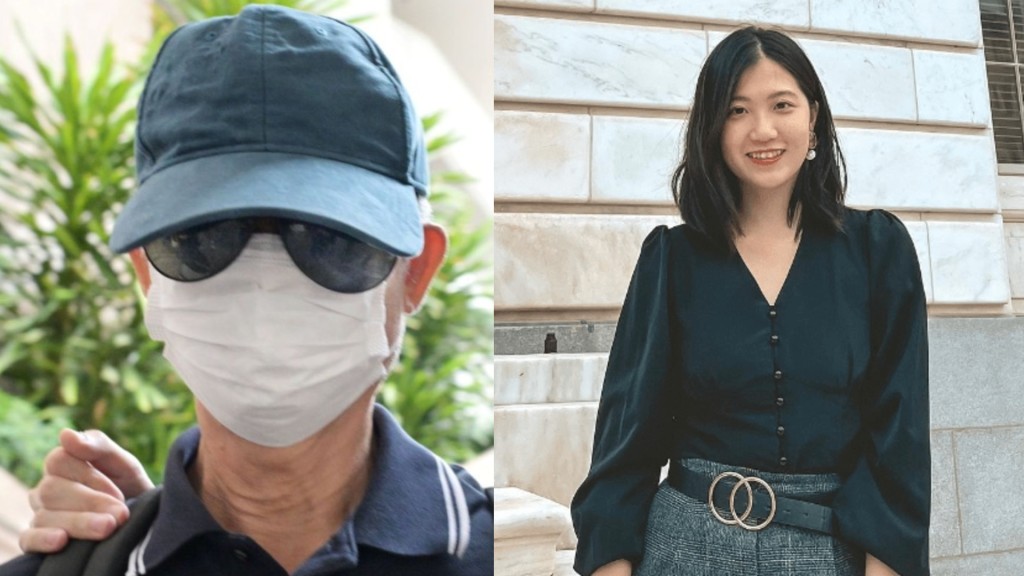
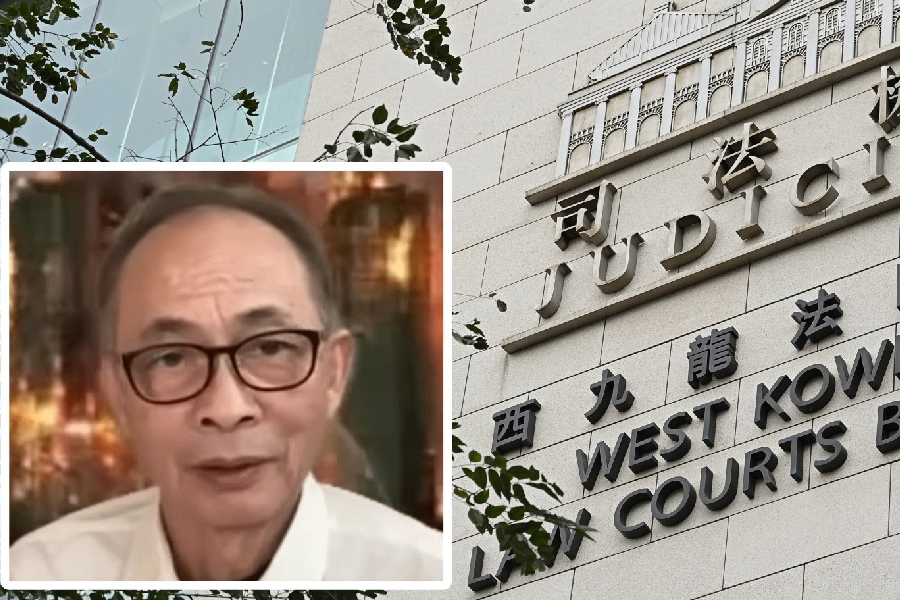
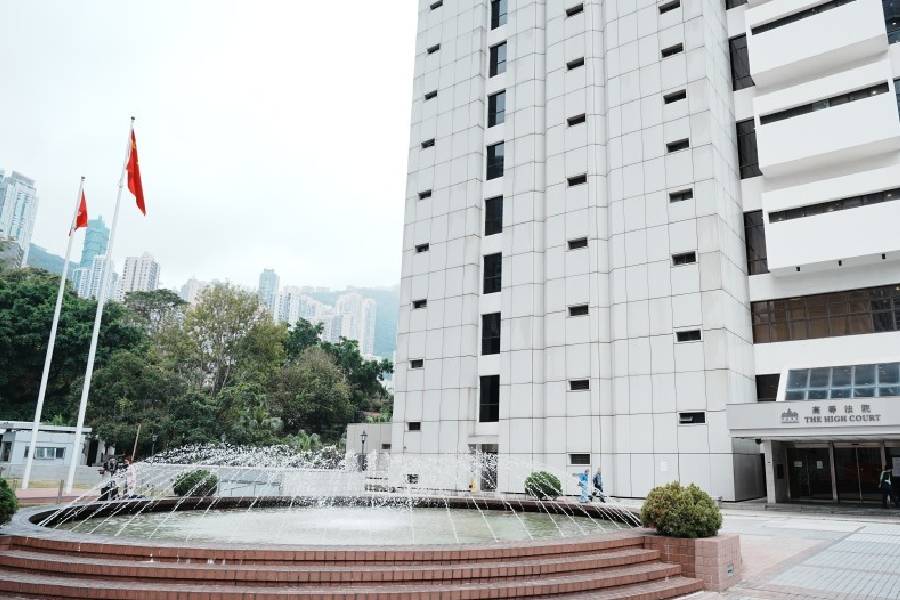
Kwok Yin-sang, the father of wanted fugitive Anna Kwok Fung-yee, was convicted on Wednesday of attempting to handle assets belonging to an absconder by managing her daughter’s insurance policy.
He purchased a life and personal accident insurance policy from AIA International in 1999 for his three children, including Anna Kwok, with a total value of around HK$90,000.
Anna Kwok is wanted by Hong Kong authorities for alleged subversion and collusion with foreign forces under the National Security Law, who is now in the United States.
Her father, Kwok, attempted to cancel an insurance policy for her last year. He then became involved in assisting in changing the policyholder and withdrew nearly HK$90,000 in remaining funds.
However, he pleaded not guilty, saying that a policyholder’s name does not automatically transfer from the parent to the insured child upon the child turning 18, which was demonstrated by his son’s case, meaning Kwok Yin-sang remained the policyholder rather than Anna Kwok.
During the trial, the defense argued that the prosecution had failed to prove that Anna Kwok was a fugitive. They said the police didn’t hold an arrest warrant or notify Kwok, and the prosecutors didn’t bring her to the court, and did not prove that she was outside Hong Kong.
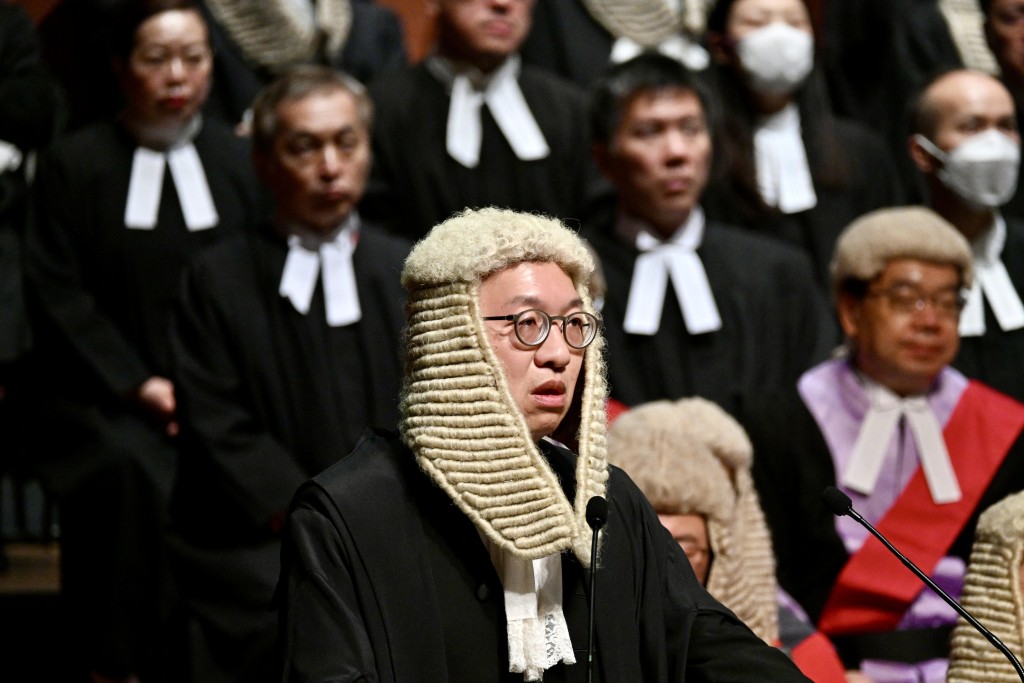
Deputy Judge Cheng Lim-chi rejected those arguments, saying the prosecution had submitted a government gazette notice in which the Security Bureau confirmed Kwok as a fugitive. He added that Kwok had no reason to be unaware of his daughter’s situation, as evidence showed he had watched related videos on YouTube.
The insurance policy involved had an account balance of about US$11,360. The defense argued that until the policy was successfully surrendered, the balance remained a chose in action and did not constitute “funds” under the charge, but at most an “economic resource.”
Cheng disagreed, saying the policy balance could be determined through calculation and that once the policy was surrendered, the balance would be paid to the relevant person. He therefore ruled that the policy balance as “funds”.
Cheng said that the testimony of the AIA insurance agent involved in the case was straightforward, clear, and reasonable, and he accepted the agent’s evidence.
As Kwok was arrested on April 30 last year and said under caution, “I paid for the policy. She is no longer in Hong Kong, so I canceled it.” Cheng said the statement supported the finding that Kwok had attempted to deal with the insurance policy in question.
A key dispute in the case was who was entitled to the rights under the policy. The prosecution argued that under the policy terms, Anna Kwok automatically became the policyholder upon reaching adulthood. However, the defense argued that she had never written to AIA to accept the policy and noted that a similar policy for her brother remained in Kwok Yin-sang’s name even after he reached adulthood.
Cheng said this was a legal issue that had to be determined based on the insurance terms. Citing the policy provisions, he said the policy was an insurance trust with Anna Kwok, as the insured person and beneficiary. Before she turned 18, Kwok Yin-sang held the policy as trustee to protect her interests and did not have the authority to dispose of the policy benefits.
Once she turned 18, his role as trustee ended and he was no longer the policyholder, Cheng said. He added that there was no evidence showing that Anna Kwok had refused to accept the policy, and that the policy was based on a trust rather than a contractual relationship.
The defense raised a statutory defense, arguing that Kwok had purchased identical policies for his three children and that even after Anna Kwok’s brother reached adulthood, Kwok Yin-sang continued to complete paperwork and make claims under that policy.
Cheng said the amount mentioned was limited and it was therefore not unusual that the insurance company did not strictly follow all procedures.
The defense also pointed out that during divorce proceedings in the District Court in 2023, Kwok submitted a financial statement declaring that the policy belonged to him, which reflected his state of mind.
Cheng rejected that argument, saying the evidence only reflected his thinking before the offense. He also noted that Kwok did not testify in court and a person’s belief can change over time. He inferred that once the AIA agent informed him that Anna Kwok had automatically become the policyholder and the policy benefits could not be accessed without her consent, he must have known he was no longer the policyholder.
Therefore, he rejected the statutory defence and found Kwok guilty of attempting to deal with funds belonging to a fugitive.
Senior Assistant Director of Public Prosecutions Derek Lau Tak-wai said offenses endangering national security are excepted offenses and a probation should not be imposed.
Defense counsel Steven Kwan Man-wai pleaded in mitigation, saying that Kwok is now 69 years old and runs a plumbing and electrical engineering company. He has reduced his business after the incident. He argued that the court should consider the actual consequences, potential risks, and possible impact of the offense, adding that the case had resulted in no actual harm.
Kwan cited a case in the United Kingdom last year concerning sanctions against Russia, pointing out that the involved provision took the UK law as a reference. He added that the nature of the case was closer to money laundering, with an amount involved of about HK$88,000 lasting less than two months, describing the case as a short period and not serious.
Kwok merely intended to retrieve what he believed to be his personal assets, and there was no evidence that the funds would have been given to Anna Kwok. In addition, the defense arguments had largely centered on legal disputes, he said.
Kwan urged the court to impose a short prison term of around 14 days, which he believed would be sufficient for deterrence and punishment and would reflect the legislative intent.
Cheng disagreed, saying the legislative purpose also included exerting financial pressure on fugitives. Lau also disagreed with the defense’s suggestion that the legislative intent was so narrow.
In response, Kwan argued that under the law, the government has no power to confiscate a fugitive’s assets, but may only prohibit others from dealing with them, similar to an injunction. He said the legislative documents show that the aim was not to place financial pressure on fugitives, but to safeguard national security in Hong Kong and mainland China.
Kwan further argued that since Anna Kwok had never accepted the policy, there was no way to exert pressure on her, and the court need not take that factor into account.
Cheng adjourned sentencing to February 26 and Kwok should be remanded in custody in the meantime.