





Read More


Night Recap - April 3, 2026
7 hours ago





Iran demands transit fees in yuan, stablecoins for Strait of Hormuz passage
03-04-2026 02:45 HKT
Growing overseas participation and a new university network mark a shift in the event’s role
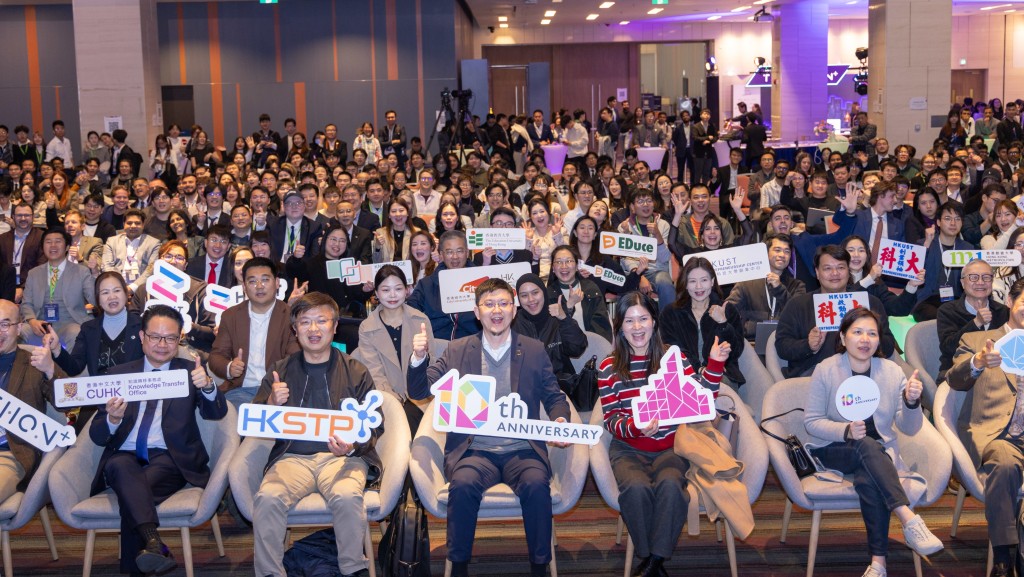
Hong Kong Techathon+ has marked its tenth year with a shift in focus, as the city’s flagship inter-collegiate innovation competition increasingly channels campus projects into commercial start-ups, supported by rising overseas participation and a new global university network.
Held on January 24 at Hong Kong Science Park, the finale of the 10th Hong Kong Techathon+ drew record international interest and coincided with the inaugural forum of the Global University Innovation Network (GUIN) earlier in the same week.
Organised by Hong Kong Science and Technology Parks Corporation (HKSTP) with 15 local tertiary institutions, this year’s Techathon+ attracted around 1,900 participants forming more than 470 teams, including 215 from overseas.
Following several rounds of selection, 172 teams advanced to the finale, with participants from Australia, Brazil, the Chinese mainland, Japan, Kazakhstan, Malaysia, Portugal, Singapore, South Korea, Taiwan, the UK and the US.
Cresento, a Hong Kong University of Science and Technology (HKUST) team developing AI-powered smart shin guards for football players, won the Gold Award in the Trusted AI and Data Science category under the Local Track (Open Group), as well as the Best Presentation Award voted by the audience.
The inaugural GUIN forum took place on January 23 as part of the Techathon+ programme, which brought together representatives from member universities and technology transfer professionals to discuss research commercialisation and cross-campus collaboration.
Terry Wong, chief executive of HKSTP, said Techathon+ had grown over the past decade from a local challenge into a major inter-collegiate innovation platform in Asia, with an expanding pipeline of young founders and overseas participation.
GUIN, co-founded last year by HKSTP and its 15 local tertiary institution partners, aims to formalise that pipeline by linking campus incubation resources with overseas institutions and markets.
The forum examined collaboration models between universities and industry, the Greater Bay Area as a base for international innovation activity, and practical steps to strengthen global cooperation.
Since last summer, HKSTP and tertiary institution partners have begun rolling out theme-based global incubation programmes under GUIN, focusing on dentistry, visual technology and the circular economy. Further programmes are being prepared.
On top of the awards ceremony, Techathon+ has taken on a broader role as a soft-landing platform for early-stage founders. Non-local teams joined a four-day programme that included mentoring, investor matching, visits to Hong Kong Science Park and tours of innovation facilities in the Chinese mainland.
Selected finalists and winners are invited to join HKSTP’s Ideation Programme, which offers seed funding of up to HK$100,000, access to co-working space, technical resources and professional mentorship, supported by participating universities.
For young founders, the competition has become less about prize money and more about validation and access to networks.
Cresento’s co-founder and chief technology officer Kushaj Dwivedi said the team’s pitch connected because it focused on lived experience rather than technical detail. “This company is real to me, and the problems we are solving are real,” he said.
Chief executive Struan Gerard Dsouza said the team had refined both its product and pitch over the past year to make the idea easier to understand. “A lot of teams explain how the technology works,” he said. “We focused on why it matters to the player.”
Cresento returned to Techathon+ after failing to win any awards the previous year. Dsouza said the decision to come back was driven by a desire to measure progress. “Last year we didn’t win anything,” he said. “This time it was about proving that the work we’ve been doing was worth something.”
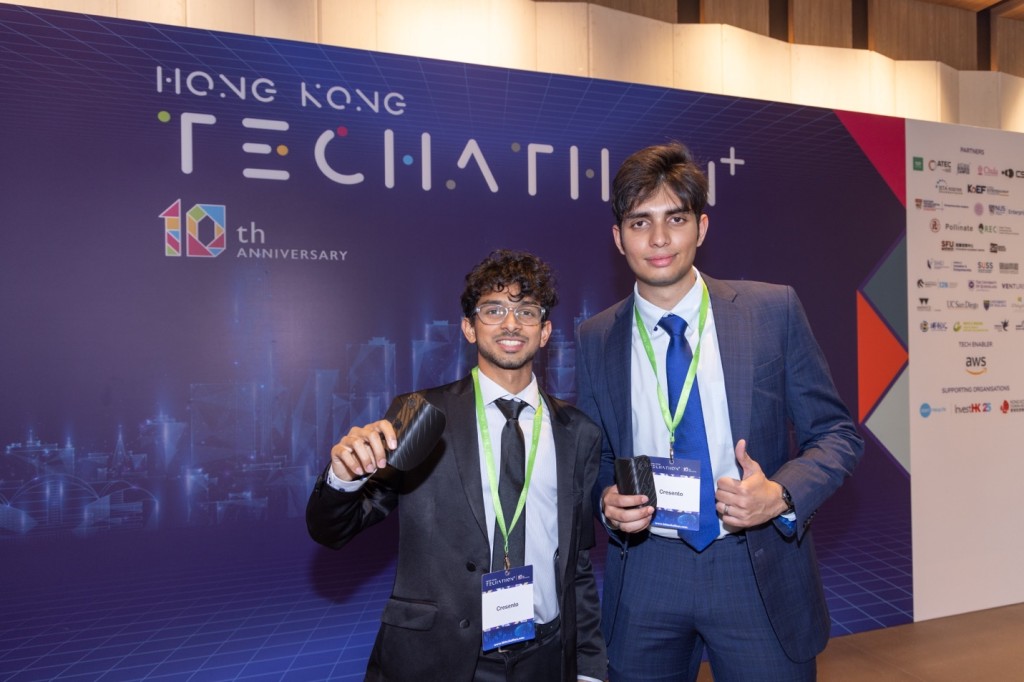
Both founders said support from HKSTP helped the team move from a student project towards a start-up mindset, through funding support, exposure to overseas events such as CES and access to mentors with commercial experience.
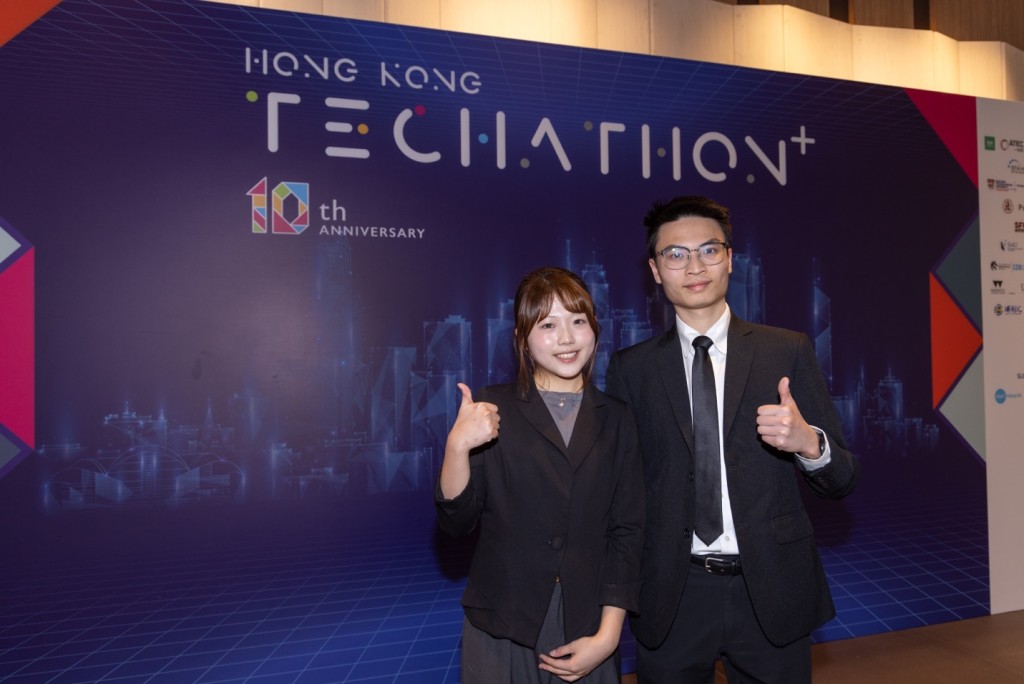
Another student-led project, OmniWatch AI, won the Gold Award of the Tech FYP Group. Developed by computer science students from HKUST, OmniWatch uses real-time AI to assess attention levels during online examinations by tracking head position and eye movement.
Team member Yoyo Cheng said the idea began as a response to weaknesses in existing online proctoring systems at her university, before proving relevant to other institutions. “We realised this wasn’t just a campus issue. Other universities were facing the same problem,” she said.
After building a working prototype, the team began exploring whether the system could be adapted for wider use, including technical interviews and corporate assessments. Cheng said the competition offered early market feedback and helped the team develop business thinking alongside technical skills.
The winners’ pipeline also includes more established start-ups. In the Global Track, Rotoboost, a clean-energy company founded by Kaisa Nikulainen, won the Gold Award in the Non-Life Science and Healthcare category for its thermo-catalytic decomposition technology, which produces low-carbon hydrogen and solid carbon from hydrocarbon feedstocks.
Nikulainen said Hong Kong plays a practical role in Rotoboost’s Asia strategy. Although the company originated in the Nordic region, she is now based in Shanghai, citing access to supply chains and industrial partners as key factors. Hong Kong, she said, offers a compact ecosystem for business development and regional networking.
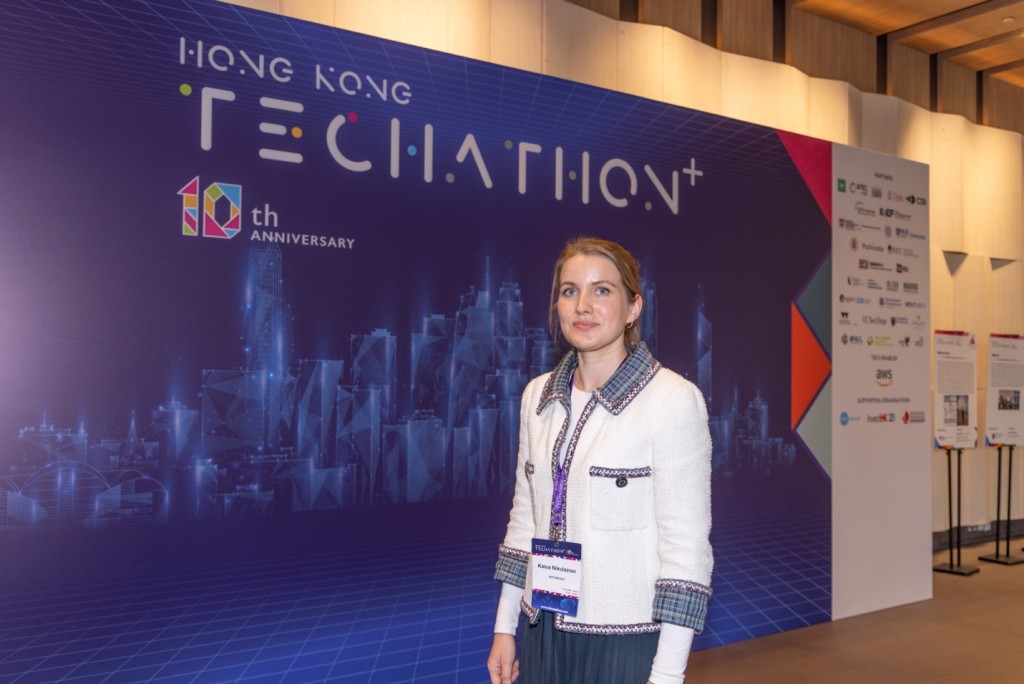
Rotoboost is working with heavy-industry customers in oil and gas, steel and marine sectors, and has off-take agreements for its solid carbon in battery manufacturing.
Nikulainen added that the company is exploring application-focused research in the city, including potential construction uses for solid carbon in concrete to improve resistance to alkaline corrosion in coastal environments.
The Life Science and Healthcare track drew attention from overseas academics assessing the region’s ability to support drug development beyond early-stage research.
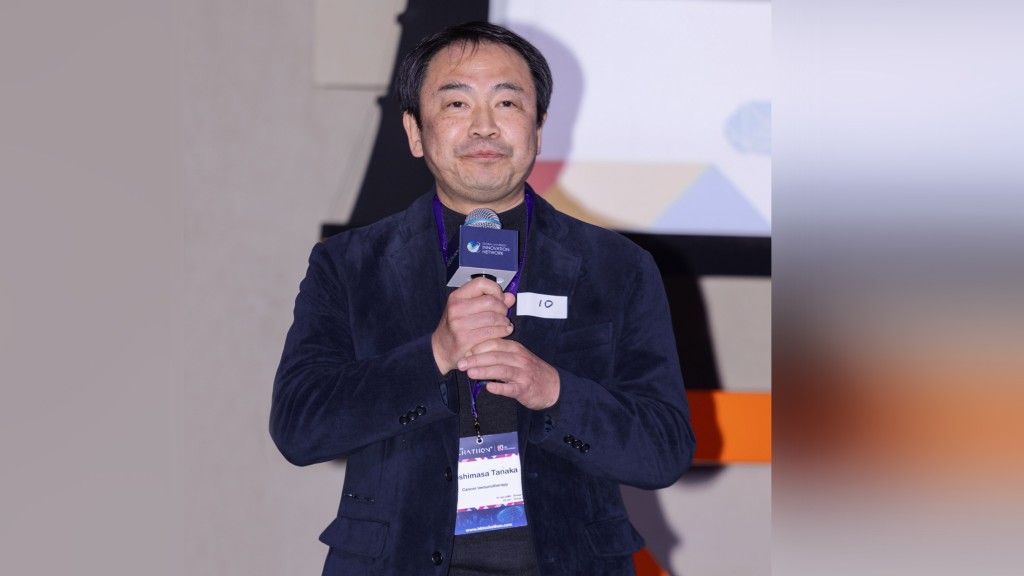
Professor Yoshimasa Tanaka of Nagasaki University, received a Gold Award with his project focusing on cancer immunotherapy, said Hong Kong’s advantage lies in finance and business operations familiar to international capital, while Shenzhen and Guangzhou offer lower-cost capacity for manufacturing and research. He is currently exploring the possibility of setting up a start-up in Hong Kong with his collaborators.
Amazon Web Services served as the exclusive technology enabler for this year’s Techathon+, providing teams with access to cloud computing and AI tools, alongside technical workshops and support.