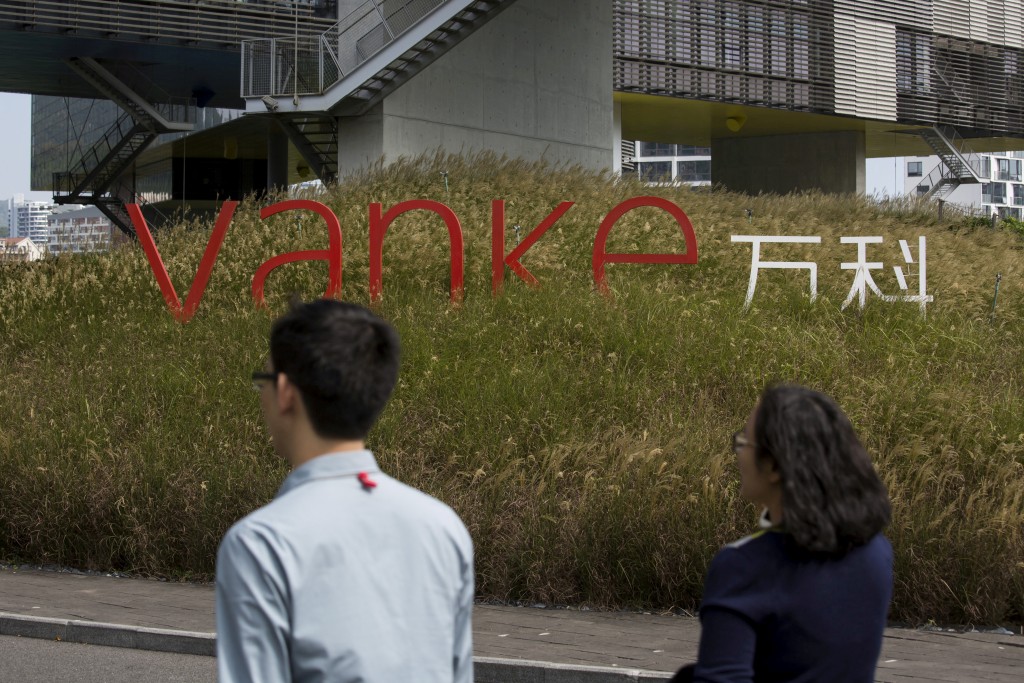
Chinese financial regulators have asked some banks not to classify overdue loans to China Vanke (2202) as non-performing and to extend repayment deadlines for the state-backed developer, people with knowledge of the matter said.
In one of Beijing's strongest interventions yet to prevent a default by Vanke, regulators gave lenders informal "window guidance" to support it and refrain from actions that would worsen a cash squeeze, the sources said.
The regulators also asked some lenders to hold off on collecting interest payments owed by Vanke, the sources added, without specifying the size of the waivers.
DIRECTIVE MEANT MOSTLY FOR STATE-OWNED BANKS, SOURCES SAY
Reuters could not determine how many banks received the guidance but the directive was meant for mostly larger-sized banks, the sources said.
How long the loans would go unclassified as non-performing was left open, and would hinge on the property market and further discussions with Vanke, one of the sources said.
They sought anonymity due to the sensitivity of the matter.
Chinese financial regulators and Vanke did not immediately respond to requests for comment.
The guidance underscores the extent of China's efforts to prevent a default at Vanke, amid concern that a chain reaction from such an event could threaten the stability of the financial system.
Vanke, which won the nod from banks this year to defer interest payments, has total assets of close to 1 trillion yuan.
It is one of the few distressed Chinese developers to have avoided official default amid a protracted property downturn.
With financing help from its state-owned major shareholder, Shenzhen Metro, it has been extending part of its yuan bond payments to avoid defaults.
RECORD LOSS IN 2025 AMID WEAK SALES
Vanke reported a record loss of 88.6 billion yuan in 2025 amid weak sales, which had eroded its cash position.
Financial authorities want to prevent a "risk event" at a developer so closely tied to a state shareholder, given the damage it could do to market confidence, one of the sources said.
Banks typically step up collection efforts or demand additional collateral once a loan is classified as non-performing, compounding pressure on the borrower.
China's property sector, once a key growth driver, sank into a downturn after a government campaign to curb developers' heavy borrowing led to a liquidity crunch.
More than five years into the slump, home prices are still falling, property investment keeps plunging and a sustained recovery remains elusive.
Beijing's recent moves to rein in presales of unfinished homes, intended to restore buyer confidence, have done little to boost home prices yet.
At the end of June, Vanke's total debt stood at 351 billion yuan, with bank loans accounting for 72 percent, bonds 7 percent and other borrowings including loans from Shenzhen Metro forming 21 percent, the developer said in an interim report in August.
Shenzhen Metro provided a credit facility of 22 billion yuan to Vanke last year and extended further loans this year.
Vanke's net loss widened to 14.95 billion yuan in the first six months of the year, while revenue plunged 33 percent from a year earlier to 70.2 billion yuan.
Reuters