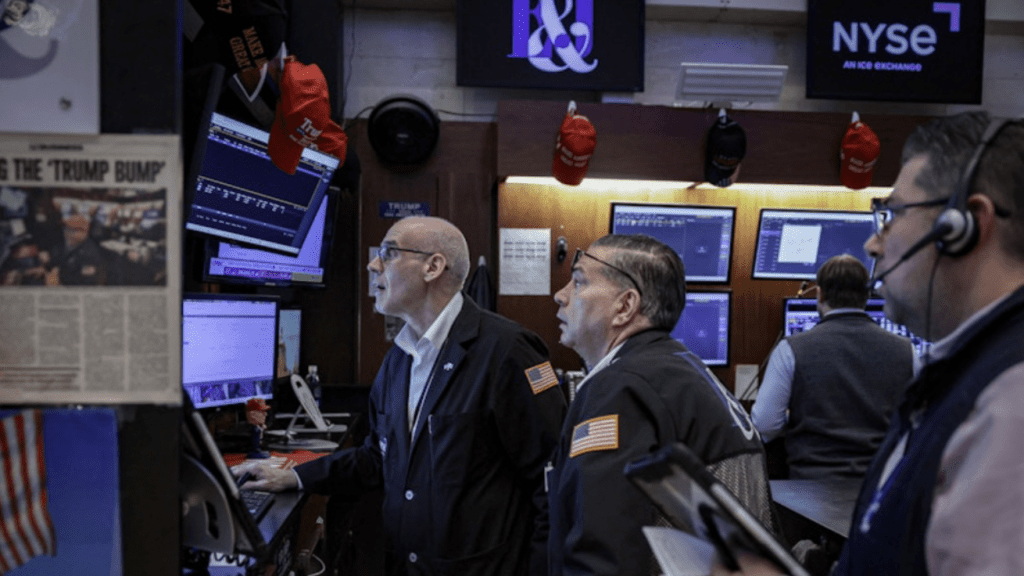
The S&P 500 and the Nasdaq fell on Monday, dragged lower by declines in megacap technology names including Alphabet, while investors also assessed developments in U.S.-Iran negotiations.
AI-driven optimism has supported Wall Street's recent rally, but analysts note that investors are increasingly questioning lofty spending by hyperscalers, who are raising funds to support infrastructure expansion.
Alphabet GOOGL.O tumbled 6.1%, while Meta META.O, Amazon AMZN.O and Microsoft MSFT.O fell between 2.3% and 4.3%.
"There's a distinguishing aspect in this market between those who are receiving the checks, like memory and DRAM names, and those who are writing the checks," said David Wagner, head of equity and portfolio manager at Aptus Capital Advisors.
"Those who are writing the checks, i.e., the hyperscalers, have underperformed for the majority part of this year."
The S&P 500 communication services index .SPLRCL fell 4.4%, weighed down by declines in Alphabet and Meta.
SpaceX SPCX.O declined almost 10%, extending losses for a third straight session after its stellar debut. The Elon Musk-led company launched its first-ever debt offering on Monday and said it had about $100.8 billion in cash and cash equivalents as of June 19.
Software shares .SPLRCIS were at an over two-month low, with ServiceNow NOW.N, Atlassian TEAM.O and Intuit INTU.O dropping between 2.3% and 4.1%.
The next test for the rally will be Micron Technology's MU.O quarterly results on Wednesday. Shares of the memory chipmaker are up nearly 300% this year.
Semiconductor shares moved higher, with the Philadelphia SE Semiconductor index .SOX up 1% at a record high. Micron and Sandisk SNDK.O gained 4% and 5.4%, respectively.
Eight out of 11 major S&P 500 sectors were in the green. Financials .SPSY and industrials .SPLRCI rose 0.7% each, signaling the rally could be broadening beyond technology stocks.
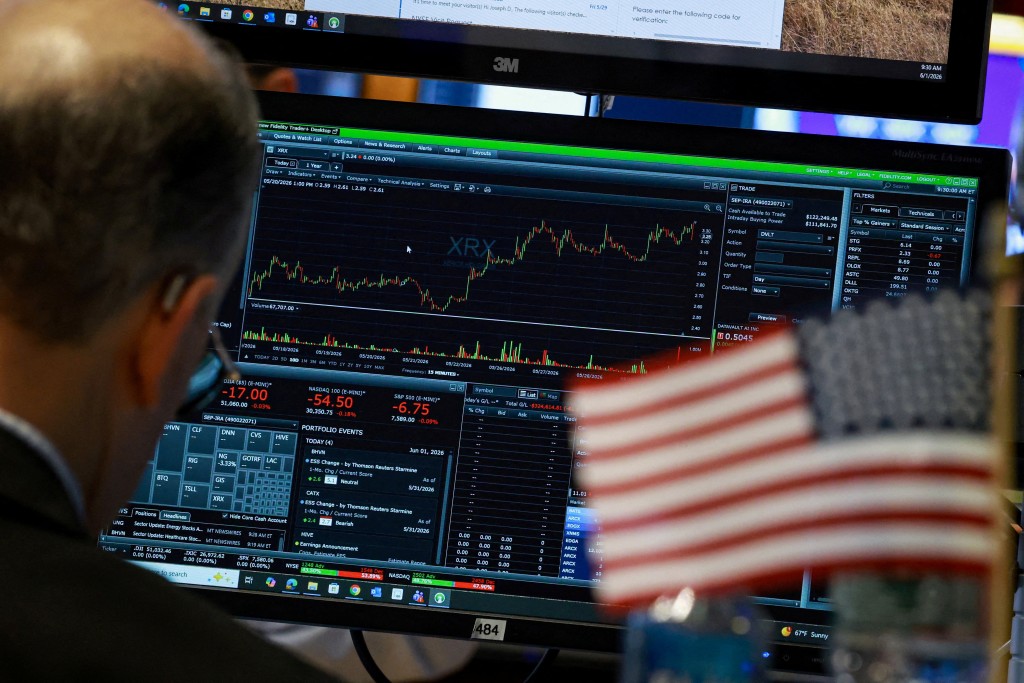
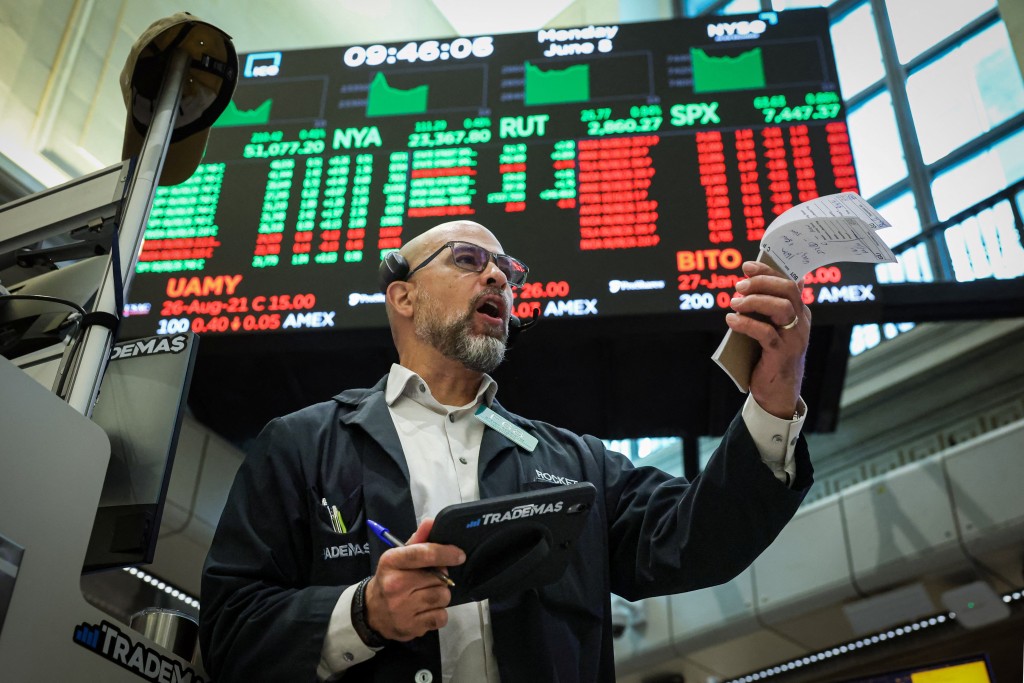
At 11:47 a.m. ET, the Dow Jones Industrial Average .DJI rose 205.47 points, or 0.40%, to 51,771.81, the S&P 500 .SPX lost 14.05 points, or 0.19%, to 7,486.53 and the Nasdaq Composite .IXIC lost 237.96 points, or 0.89%, to 26,281.87.
Meanwhile, oil prices fell as much as 2%, as Washington and Tehran agreed on a roadmap toward a final deal within 60 days.
U.S. and Iranian officials made "encouraging progress" at the first round of their talks in Switzerland that ended early on Monday, mediators said, although tensions persisted over Lebanon and the Strait of Hormuz.
Hopes of a peace deal helped the three key indexes notch significant weekly gains on Thursday, with the Nasdaq .IXIC gaining 2.4% as technology shares continued to drive markets higher.
A key focus this week will be on Thursday's personal consumption expenditures (PCE) data, the Federal Reserve's preferred gauge of core inflation. A stronger-than-expected reading could reinforce expectations of a hawkish Federal Reserve, after Chair Kevin Warsh underscored the need to curb inflation at last week's meeting.
Markets currently expect a 25-basis-point rate hike from the Fed in September, according to LSEG data. Yields on 2-year notes, which reflect near-term rate expectations, earlier touched a 16-month high of 4.236%.
Comments from central bank speakers this week, including New York President John Williams and Chicago President Austan Goolsbee, will also be closely watched for policy signals.
Among other movers, Apogee Therapeutics APGE.O jumped nearly 47% after AbbVie ABBV.O said it would acquire the biotech for $10.9 billion in cash. AbbVie rose 6.7%, while the healthcare index .SPXHC added 1%.
Declining issues outnumbered advancers by a 1.05-to-1 ratio on the NYSE and by a 1.06-to-1 ratio on the Nasdaq.
The S&P 500 posted 26 new 52-week highs and 26 new lows, while the Nasdaq Composite recorded 125 new highs and 129 new lows.
Reuters