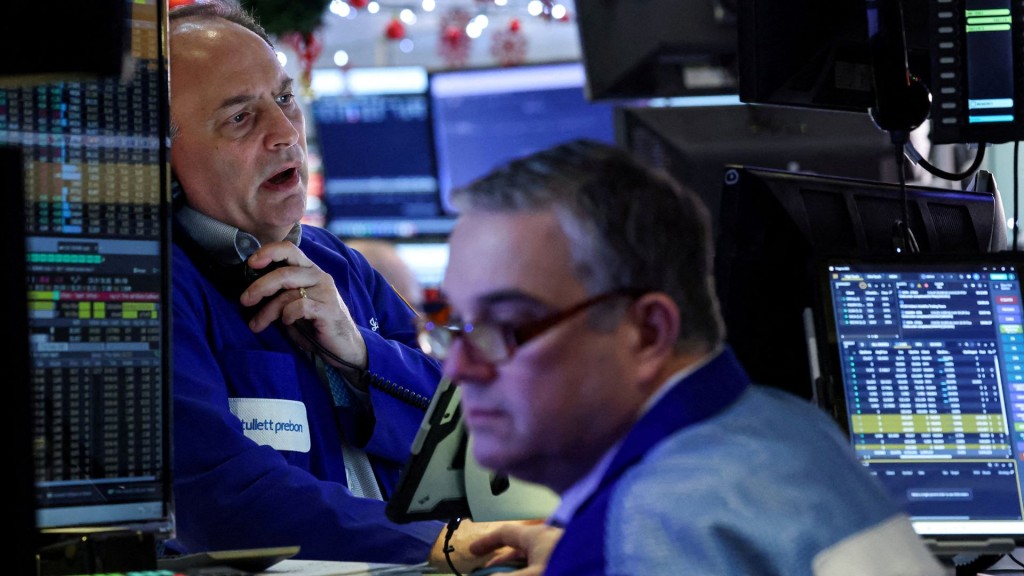
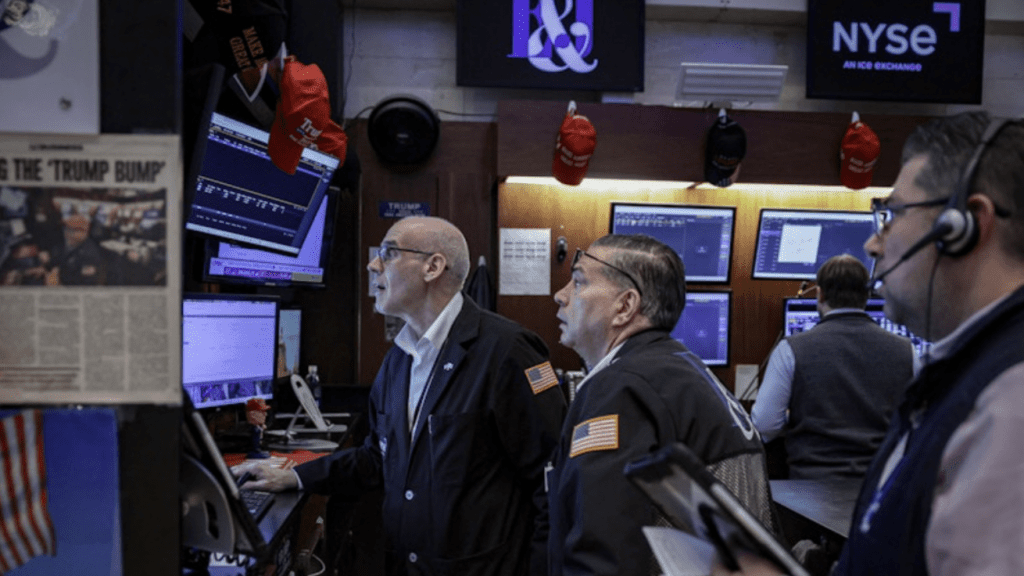
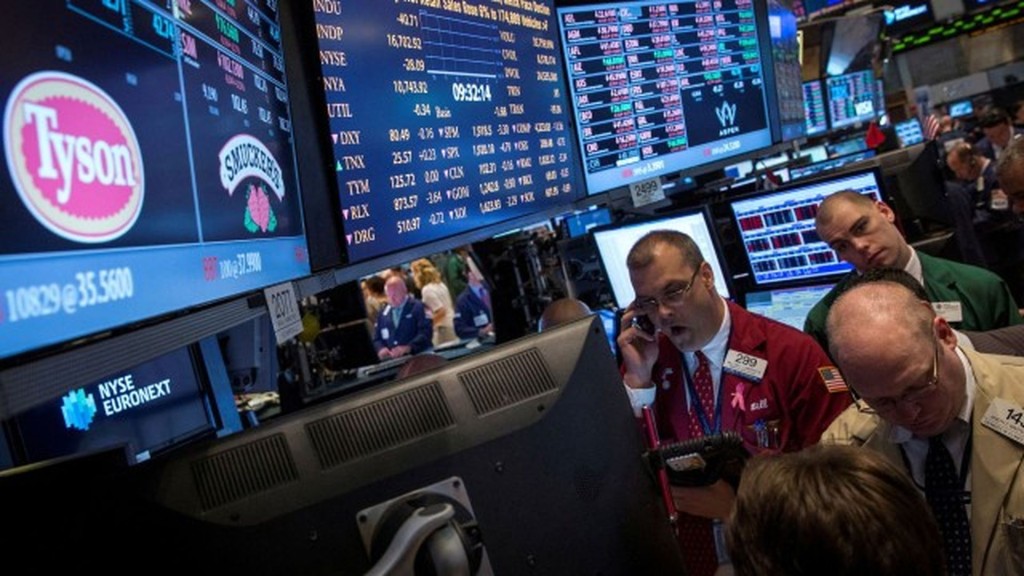
U.S. stocks fell in choppy trading on Thursday as hopes dimmed for a quick end to the Iran war, while investors grappled with a mixed bag of earnings reports as concerns resurfaced about AI-driven disruption across the software sector.
Equities had been holding near unchanged after Iran tightened control over the Strait of Hormuz. Tehran released footage of its commandos storming a huge cargo ship they claimed to have seized, while demanding the U.S. lift its naval blockade on Iranian ports.
Stocks weakened after reports that Iran's Parliament Speaker Mohammad Bagher Ghalibaf had resigned from the negotiating team. Losses were extended as oil prices shot higher after reports of air attacks in Iran.
Iran's Fars news agency said the air defenses were activated due to small drones at several locations across the country.
"We're playing musical chairs between earnings season and these war headlines that are not likely to be that great," said Jay Hatfield, CEO and CIO of Infrastructure Capital Advisors in New York.
"We had a big run, and there are people looking to take some exposure off, and using the war as an excuse is not a bad excuse."
The Dow Jones Industrial Average .DJI fell 179.71 points, or 0.36%, to 49,310.32, the S&P 500 .SPX lost 29.50 points, or 0.41%, to 7,108.40 and the Nasdaq Composite .IXIC lost 219.06 points, or 0.89%, to 24,438.50.
Markets had rallied in recent weeks on hopes a resolution to the Iran war was on the horizon, along with expectations of solid corporate earnings.
But gains have been harder to come by this week. On Monday, the Nasdaq snapped a 13-session streak of gains as optimism faded for a resolution to the war. The three major indexes are slightly lower on the week.
Oil prices holding near $100 a barrel also kept fears of rising inflation in focus.
Data on Thursday showed weekly initial jobless claims increased only marginally last week, but risks from higher prices due to the war could hamper the economy.
S&P Global's flash U.S. Composite PMI Output Index, which tracks the manufacturing and services sectors, increased this month after almost stagnating in March, but the improvement was largely due to what it said was "stock building in the face of concerns over supply availability and price hikes."
PACKED EARNINGS CALENDAR IN FOCUS
The earnings season has been largely strong so far, with 82.1% of the 123 companies that have reported earnings through Thursday morning topping analyst expectations, according to Tajinder Dhillon, head of earnings research at LSEG. The earnings growth rate of 15.6% is up from the 14.4% at the start of the month.
The S&P 500 tech index .SPLRCT, down 1.47%, was the worst performing of the 11 major S&P sectors, weighed down in part by an 8.25% drop in IBM IBM.N after revenue growth slowed in the first quarter on weakness in its software business.
Also weighing on the sector was a 17.75% plunge in ServiceNow NOW.N after it reported quarterly results and said revenue growth was dented by delays in closing government deals in the Middle East.
The results reawakened concerns that the software sector's traditional business models could be upended by new AI tools, and the S&P 500 software and services index .SPLRCIS dropped 5.09% on the session, its biggest daily percentage drop since January 29.
Tesla TSLA.O shares fell 3.56% after the company raised its spending plan to more than $25 billion for the year.
Car-rental company Avis Budget's CAR.O shares plummeted about 48.38% and recorded their steepest two-day drop ever, after a meteoric rally that was reminiscent of the "meme-stock" craze.
On the flip side, Texas Instruments TXN.O surged 19.43%, its biggest daily jump since October 2000 after forecasting second-quarter revenue and profit above Wall Street expectations.
Declining issues outnumbered advancers by a 1.38-to-1 ratio on the NYSE and by a 2.03-to-1 ratio on the Nasdaq.
The S&P 500 posted 41 new 52-week highs and eight new lows while the Nasdaq Composite recorded 124 new highs and 103 new lows.
Volume on U.S. exchanges was 17.41 billion shares, compared with the 18.33 billion average for the full session over the last 20 trading days.
Reuters