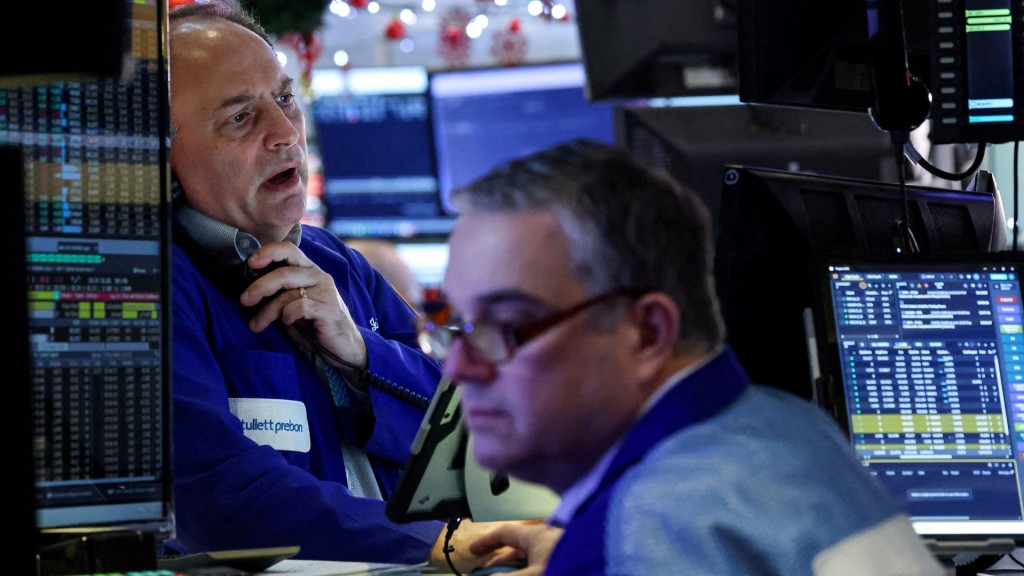
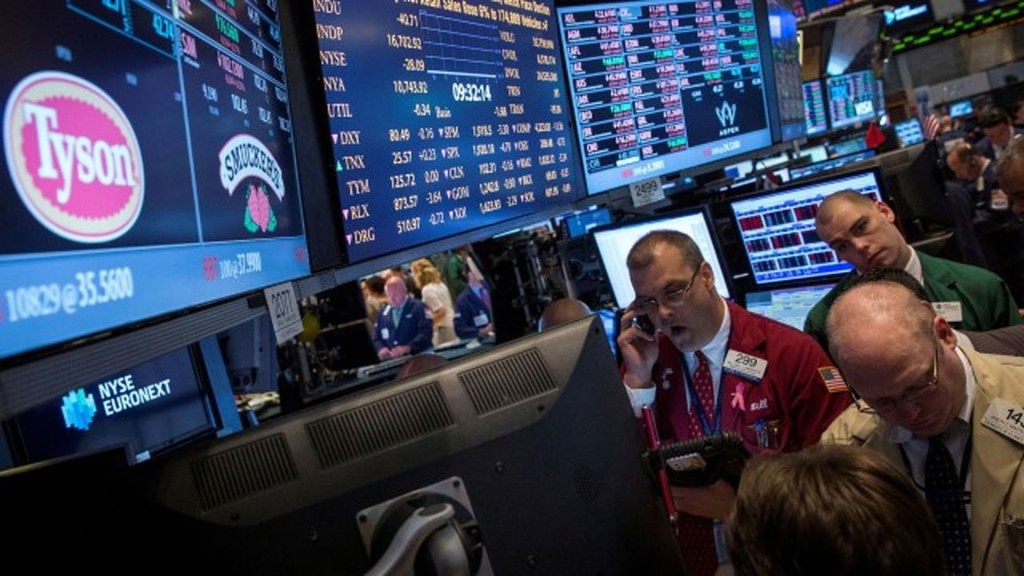
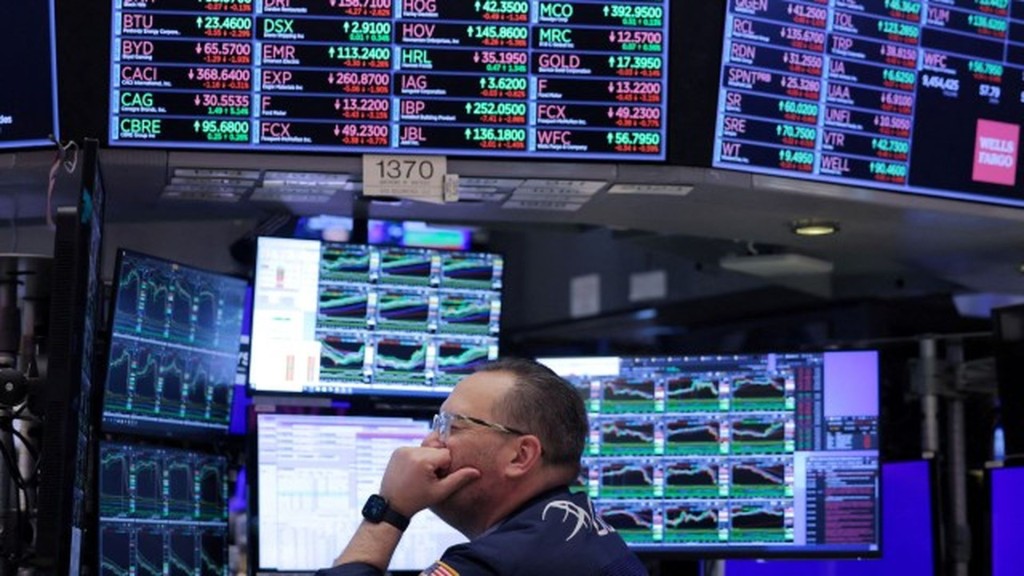
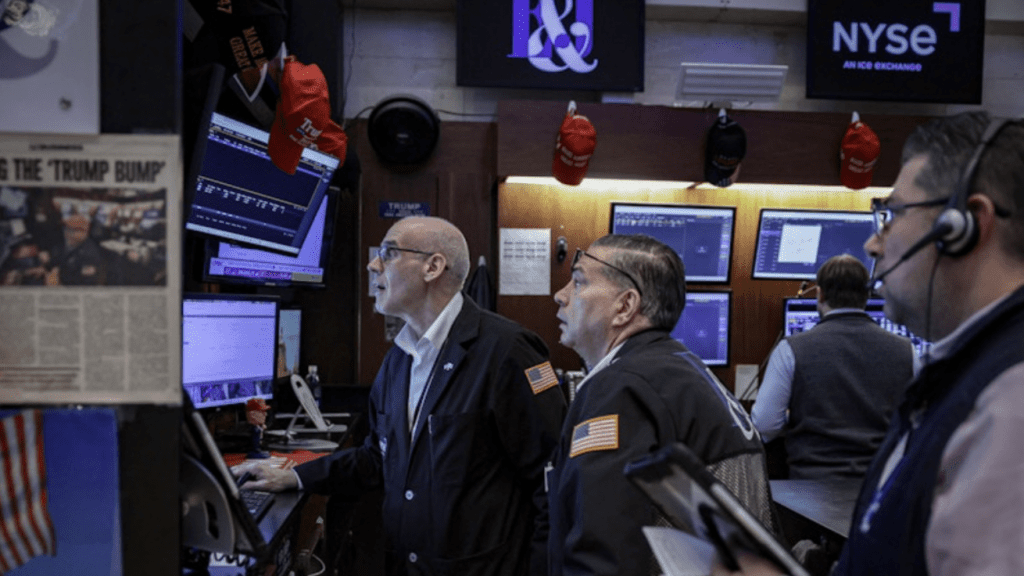
U.S. stocks ended mixed on Tuesday amid signs of progress in negotiations as the minutes ticked down to President Donald Trump's deadline for Iran to open the Strait of Hormuz.
In the last hour of trading, all three major U.S. stock indexes recovered from steep losses earlier in the session after Pakistan's Prime Minister Shehbaz Sharif said on X that diplomatic efforts for peaceful settlement of the ongoing war in the Middle East were progressing steadily while he urged Trump to extend his Iran deadline for two weeks and requested that Iran open the Strait for the same timeframe as a goodwill gesture.
Minutes before the closing bell, the S&P 500 and the Nasdaq reversed their losses to close slightly higher, marking their fifth straight session of gains.
"Investors are calibrating as they try to read into the president's messaging and predict the degree (to which) he will follow through with some of his rhetoric in terms of the ultimatum," said Matthew Keator, managing partner in the Keator Group, a wealth management firm in Lenox, Massachusetts. "How much of it is posturing, and how much of it is telegraphing what he will actually do?"
"Investors need to make sure that they make whatever necessary adjustments for their personal circumstances," Keator added.
While attacks on Iran intensified, the country had not yet allowed traffic to resume through the crucial Strait of Hormuz, despite Trump's threats if a deal is not reached by the end of Tuesday.
Oil prices have surged since the United States and Israel declared war on Iran on February 28, rattling markets, igniting fears of rising inflation and dampening hopes that the U.S. Federal Reserve will cut interest rates this year.
Front-month U.S. WTI crude CLc1 backed off from session highs to settle up 0.5%, while Brent crude LCOc1 settled down 0.5%.
Chicago Fed President Austan Goolsbee said he was worried that the war would drive inflation higher while dampening the economy, resulting in a stagflationary shock and putting the central bank in a bind.
On the economic front, a report from the Commerce Department showed new orders for durable goods decreased more than analysts expected in February, before the onset of the war.
Later in the week, the Labor Department's consumer price index (CPI) will provide a glimpse at the extent to which the war on Iran has affected inflation.
The Dow Jones Industrial Average .DJI fell 85.42 points, or 0.18%, to 46,584.46, the S&P 500 .SPX gained 5.02 points, or 0.08%, to 6,616.85 and the Nasdaq Composite .IXIC gained 21.51 points, or 0.10%, to 22,017.85.
Of the 11 major sectors of the S&P 500, communication services .SPLRCL enjoyed the largest percentage gains, while consumer staples .SPLRCS were the biggest laggards.
Dow Transports .DJT and semiconductors .SOX were clear outperformers on the day.
UnitedHealth UNH.N jumped 9.4% and peers Humana HUM.N and CVS Health CVS.N rose 7.9% and 6.7%, respectively, after the U.S. government announced on Monday it would raise payments to private insurers offering Medicare Advantage plans to older adults, an increase from the near-flat change proposed earlier.
Shares of Apple AAPL.O dropped 2.1% after Nikkei Asia reported that the gadget maker's long-awaited foldable phone is encountering engineering setbacks.
Chipmaker Broadcom AVGO.O advanced 6.2% after signing a long-term deal with Alphabet GOOGL.O to develop its AI chips and other components.
Intel INTC.O gained 4.2% after the company said it would join Elon Musk's Terafab AI chip complex project along with SpaceX, Tesla TSLA.O and xAI.
Declining issues outnumbered advancers by a 1.05-to-1 ratio on the NYSE. There were 84 new highs and 78 new lows on the NYSE.
On the Nasdaq, 2,054 stocks rose and 2,627 fell as declining issues outnumbered advancers by a 1.28-to-1 ratio.
The S&P 500 posted 3 new 52-week highs and 9 new lows while the Nasdaq Composite recorded 54 new highs and 119 new lows.
Volume on U.S. exchanges was 18.78 billion shares, compared with the 19.35 billion average for the full session over the last 20 trading days.
Reuters