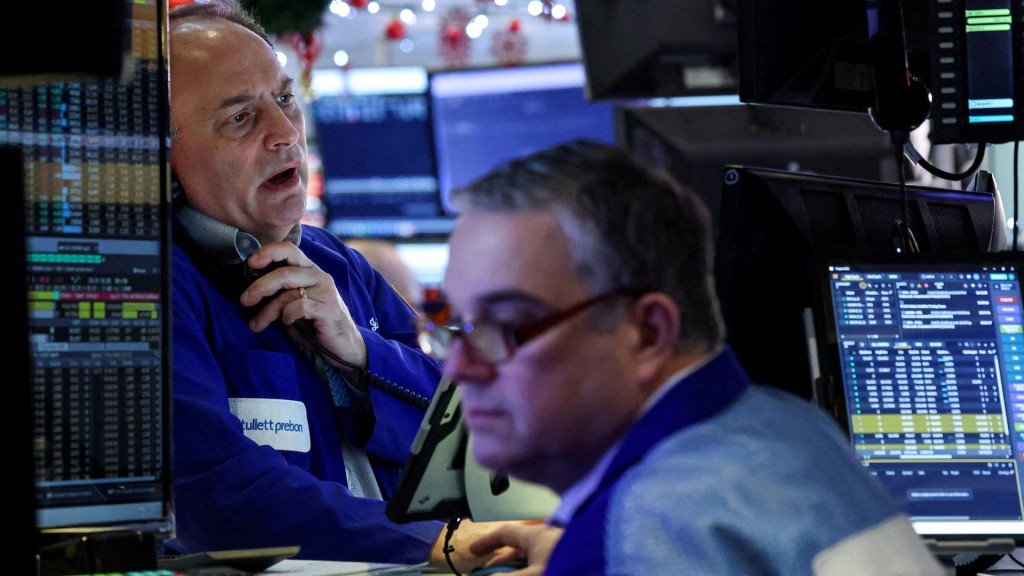
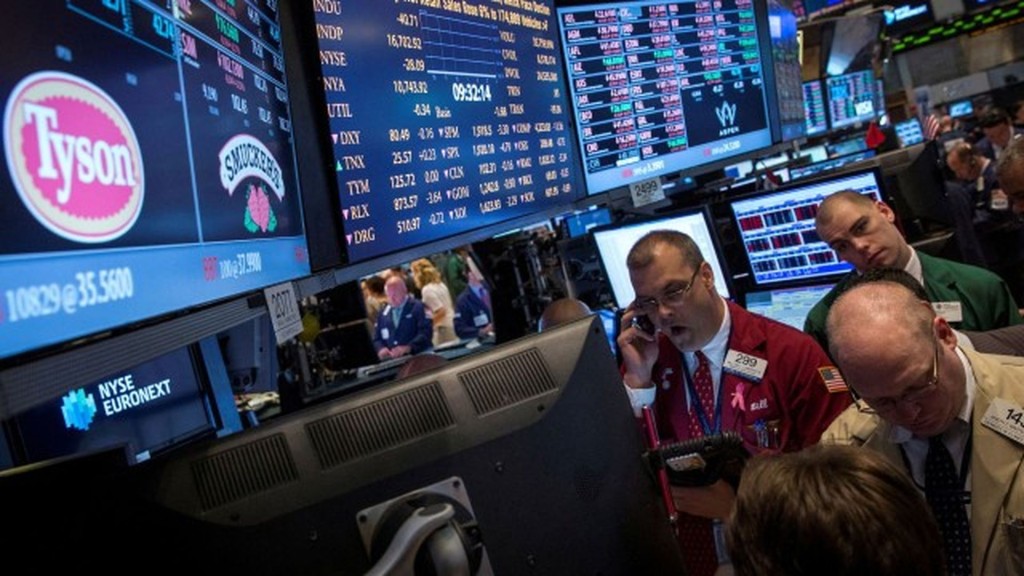
U.S. stocks closed sharply higher on Wednesday after a last-minute, two-week ceasefire agreement between the United States and Iran lifted investor sentiment.
All three major U.S. stock indexes surged at the opening bell, muscled higher by a broad relief rally after a deal brokered by Pakistan resulted in a two-week suspension of the war. The conflict, which began with joint U.S.-Israeli strikes on Iran on February 28, has sent world markets reeling, disrupted global oil supply and sparked fears of rising inflation.
A senior Iranian official told Reuters that the crucial Strait of Hormuz, through which one-fifth of the world's oil is shipped, could be reopened on Thursday or Friday ahead of peace talks if the countries agreed upon a framework for the ceasefire.
"It’s an expected move today and there's still a lot of work to do, but I think the market is quite relieved," said Mike Dickson, head of portfolio management at Horizon Investments in Charlotte, North Carolina. "The other side of this coin could have been a lot worse and frankly there's a good reason to think that it was possible too. So you're seeing that relief rally in the hardest-hit areas of the market."
The S&P 500 shot above its 200-day moving average for the first time since mid-March, while the Dow registered its largest single-session percentage gain since April 9, 2025.
Economically sensitive Dow Transports .DJT touched an all-time high, while the Russell 2000 .RUT outperformed its larger-cap peers. Chips .SOX jumped 6.3%.
The rally was not confined to U.S. indexes. European shares.STOXX rose 3.9%, while MSCI's World index .MIWD00000PUS was up over 3%. Both indexes logged their biggest one-day percentage gains in a year.
"Most other countries were more exposed to an energy shock and a food shock than the U.S.," said Ross Mayfield, investment strategy analyst at Baird in Louisville, Kentucky. "So this is a much bigger near-term relief for international stocks."
The CBOE Market Volatility index .VIX, a barometer of investor anxiety, dipped to its lowest level since the beginning of the war.
Front-month WTI CLc1 and Brent LCOc1 crude futures fell 16.4% and 13.3%, respectively, both settling below $100 per barrel.
Minutes from the U.S. Federal Reserve's March meeting, released on Wednesday, showed a growing openness to rate hikes as policymakers raised their 2026 inflation outlook due to war-related oil shock.
The Dow Jones Industrial Average .DJI rose 1,326.33 points, or 2.85%, to 47,910.79, the S&P 500 .SPX gained 165.98 points, or 2.51%, to 6,782.83 and the Nasdaq Composite .IXIC gained 617.15 points, or 2.80%, to 22,635.00.
Of the 11 major sectors in the S&P 500, eight jumped 2% or more, with industrials .SPLRCI leading the pack. Energy stocks, dragged down by falling crude prices, were the sole percentage losers, dropping 3.7%.
Sectors that have suffered a beating since the war began enjoyed a robust bounceback. Commercial airlines .SPCOMAIR jumped 5.7%, travel and leisure-related stocks .SPCOMHOTL shot up 5.2% and homebuilders .SPCOMHOME rose 4.9%.
Delta Air Lines DAL.N gained 3.8%, despite its disappointing second-quarter profit forecast. The commercial air carrier declined to update its annual outlook due to uncertainties related to the Iran war.
Delta peers Southwest Airlines LUV.N and United Airlines UAL.O advanced 6.7% and 7.9%, respectively.
Cruise operator Carnival CCL.N added 11.2% and Norwegian Cruise Line NCLH.N rose by 7.6%.
Levi Strauss LEVI.N jumped 10.7% after the apparel maker raised its annual sales and profit forecasts.
Advancing issues outnumbered decliners by a 5.67-to-1 ratio on the NYSE. There were 197 new highs and 45 new lows on the NYSE.
On the Nasdaq, 3,582 stocks rose and 1,174 fell as advancing issues outnumbered decliners by a 3.05-to-1 ratio.
The S&P 500 posted 21 new 52-week highs and 5 new lows while the Nasdaq Composite recorded 133 new highs and 57 new lows.
Volume on U.S. exchanges was 20.64 billion shares, compared with the 19.42 billion average for the full session over the last 20 trading days.
Reuters