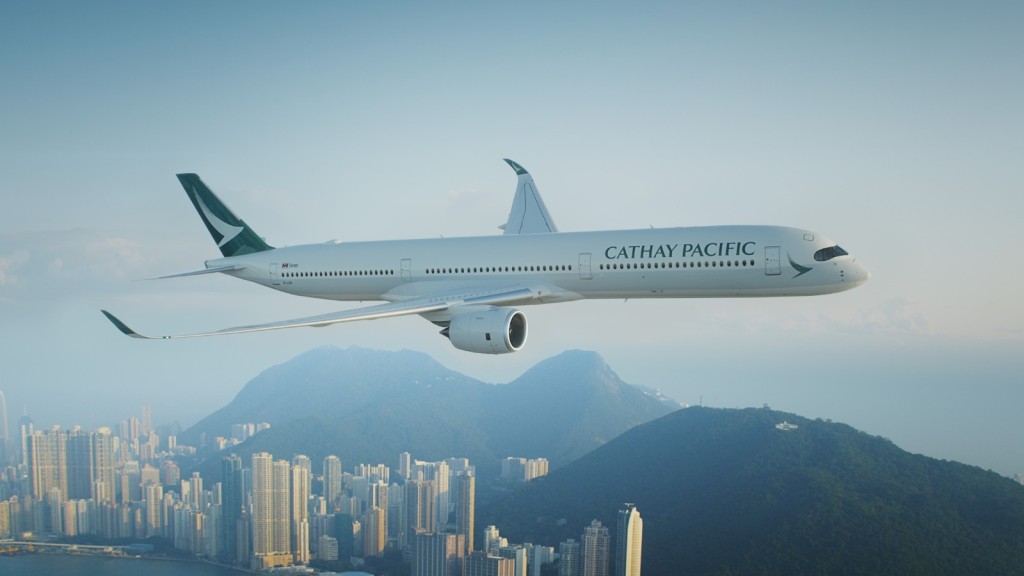
Cathay Pacific Airways (0293) recorded a better-than-expected 9.5 percent growth in net profit last year despite a nearly HK$1 billion loss from budget airline HK Express.
Increased passenger numbers and strong cargo demand lifted profit to HK$10.8 billion, compared to market estimates of HK$10.05 billion.
The company also expects to grow its passenger capacity by 10 percent this year as it adds frequencies and destinations to its network amid geopolitical uncertainties that lead to unexpected shifts in passenger and cargo traffic flows, as well as jet fuel prices.
Cathay raised its second interim dividend by 30.6 percent to 64 HK cents, bringing the full-year payout up by 21.7 percent to 84 HK cents.
Revenue for the year jumped 11.9 percent to HK$116.8 billion as flagship carrier Cathay Pacific’s passenger numbers soared 26.5 percent to 28.9 million, lifting passenger revenue 15.8 percent to HK$72.5 billion.
Its shares jumped by 5 percent following the results announcement.
Low-cost carrier HK Express’ loss before net finance charges and taxation widened 3.9 times to HK$996 million.
Short-term factors, including changes in customer preferences for travel destinations, launching new routes that will take time to mature, and some aircraft remaining grounded due to engine issues, weighed on its earnings, the firm said.
Although passenger revenue increased by 6.7 percent to HK$6.3 billion, load factor slid 3.8 percentage points to 79.6 percent and yield fell by 15.3 percent to 44.2 HK cents.
Cathay said it is taking a long-term view and a path to sustained profitability can be expected based on the low-cost carrier business model, as it continues to grow and increase its efficiencies in the coming years.
It has been taking measures to elevate the resilience of the business and is starting to see some positive impact, with the first two months of 2026 getting off to an encouraging start, the group said.
Net fuel cost jumped by 11 percent to HK$30.6 billion last year as flight capacity rose. It booked a HK$707 million loss from oil hedging compared to a HK$35 million gain in 2024.
Cathay said it does not speculate on oil prices but uses hedging to manage short to medium term volatility in oil prices and therefore its fuel costs. Hedging is not risk-free, it stressed.
On the cargo front, Cathay Cargo’s revenue inched up 1.2 percent to HK$24.3 billion despite load factor falling 1.1 percentage points to 58.8 percent and yield by 4.6 percent to HK$2.69.
The company said it paid a total of around 11 weeks of eligible pay in the form of a discretionary bonus and profit sharing for last year to staff in addition to a salary increase introduced at the beginning of 2026.