Read More
Asia Pacific nations including China, Japan and South Korea signed the world’s largest regional free-trade agreement today.
ADVERTISEMENT
SCROLL TO CONTINUE WITH CONTENT
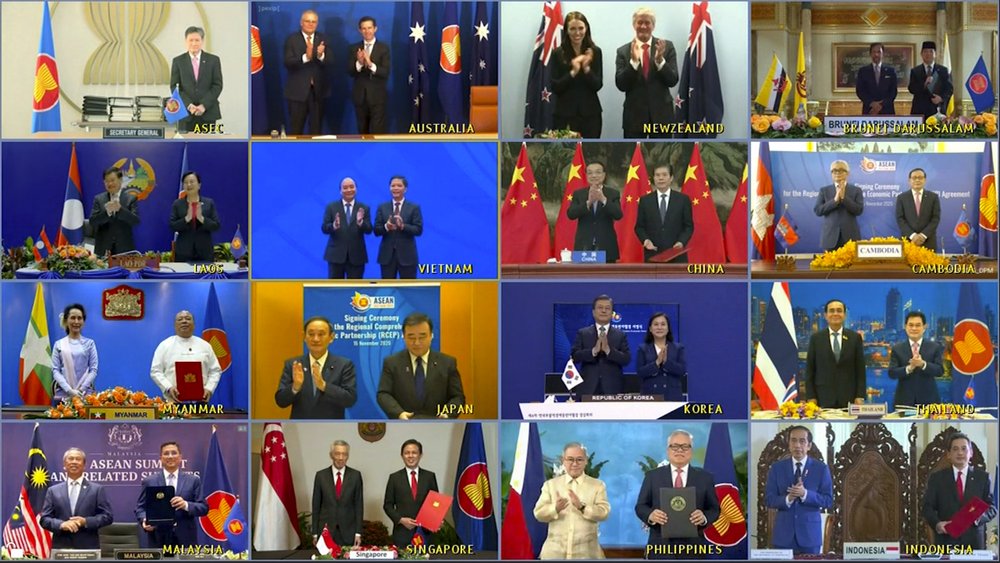
Top officials from 15 nations that also include Australia, New Zealand and the 10 members of the Association of Southeast Asian Nations inked the Regional Comprehensive Economic Partnership, or RCEP – nearly a decade in the making – on the final day of the 37th Asean Summit hosted virtually by Vietnam, Bloomberg reports.
“The completion of negotiations is a strong message affirming Asean’s role in supporting the multilateral trade system,” Vietnamese Prime Minister Nguyen Xuan Phuc said ahead of the virtual signing ceremony.
The agreement will contribute to “developing supply chains that have been disrupted due to the pandemic as well as supporting economic recovery,” he said.
Supporters of the trade pact, which covers 2.2 billion people with a combined GDP of US$26.2 trillion, said it will bolster pandemic-weakened economies by reducing tariffs, strengthening supply chains with common rules of origin, and codifying new e-commerce rules.
Among the benefits of the agreement include a tariff elimination of at least 92 percent on traded goods among participating countries, as well as stronger provisions to address non-tariff measures, and improvments in areas such as online consumer and personal information protection, transparency and paperless trading, according to a statement issued by Singapore’s Ministry of Trade and Industry.
It also includes simplified customs procedures while at least 65 percent of services sectors will be fully open with increased foreign shareholding limits.
Negotiators pushed the deal across the finish line after India surprised participants late last year by abandoning the agreement.
Prime Minister Narendra Modi said he pulled out over concerns about how RCEP would affect the livelihoods of Indians, particularly the most vulnerable. India, though, will be allowed to rejoin the trade pact.
“The clause allowing India to join at a later date is symbolic and shows China’s desire to build economic bridges with the region’s third-largest economy,” said Shaun Roache, Asia Pacific chief economist at S&P Global Ratings.
Malaysia recognizes the difficulties India is facing, Prime Minister Muhyiddin Yassin said in a speech today. “Nevertheless, we wish to express our continuous support and welcome its accession to RCEP in the future.”
Whether RCEP changes regional dynamics in favor of China depends on the U.S. response, experts said.
The agreement underscores how U.S. President Donald Trump’s 2017 decision to withdraw from a different Asia Pacific trade pact -- the Trans-Pacific Partnership or TPP – diminished America’s ability to offer a counterbalance to China’s growing regional economic influence.
That challenge will shift to President-elect Joe Biden if, as expected, he’s officially named the winner of the November 3 election.
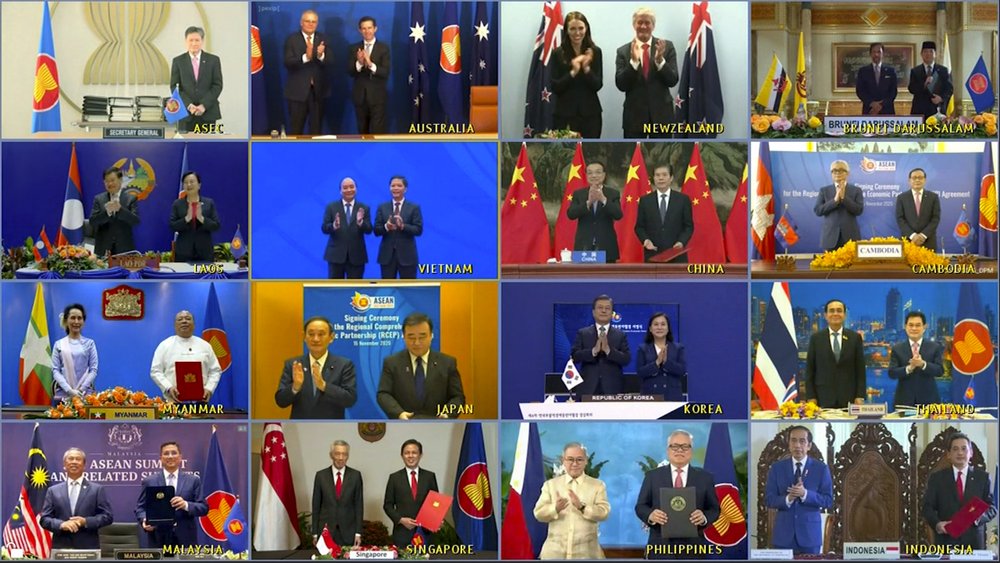
This image made from a teleconference provided by the Vietnam News Agency (VNA) shows the leaders and trade ministers of 15 Regional Comprehensive Economic Partnership countries today.