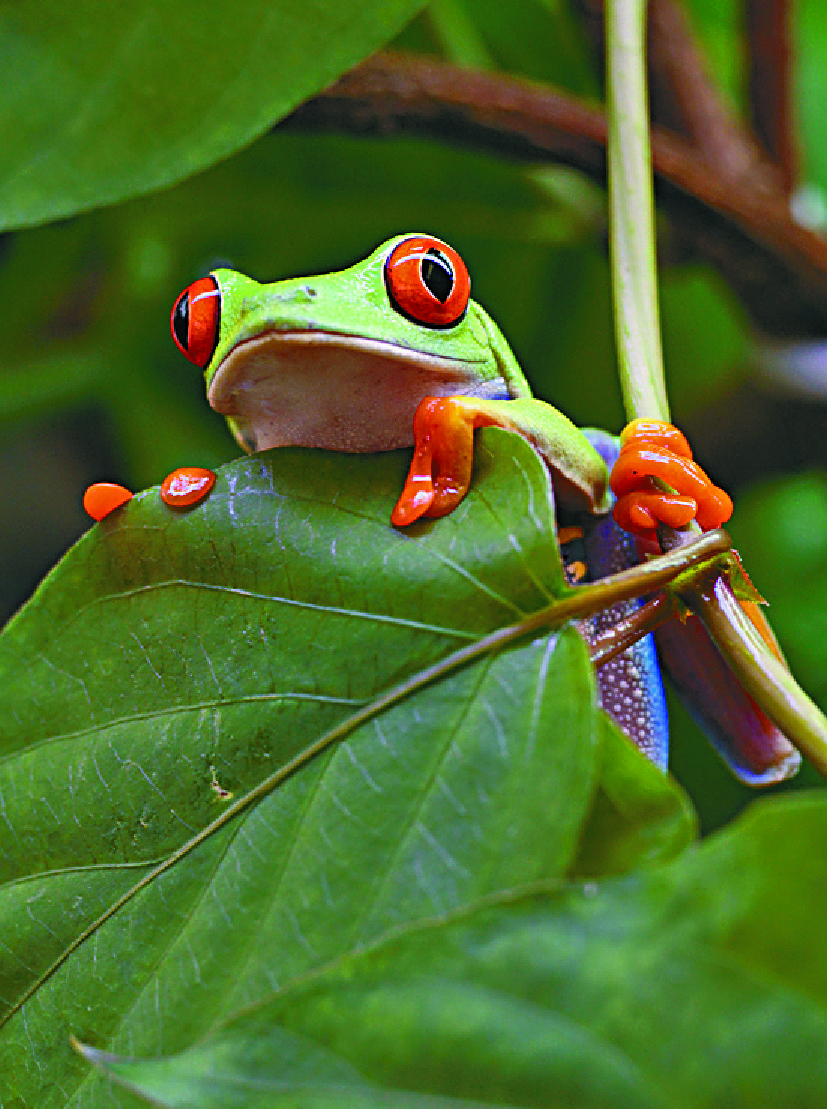
It's easy to become attracted to a photo of a red-eyed tree frog because of its eye-catching rainbow body. But what about its colorful rainforest habitat?
The iconic appearance of the red-eyed tree frog comprises many hues.
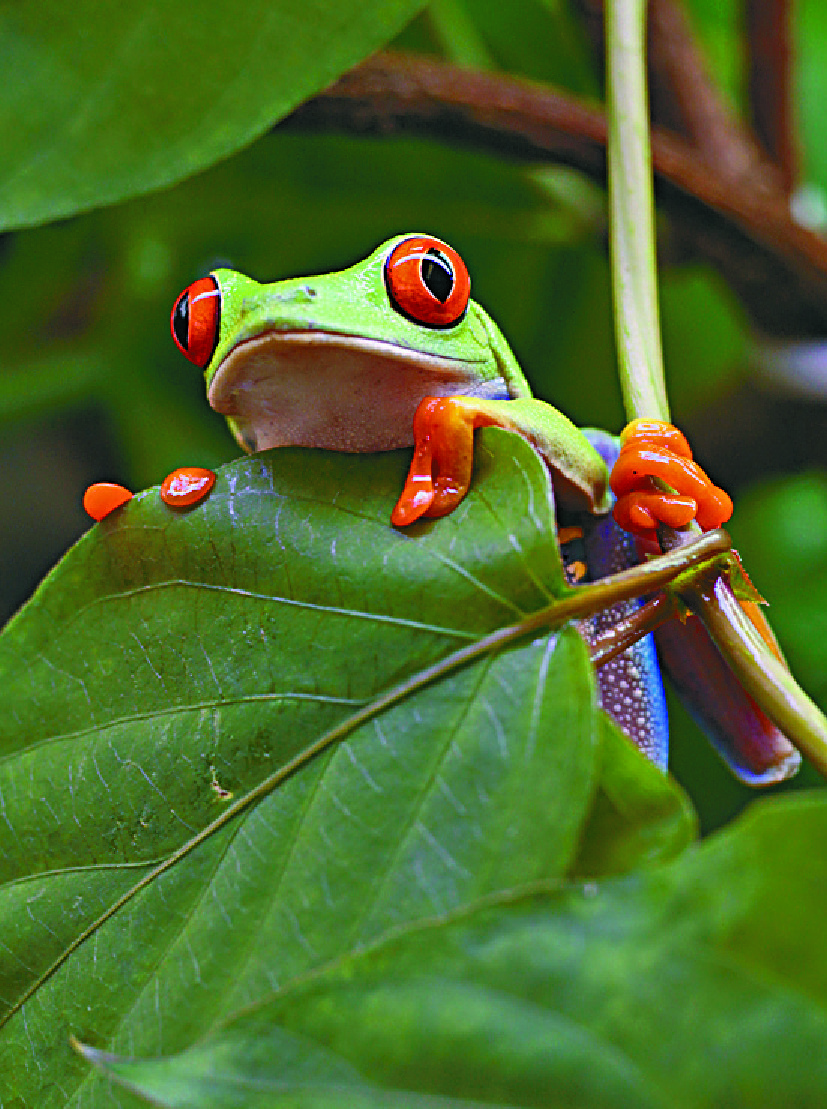
Its huge eyes are gleaming red, and bulge with narrow vertical pupils. Most of the upper part of its body is leafy green to dark green, flanked with beautiful highlights of blue or purple and separated by strokes of cream or yellow. Its dainty, half-webbed hands and feet are orange.
With a length of five to seven centimeters, the nocturnal amphibian is mainly found in the tropical lowland and mountainous forests of Central America.
Suction cups on its toe pads allow it to climb and cling onto branches, tree trunks and leaves.
As the underside of leaves provide excellent hideouts from predators, they act as frog shelters during the day.
Hidden among the green foliage, the frog waits for insects and other animals to prey on, including crickets, moths, flies, grasshoppers or even smaller frogs. Some young frogs may even change their color from green by day to purple or brown at night for better camouflage.
There is another possible reason for the frog's bright disguise. Should a predator approach, its big, red eyes would suddenly pop open, giving the predator quite a shock. This split-second surprise may buy time for the frog to leap and escape from danger.
To red-eyed tree frogs, a tree or a shrub near a pond is the best home for their family group to thrive.
The species usually breed during the wet season between May and November every year and look for water bodies with overhanging vegetation.
The female carries the smaller male on her back and submerges herself in water to hydrate her bladder, which creates the jelly mass surrounding her clutches of eggs.
As the mature eggs emerge, the male fertilizes them and stays in position until all eggs have been laid.
This mating position, known as amplexus, may last one day or longer.
On a single night, the female may lay several clutches of eggs, of about 40 each, usually on a broad leaf. Each egg is wrapped in a clear jelly coat. Each clutch, in turn, is cushioned by more jelly which keeps it extra moist.
As soon as they hatch, the tadpoles drop from the leaf into the water below. Tadpoles can live out of water for at most 20 hours so those that do not make it to the water instantly will try to wiggle their way to it, or hope to be washed into the pond if rain comes.
During the hatching phase, the red-eyed tree frog shifts its habitat for the first time, from an aerial to aquatic existence.
The cycle of life starts again as the tadpoles grow into frogs and resume life up in the trees once more.
The red-eyed tree frogs are currently listed in Appendix II in the Convention on International Trade in Endangered Species of Wild Fauna and Flora.
Although they are not classified as an endangered species, their lives are still at risk if climate change and deforestation worsen.
Deforestation caused by humans may pose a threat to their habitat. Adopting more sustainable living habits and choosing forest products with Forest Stewardship Council certification can help protect forests.
Come and visit these amazing amphibians at the Expedition Trail of Ocean Park and appreciate how amazing the creatures are as they apply adaptations in life.