Read More













It will soon be the Year of the Rat and this rodent will receive lots of attention. When talking about rodents, people usually think of rats, but seldom of capybaras.
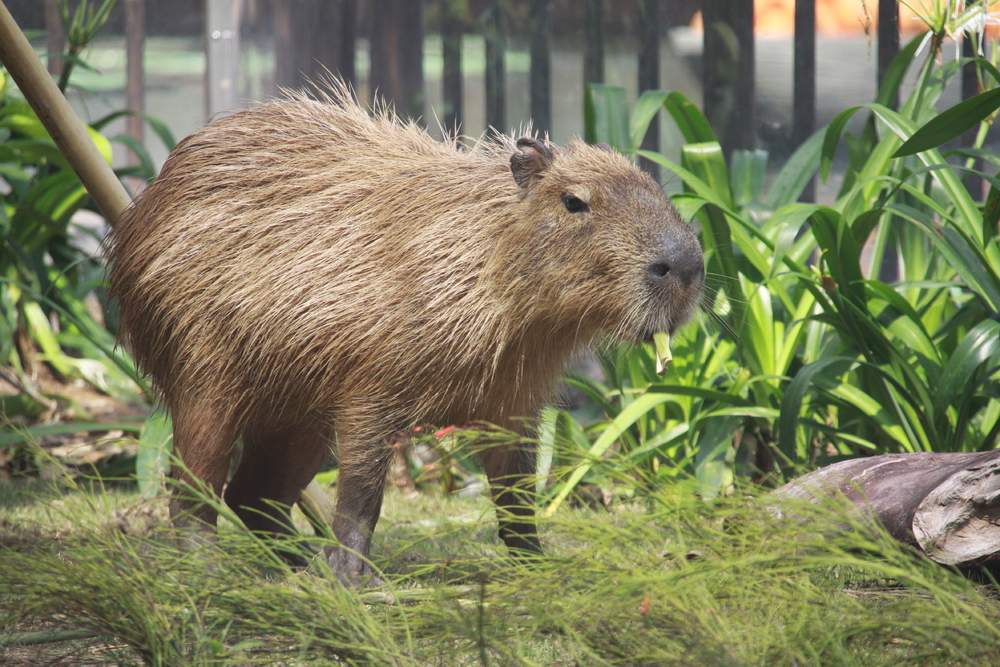
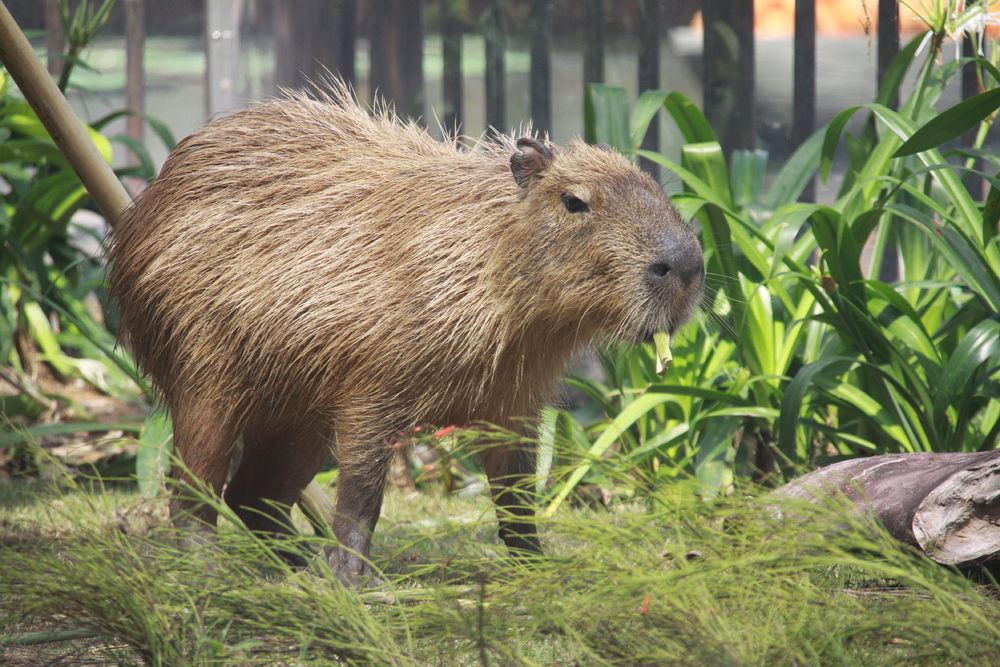
Looking similar to pigs, or perhaps enormous guinea pigs, capybaras are in fact the world's largest species of rodents. They can weigh from 35 to 66 kilograms and grow more than 1.25 meters long.
Capybaras are native to the northern and central parts of South America, mainly in areas with a constant supply of freshwater, such as marshes, or lands along rivers and streams. As gregarious animals, they live in small groups of about 10 to 20 individuals. Yet, during the dry seasons, the ensemble may grow to include 100 individuals if a water source is guaranteed.
The gigantic rodents are semi-aquatic mammals. Their body are well-adapted to living on land and in water. Fatty tissues keep them buoyant in water; while their feet are partially webbed like some aquatic birds, allowing them to paddle through water or swamps.
With nose, eyes and ears on the upper part of their heads, capybaras can submerge the rest of their body under water for long periods. By exposing only these key features above water, they can stay alert to potential dangers surrounding them. Capybaras can hold their breath underwater for up to five minutes.
More importantly, the water bath helps them stay cool from the heat. Sometimes, they feel so comfortable that they can fall asleep in water. Their bodies are covered in brittle brown fur that dries quickly once out of water, so that they are ready to move freely on land.
Among some Amazonian natives, capybaras are called "kapiyva," meaning "masters of the grasses."
Capybaras are herbivores feeding on grasses and aquatic plants. Their teeth are adapted for this diet as they continuously grow to replenish damaged ones.
Like camels, they grind their food from side to side. An adult capybara can consume 2.7 to 3.6 kilograms of fresh grass a day.
They even eat their own feces. Beneficial bacteria in their faeces help their stomach break down the high fiber contents in their food, allowing them to maximize protein and vitamin intake.
The highly vocal animals communicate with each other through a range of sounds from purring, barking, grunting to teeth-chattering.
Each sound denotes a different meaning and helps capybaras keep track of their group members and their young ones.
During mating, female capybaras take the dominant role. If they want to welcome a suitor, they will whistle through their nose.
The entire copulation process takes place in the water. If a female is not pleased with her suitor, it will submerge itself or simply walk out of the water.
Upon successful intercourse, baby capybaras will be born in 130 to 150 days. The new-borns are brought up in groups, and are nursed by multiple females. They are well developed at birth and can be fed on grasses even at the first few weeks of life. Infant capybaras are also fed on mothers' milk until about 16 weeks.
But capybaras' lives are threatened by human activities. Some traders hunt them for their meat and skin, which are valuable to produce leather, while some farmers kill capybaras as they compete with livestock in farms for food. Furthermore, their natural habitats are extensively destroyed due to agricultural use.
While capybaras are not listed as endangered, it is important to protect them before it is too late.
The first step for conservation is to get to know more about these animals. For a closer encounter, visit these cute giant rodents at the Rainforest Expedition Trail in Ocean Park Hong Kong.