Read More

The mathematician who wore Cartier: Wang Hong's Fields moment
29-07-2026 19:25 HKT




China's Communist Party elite hold key talks on governance
26-10-2026 13:02 HKT

New quakes strike Tibet after deadly 7.0
25-10-2026 21:23 HKT


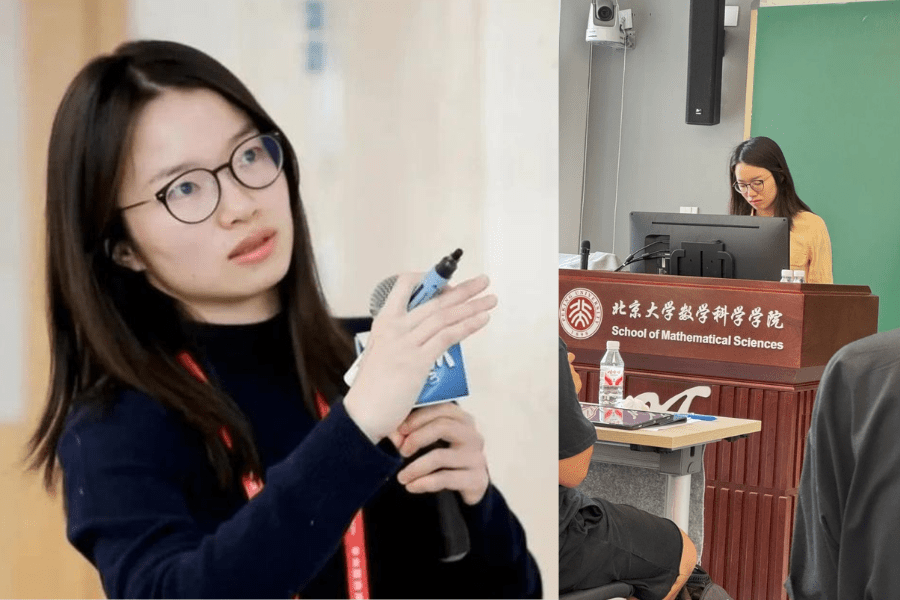
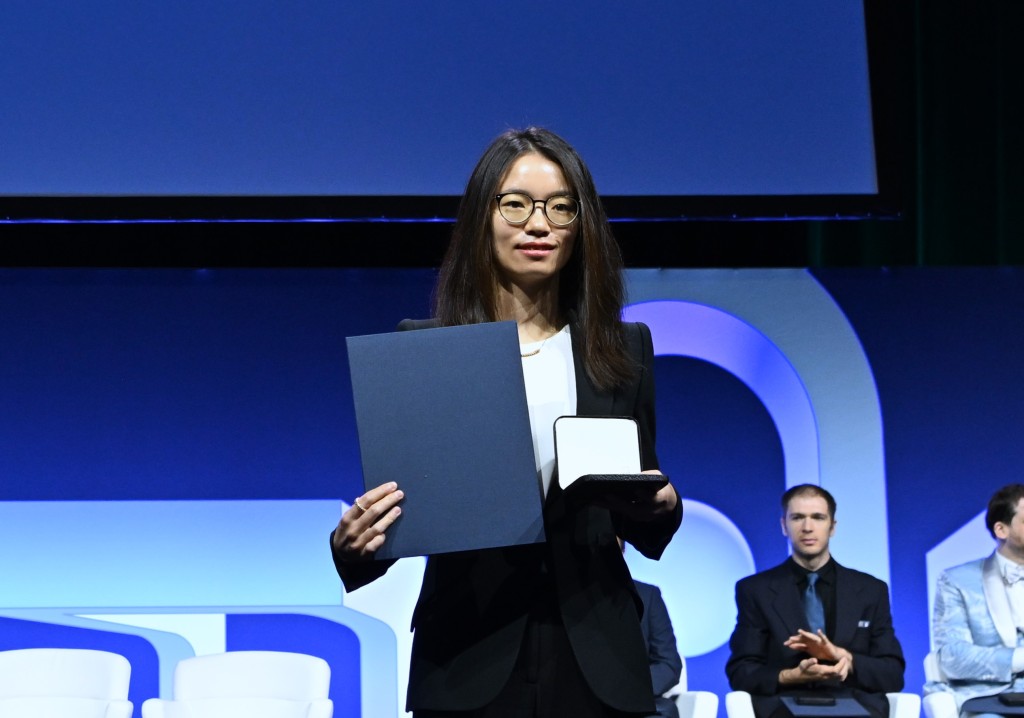
Presenting a solution to the century-old mystery of the Kakeya Conjecture, rising Chinese mathematician Wang Hong has placed her name in the running for the Fields Medal—also known as the "Nobel Prize of Mathematics."
The Kakeya Conjecture, first proposed by Japanese mathematician Sōichi Kakeya in 1917, poses the question: "What is the smallest possible area required to rotate a needle in every direction?"
While some have humorously suggested that the question might have been inspired by the sight of samurai maneuvering their weapons in tight quarters, the conundrum has been in the mathematicians' minds for more than a century.
However, the 34-year-old mathematician at the Courant Institute at New York University, in collaboration with Joshua Zahl, an associate professor at the University of British Columbia, presented their solution in a groundbreaking 127-page paper on the research archive arXiv in February, sending waves through the global math community.
Terence Tao, often dubbed the "Mozart of Math" and also a winner of the Fields Medal, praised Wang's work as "perfecting a perpetual motion machine with magical quality", introducing new insights in geometric measure theory.
Another well-known mathematician, Nets Katz from Rice University described the discovery as a "once-in-a-century mathematical breakthrough."
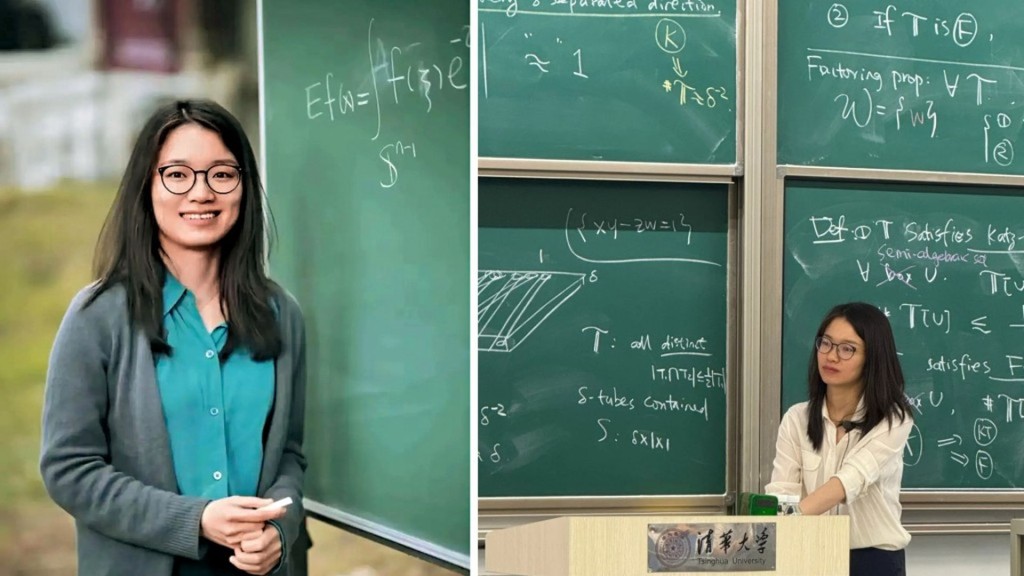
Introducing Wang at a seminar at Tsinghua University, renowned Chinese mathematician and Medalist professor Yau Shing-tung remarked that Wang is "one of the greatest and most significant scholars of the younger generation in China," believing she could be a strong candidate for the Fields Medal if her work passes peer review.
Born in 1991 in Guilin, Guangxi, Wang faced early challenges when a household accident prevented her from attending kindergarten with a severe arm burn at age four.
To keep her engaged at home, her parents introduced her to primary school materials, where she exhibited remarkable learning capabilities, skipping a grade in primary school just a year later.
Despite attending the prestigious Guilin Middle School, Wang was drawn to extracurricular readings rather than homework, still managing to rank in the top ten at her school thanks to her inherent gift for math.
Wang's parents recalled Wang seeing numbers like toys, learning geometry from the shadows cast by curtains and calculating formulas with lip balm on the floor.
With a unique learning style, Wang reportedly prefers to self-study the entire curriculum before each semester and values independent problem-solving over seeking help from teachers, which has cultivated her problem-solving skills.
While most of her peers prepared for China's national college entrance exams, Wang achieved an impressive score of 653, gaining early admission to Peking University's School of Earth and Space Sciences at the age of 16.
Driven by her passion for mathematics, Wang transferred to the School of Mathematical Sciences one year later.
After graduating in 2011, Wang pursued further studies in France at the École Polytechnique and Université Paris-Sud, eventually obtaining her doctorate degree from the Massachusetts Institute of Technology (MIT).
Serving as a teacher at multiple universities, Wang is set to join the Institut des Hautes Études Scientifiques (IHES) as a permanent professor in France this September. Meanwhile, her collaborator Joshua Zahl has accepted a position as a full-time chair professor at Tianjin's Nankai University.
Read more: