China’s state broadcaster CCTV has revealed that some vegetable farms continue to illegally use the highly toxic and banned pesticide carbofuran to boost crop growth, despite a nationwide prohibition, putting consumers at risk of severe liver and kidney damage from long-term exposure.
A CCTV investigation found that carbofuran, a highly poisonous carbamate insecticide, is still being secretly supplied and applied to vegetable fields in several regions despite being banned for use on vegetables, fruits, tea, and herbs.
The pesticide is so toxic that just 0.08 grams can be fatal to humans. Official rules prohibit its production since June 2024, with sales and use fully banned from June 2026.
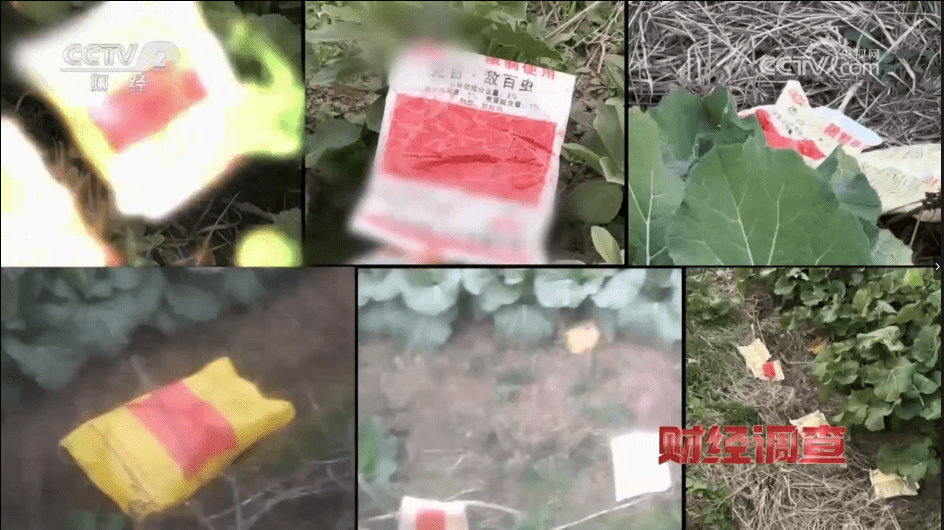
The report showed discarded packaging of carbofuran mixed with other chemicals at a vegetable base in Tianmen, Hubei province.
Local residents said farmers spray the poison at night to avoid detection, leaving a strong, irritating smell in the air. Villagers refuse to eat the radishes, cabbage, and potatoes grown there, saying they are only sold outside the area.
Farmers admitted they obtain the banned chemical through special channels and use it because it makes vegetables grow faster and look more attractive, yet they never consume their own produce or even feed it to chickens.
Underground sales networks operate openly in places like Heilongjiang, Wuhan, and Yunnan. Dealers fake production dates on packaging to appear compliant with pre-ban rules, sell only to trusted customers, hide products from public view, and store large quantities in secret warehouses for cheap delivery via logistics.
Some openly recommend carbofuran for vegetable crops despite knowing its high residue risk and legal restrictions, which limit its use to crops like peanuts, rice, and cotton.
Nutrition experts recommend thorough washing to reduce pesticide residues. Soaking vegetables in water followed by running water can remove a significant portion of water-soluble residues and surface dirt.
Nutrition experts recommend thorough washing to reduce pesticide residues:
- Soak vegetables in water followed by running water to remove a significant portion of water-soluble residues and surface dirt.
- Green leafy vegetables (e.g. spinach, choy sum): trim roots or stems first, then soak, rinse, and brush.
- Headed vegetables (e.g. cabbage, Chinese cabbage): peel outer leaves and wash each layer individually.
- Flower vegetables (e.g. broccoli, cauliflower): rinse flower-side up while rotating under running water.
- Onions and leeks: remove outer layers before soaking, rinsing, and brushing.
- Beans (e.g. snow peas, green beans): wash before trimming ends.
- Bumpy-skinned gourds (e.g. cucumber, bitter melon): brush thoroughly on uneven surfaces.
- Berries (e.g. strawberries, blueberries): soak and rinse gently with weak water flow for about 15 minutes.
- Fruits with inedible peels (e.g. passion fruit, banana): rinse thoroughly even if peel is not eaten.