Zhongzhi Enterprise Group, a former leader of China's shadow banking sector that declared insolvency last year, used aggressive and potentially illegal sales practices to sustain its operations as it lurched toward collapse, according to records reviewed by Reuters and eight people with direct knowledge of the matter.
China's years-long property boom had propelled Beijing-headquartered Zhongzhi to the top of the country's $18 trillion asset-management industry and made it a key player in a shadow banking sector the size of the French economy. Asset managers such as Zhongzhi sell wealth-management products to investors. The proceeds are then channeled by licensed trust firms like its Zhongrong unit to developers and other companies that cannot tap bank funding directly because of poor creditworthiness or other reasons.
Previously unreported details show that about a year before its financial troubles burst into the open, Zhongzhi units were paying returns to existing investors in wealth-management products by using funds from new investors, and promising individual investors lucrative returns that belied the group's exposure to a deepening property crisis.
China's trust firms are known as shadow banks because they operate outside many of the rules that govern commercial lenders. But China's top banking regulator in 2018 specified that financial institutions including shadow banks and asset managers should not set up capital pools, to prevent them from using money from new sales to cover returns on existing wealth-management products, nor should they guarantee returns on wealth-management products.
Zhongzhi appears to have violated both those requirements, two lawyers said after reviewing Reuters' findings at the request of the news agency. The lawyers added that such wrongdoing can result in fines and prison sentences of up to 10 years.
"The core of its suspected illegal action is raising money from investors through its licensed financial institutions to fund the group's business operations and expansion," said Zhang Guanghui, an attorney at Guangdong Suijia Law Firm.
Zhongzhi and its units identified in this story did not respond to detailed requests for comment about the practices outlined by Reuters.
Chinese officials were similarly tight-lipped. China's ministries of public security and justice, which oversee the Beijing police and prosecutors, respectively, did not respond to queries about the cases against people connected to the shadow bank. China's National Financial Regulatory Administration and central bank also did not respond to requests for comment about Zhongzhi units' practices.
The liquidity crisis at Zhongzhi became public when trust unit Zhongrong missed payments on dozens of products in the third quarter of 2023, fueling investor protests and worries that China's property meltdown was spilling over into its $66 trillion financial industry.
Eventually, Zhongzhi told investors in November 2023 that it was insolvent with up to $64 billion in liabilities. The group filed for bankruptcy liquidation in January, while Beijing police probed its business practices. In March, Beijing police said on WeChat that wealth-management firms under Zhongzhi should cooperate with police and return any illegal income.
In August, Beijing prosecutors said they had charged 49 suspects related to Zhongzhi on suspicion of illegally absorbing public deposits, without providing details.
Public deposits flowed into Zhongzhi's shadow bank operation via the funds the investors placed in the wealth-management products that Zhongzhi's licensed financial units were selling. Reuters couldn't determine the specific deposits or units to which the prosecutors were referring.
Interviews with current and former Zhongzhi group staff and investors, as well as records reviewed by Reuters, shed new light on how its units' possibly illegal practices exposed middle-class savers to damaging consequences of China's property bust, despite regulators' efforts to rein in the shadow banking sector's excesses.
The eight sources spoke to Reuters on the condition of anonymity, citing fear of official retribution.
RAGS TO RICHES
Zhongzhi was founded in 1995 by Xie Zhikun, a rags-to-riches tycoon who started with timber and real-estate businesses before expanding into financial services.
In its heyday, Zhongzhi cashed in on China's booming property market. It raised funds by selling wealth products to retail investors while trust arm Zhongrong charged developers like Country Garden an interest rate of over 12% on one-year loans, according to four Zhongrong investment banking documents dated 2017, which Reuters reviewed. While this wasn't uncommon for shadow banks, the benchmark bank lending rate was around 4%.
As business soared, Xie rubbed shoulders with developer magnates, including China Evergrande Group chief Hui Ka Yan and Country Garden head Yang Guoqiang, according to three current and former staff. Both developers have since defaulted on debt repayments and property builds; Evergrande is going through a court-ordered liquidation process, and Country Garden is facing the prospect of one. Neither responded to requests for comment about their ties to Zhongzhi.
Zhongzhi staff raked in sky-high bonuses as the property boom turbocharged both growth and demand for high-yielding wealth products, said one current and two former Zhongrong staff. Xie gave vast sums to Fudan University, his alma mater, and held summer getaways for top-performing staff, where he would recite poetry, two of these people said. The university did not respond to questions about the unspecified donations.
Meanwhile, salespeople in Zhongzhi units were touting the group's connections with local governments and its trust unit's backing by state-owned Jingwei Textile Machinery Co., its largest shareholder, according to two investors and now-deleted state media reports. Jingwei did not respond to a request for comment about the nature of its involvement with Zhongzhi.
Xie died in 2021, aged 61, after a heart attack. That year also marked the beginning of the property sector's liquidity crisis as Chinese regulators cracked down on developers' debt-fueled construction to curb spillover risk to the broader financial sector.
In July that year, one Zhongzhi unit's sales pitch for a wealth-management product masked the growing strain.
"This is a fixed-return product," a Hang Tang Wealth salesperson wrote to investors in a WeChat group in July 2022, according to a screengrab of the exchange reviewed by Reuters.
The salesperson guaranteed a minimum 6.2% return on a three-month wealth management product on investments exceeding 1 million yuan, or about $140,000, outstripping the 1.5% on local bank deposits.
The Zhongzhi unit "assumes the full, unconditional and irrevocable obligation" for timely repayment to investors, the salesperson said, giving three thumbs-up emoji.
Reuters
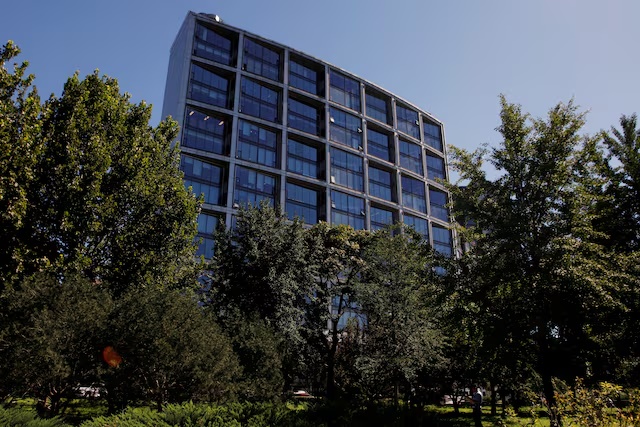
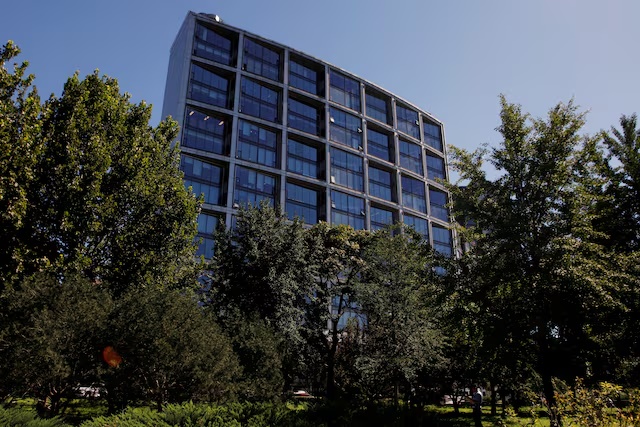
A general view of the Zhongzhi Enterprise Group office building in Beijing, China August 22, 2023. REUTERS/Florence Lo/File Photo