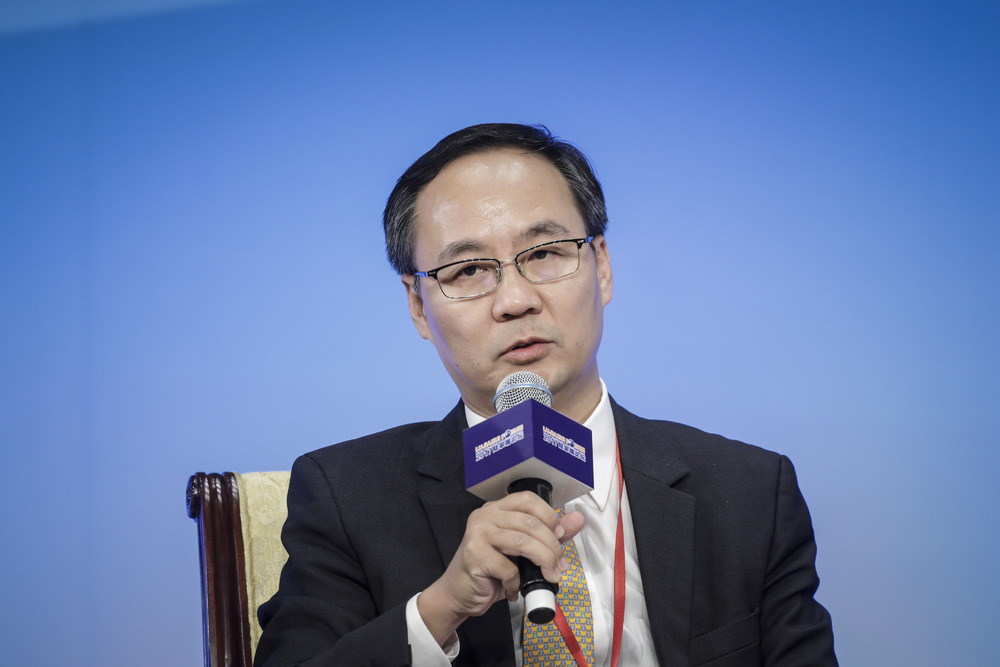
China picked a little-known local government official as the nation’s top regulator overseeing the US$61 trillion financial sector, in a surprise move after President Xi Jinping unveiled the biggest overhaul of the nation’s bureaucracy in decades.
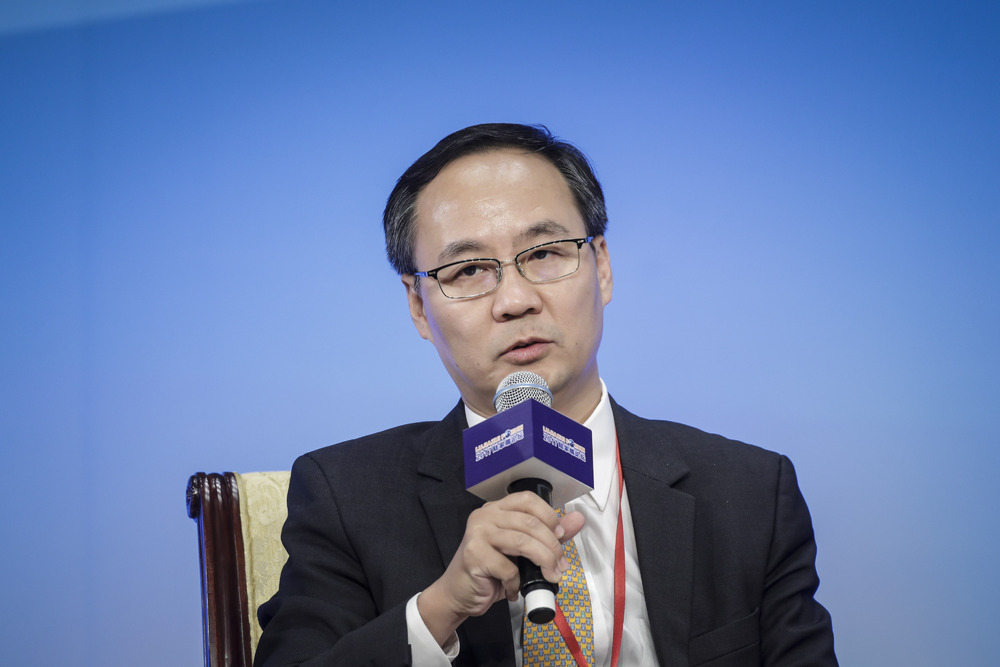
Li Yunze, a former banker, was named party secretary of the newly formed national financial supervision and management bureau that regulates thousands of banks, insurers and trust firms, according to an announcement Wednesday.
The 52-year-old is being elevated from his latest post as a vice governor of Sichuan province, where he has served since 2018. He was added to the list of alternate members of the Central Committee — the country’s most senior officials and political elites — last year at the Communist Party’s 20th congress meeting.
His appointment may come as a surprise to market watchers, who had expected candidates with more seniority and expertise to help tackle financial risks at a time when Beijing is striving to shore up the world’s second-largest economy. Yi Huiman, chairperson of the China Securities Regulatory Commission, and Zhu Hexin, chairperson of Citic Group Corp., a ministerial level financial conglomerate overseen by the State Council, were among the front-runners anticipated by investors.
It also stands in contrast to the leadership changes in March when Beijing reappointed several top economic officials including central bank governor Yi Gang to provide continuity. Analysts had expected a larger reshuffle at that time with officials with international experience to be replaced by men with closer personal ties to Xi but less familiar to global investors.
The enlarged national regulator was unveiled in March in a bid to step up oversight over the financial sector as authorities pledged to prevent and defuse economic and financial risks this year. The shake-up will give the Communist Party a firmer grip on the sector and centralize key policy decision-making under Xi in his precedent-defying third term.
The regulator — with a focus on beefing up oversight of financial institutions and cracking down on violations — kicks off its work as an anti-graft campaign in the finance industry gathers steam. Last month, authorities warned bankers of a deepening crackdown on corruption, following a “look back” at five financial companies as part of a central government inspection in late March.
While Li had worked at two of the nation’s largest state-owned banks before he took the government post in Sichuan, he didn’t rise to the top positions. He most recently served as a senior executive vice president of Industrial & Commercial Bank of China Ltd. during 2016-2018.
Prior to that, Li was head of a local branch during his more than two-decade tenure at China Construction Bank Corp. A native of eastern Shandong province, Li holds a doctor’s degree in economics.
Still, his insight into provincial government operations and finances may help him tackle long-standing debt risks at the local level. Goldman Sachs Group Inc. estimated the debt racked up by China’s provincial governments at US$23 trillion — 126 percent of gross domestic product — if their off-budget borrowing is included. Curbing local debt risks was highlighted by President Xi as a key challenge officials must tackle this year.
(Bloomberg)
Li Yunze. (Bloomberg)








![A Kinetica 1-Y5 commercial carrier rocket with 15 satellites onboard blasts off from a commercial aerospace innovation pilot zone in Northwest China, Nov 11, 2024. [Photo/Xinhua]](https://image.hkstandard.com.hk/f/1024p0/0x0/100/none/9d75efaf2880111bc04de3f4e79a2647/2026-04/v.jpg)