Read More




Angry at Russia's inaction after a shock Ukrainian offensive put her parents on the other side of the front line, Lyubov Prilutskaya is one of the few Russians willing to speak out.
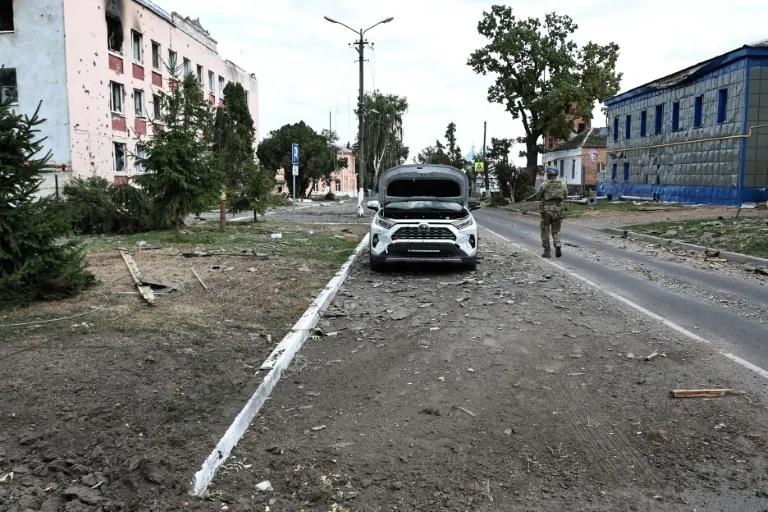
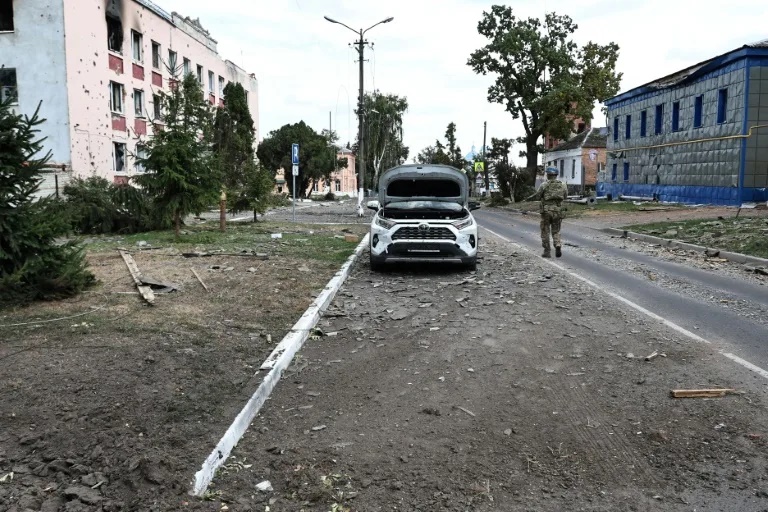
Prilutskaya was one of many who lost contact with loved ones after Kyiv's troops launched a major incursion into Russia's Kursk border region last August, seizing control of dozens of settlements and opening a new front in the nearly three-year conflict.
The 37-year-old has spent the last five months trying to locate her elderly mother and father -- to no avail.
In despair she turned to social media to accuse the authorities of "incompetence" over their failure to track down missing people, in an emotional video published earlier this month.
The immediate spark was a list published by the local governor and Russia's rights ombudsman that was presented as an official register of missing people.
She said the 517 names were an incomplete list and even included the names of some people known to be dead.
She called it a "spit in the face" for those who had spent months fruitlessly searching for news of lost relatives.
- 'Not afraid' -
Such public attacks on the authorities are rare in Russia.
Moscow has outlawed criticism of the Ukraine offensive under strict military censorship laws, punishable by years in prison.
In comments under her video on the VKontakte social media platform, some praised Prilutskaya's "courage" and "honesty". Others warned her.
But in a phone interview with AFP she said she was "not afraid" and that staying silent was "simply impossible".
"I see that nothing is being done to search for the people left under occupation," she said, expressing her "huge anger" at official inaction.
Families trying to find their relatives are left "completely in the dark", she said.
"In order to somehow express our outrage, we are forced to go on social media, because it is impossible to do it any other way," she said.
An estate agent and mother of four, Prilutskaya lives in the regional capital of Kursk, around 90 kilometres (55 miles) from the border.
Her parents -- Ivan Prilutsky, 66, and Alexandra Pashchenko, 71 -- had refused to leave their village of Zaoleshenka, 10 kilometres from Ukraine, despite increasing drone attacks ahead of the August offensive.
- 'Nothing except their house' -
In a photo of the couple, Prilutskaya's father sports a bushy moustache, while her mother's fine hair is pulled back into a ponytail.
Before retiring, he was a farm worker while she worked as an agriculture inspector, living in Zaoleshenka virtually their entire lives.
"My parents have nothing except their house," Prilutskaya said.
They were last in touch on August 5, 2024, when Prilutskaya told her parents to prepare to leave as she would come to collect them.
Within 24 hours, Ukrainian tanks were in the adjacent village.
Phone lines were down and communication across the new front line had become impossible.
In the frantic search for accurate information that followed, Prilutskaya said she realised she could not rely on officials, accusing them of "hushing up" the plight of those searching for missing loved ones.
- 'Lie' -
Amid criticism of the list of missing people, Prilutskaya said she received a phone call and letter from Russian ombudswoman Tatyana Moskalkova, who admitted the register was "far from exhaustive".
Moskalkova said last week she had held a rare meeting with her Ukrainian counterpart in which they discussed "the search for missing residents of the Kursk region".
The Kursk regional government had yet to reply to an AFP request to comment.
Governor Alexander Khinshtein has pushed back against some of the criticism, writing on Telegram that Ukraine was "holding onto Russian citizens".
On Saturday, dozens of residents confronted him at a small-scale protest to demand the return of those in the occupied zones and better conditions for people displaced by the fighting.
Ukraine has returned a handful of residents to Russia after they were caught in areas it had taken control of.
The Ukrainian army spokesman for the occupied zone, Oleksiy Dmytrashkivsky, told AFP around 2,000 civilians were still living there.
He called the Russian list of missing people a "lie", but said he had no information on Prilutskaya's case.
Artillery and drones made the area extremely dangerous, he said, but added Ukraine had managed to locate some 800 people after their relatives and friends got in touch.
But reaching out to the Ukrainian military is fraught with risks under Russian law.
"So what options are left?" asked Prilutskaya. "Only public appeals."
AFP