Read More










Elon Musk unveils Tesla's 'flying' car
21 hours ago

HK unlikely to be hit as Typhoon Champi gathers strength
15-10-2026 17:54 HKT


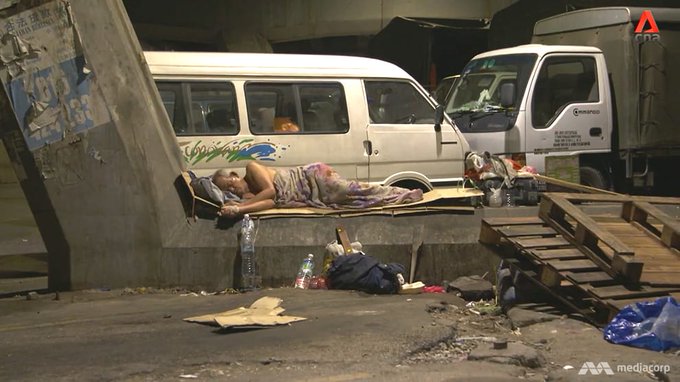
Vivian Wong, the Member of Parliament for the port town of Sandakan, Sabah, has received many calls for help this year. In particular, there were mothers who could not afford to feed their babies.
So she approached a non-governmental organization called Future Alam Borneo. Through crowdfunding, they managed to raise about 15,000 Malaysian ringgit (HK$28,027) to buy 400 packs of infant formula, Channel News Asia reports.
“With the pandemic that’s going on, Sabah is definitely facing a big challenge compared to the past years — a bigger challenge,” says the 31-year-old.
It is the poorest state in Malaysia, faced with inadequate infrastructure, low education levels and a high cost of living for rural folk with stagnant salaries.
With a poverty rate of 19.5 percent based on the 2019 poverty line, Sabah has almost 100,000 households forming some of the country’s poorest communities.
And now, years of effort to decrease poverty to this level have gone out the window following the arrival of coronavirus. Just this week, Sabah came under a conditional movement control order again.
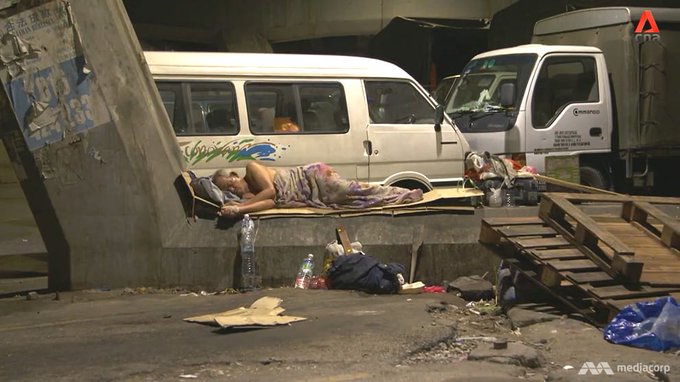
All across the country too, there are stories of hardship as many households struggle to stay afloat because of the pandemic.
According to opinion research firm Merdeka Centre, 5 to 8 percent of Malaysia’s population will fall into poverty. That is about 1.5 to 2.4 million citizens in addition to the 405,000 households already living below the poverty line.
As the coronavirus crisis drives up poverty levels in Asia for the first time since the 1990s, the program Insight asks whether vulnerable Malaysians can cope and survive the challenges.
In Sabah, among the families Wong has helped are those from the rural community on Berhala island.
For many of them, their struggles began with the nationwide lockdown that was first imposed in March, which included restrictions on fishermen such as Sadiya Lauddin’s husband.
“Sometimes he could go to sea and sometimes he couldn’t … When he was able to go to sea, he didn’t get that much — around 20 to 30 fish. That’s able to feed us for two days,” says the 50-year-old.
“We felt uneasy because we were already struggling.”
She could not go to work either, but she counts herself lucky that she did not lose her job as a cook-cum-cleaner at a children’s learning center. Her salary came late, however, and the family found it hard to survive.
“So it was hard to get milk powder because I didn’t have enough money,” recalls the mother of six. “Thankfully, I’ve been granted 1,600 ringgit from the (government’s) cash assistance scheme. But so far, I’ve received 1,000. ringgit. The remainder hasn’t come.
“That’s what we’ve used for our daily expenses … Each month, we use a little bit and didn’t spurge it all straightaway.”
Many other Sabahans rely on tourism, directly or indirectly. With natural attractions like Mount Kinabalu, forests and beaches, the state has long been a magnet for tourists. But between January and July, total visitor arrivals decreased by 66.2 percent.
Sabah halted flights from China as early as January 30, in a move to protect its tourism industry, a key economic driver that accounts for 15 per cent of the state’s gross domestic product. But nothing could avert the decline.
“In Sandakan … a few hotels have already announced that they’ll cease their operations — so roughly a few hundred in hand who we know will face unemployment during this period,” says Wong.
The biggest hotel in town, the 290-room Four Points by Sheraton, was the first to shut, in May. It was not the last. One of Sandakan’s oldest hotels, the 54-year-old NAK Hotel, hosted its last guests in June.
Ju Kabing, a former receptionist at the boutique hotel, feels that its closure is “like a big loss for Sandakan”.
The impact is more than just sentimental, however. “The effects of the pandemic haven’t been easy, especially for us to find a new job,” he says.
When unemployment in Malaysia increased to 5.3 percent in May, it was the highest since 1989. The number of unemployed increased by 47,300 to 826,100 individuals. In August, the rate was 4.7 percent.
The pandemic has affected more people than just that, however.
“We were able to carry out a survey, and we did find that as many as one half … of the workforce suffered a loss of income, and some suffered the loss of their jobs,” cites Merdeka Centre executive director Ibrahim Suffian.
Take, for example, Fakaruddin Jasmi, a 43-year-old mechanic in Bukit Beruntung, about 47 kilometers north of Kuala Lumpur. He used to work at a car factory before he left to pursue his dream of running an automotive workshop.
A year after his wife died of cancer, and despite the difficulty of raising six children on his own, he managed to start his business in his township. The timing could not have been worse.
Just a month after his shop opened, Malaysia was placed on lockdown. The strict measures left businesses like his hanging by a thread.
“Before the lockdown, I could earn around 2,000 ringgit (a week). The lowest would be around 800 ringgit. But during the lockdown, my income was zero,” he recalls. “The effect was really painful … We didn’t have any prospects for the workshop.”
His finances became a “huge challenge” for him, and he now falls into the category of the new poor in Malaysia — under the revised national poverty line of 2,208 ringgit for monthly household income.
Even as his life went from bad to worse all of a sudden, he thought he could “take care of things” himself.
“Even though I’m a single father, I felt that I could make it,” he says. “But at that time, I was at my lowest point, and I couldn’t do anything.”
A friend of his then approached the Darul Jariyah Welfare Association about his situation. The organisation delivers aid to people in need, and his case has “moved” the woman who runs it, Jalijah Awang Kenit.
“He’s a loving husband, and it’s hard for him to be away from his kids,” she says.
“We have a lot of cases like Fakaruddin’s, but mostly they’re single mums … When it comes to husbands who lost their wives, there aren’t many.
“For some cases, we’d help once a month (or) temporarily. We help (to send food to) Fakaruddin every day.”
There may be many families in Bukit Beruntung who need help, so she is always on the lookout for those who have fallen through the cracks, especially during these trying times.
The hardest hit are not only those living below the poverty line, but also the bottom 40 per cent of income earners, the group referred to as the B40.
“It’s the small businesses, because those people rely on income from their businesses. So whatever they get on that day will be their income for the day,” says Jalijah.
“During lockdown, everything had to be halted suddenly. They couldn’t sell anything, and their source of income was halted.”
And once again, as with Sabah, a conditional MCO has been imposed on Kuala Lumpur, Putrajaya and Selangor from this week.
The pressure on low-income households will continue to mount so long as the health crisis prevails. But to help minimise their suffering and keep the economy going, the government has unveiled stimulus packages totalling 305 billion ringgit.
They are part of a series of fiscal measures to cushion the impact of the coronavirus pandemic on both business and households, with the economy expected to contract between 3.5 and 5.5 percent this year.
Among the various plans, Institute for Democracy and Economic Affairs research manager Wan Ya Shin cites the wage subsidy program as an “effective” way of reducing employment loss and helping businesses sustain themselves during this time.
While these economic packages have been valuable, and the government has devised other assistance programmes and cash handouts, the benefits have not been fully felt among those who fall outside the scope of formal employment.-Photo: CNA