Since taking power President Xi Jinping has effectively made himself “chairman of everything.” The coronavirus scare is showing all the risks involved with that strategy.
Xi last week took direct control of the response to the outbreak, showing the high stakes in a crisis that has now killed 259 people in China and spurred panic across the globe, Bloomberg reports.
He has overseen extreme measures, including quarantining more than 50 million people -- roughly equivalent to the population of Spain -- and rapidly building two new hospitals. While lower-ranking Communist Party officials are starting to admit they were slow to contain the virus, senior leaders very quickly realized the enormous political stakes.
Last Tuesday they issued a notice calling for cadres to think of the big picture, stay united and “resolutely uphold General Secretary Xi Jinping’s core position” in the party.
If all goes well, with a minimal hit to the world’s second-biggest economy, the benefits of Xi’s model of centralized control will be reinforced. But if the epidemic gets worse and the economic pain is deeper than expected, Xi “will deservedly take the blame,” said Scott Kennedy, an expert on China’s economy at the Center for Strategic and International Studies in Washington.
“There’s no second lieutenant to blame this on,” he said. “And so as goes the virus, so goes Xi Jinping.”
Xi has become China’s most powerful leader since Mao Zedong in his eight years running the country, engineering constitutional changes to make himself the “core” of the Communist Party and scrapping presidential term limits.
Along the way he’s also accumulated a number of enemies, particularly through a corruption purge that resulted in jail time for several senior party officials. In China’s top-down system of government, much of the political intrigue takes place behind closed doors -- stability and control are cherished among top leaders. Worried that they may end up being scapegoats, local officials in the firing line are now publicly pointing fingers at each other.
The mayor of Wuhan, said he had to wait for “authorization” before he could release information on the outbreak to the public.
The chief epidemiologist of China’s Center for Disease Control and Prevention said the local government failed to recognize the problem from a scientific point of view, and probably had some “executive issues.”
“While no one person may be responsible for the fast spread of the coronavirus, it has resulted in a blame game within the bureaucratic system,” said Suisheng Zhao, executive director of the Center for China-U.S. Cooperation at the University of Denver’s Graduate School of International Studies. “The accelerated spread of the virus is also the result of political incompetence and a tightened control on ideology and information.”
In Xi’s China, lower-level officials must constantly weigh whether they are saying too much or too little.
Since January 24, some 33 local officials have been dismissed or scheduled for disciplinary review for allowing informal public gatherings, repeating misinformation via official channels, and failing to provide superiors with detailed updates, Eurasia Group, a New York-based consultancy, said in a note on Friday.
Xi himself has sought to get on top of the crisis, convening what state media dubbed an “unusual” meeting of the supreme Politburo Standing Committee to discuss the outbreak on January 25, the first day of the Chinese New Year festivities. Similar emergency meetings occurred after the 2008 Sichuan earthquake, 2009 street violence in Xinjiang and a 2014 earthquake in the southern Yunnan province.
The worst may still be yet to come.
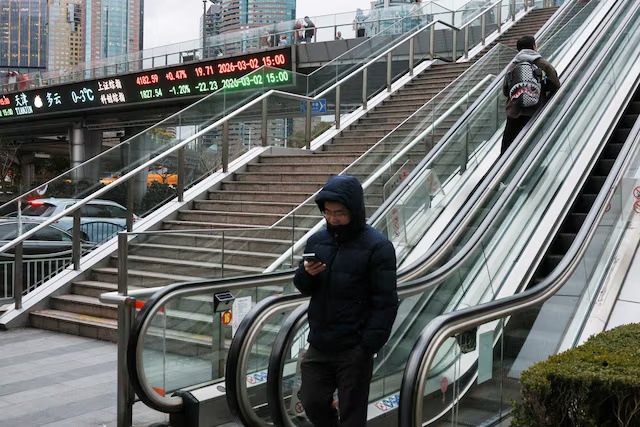
Even before the outbreak, China’s economy was already slowing amid weak domestic demand, a crackdown on debt and the trade war with the Trump administration.
The World Health Organization’s move to declare the coronavirus a “public health emergency of international concern” sparked renewed concern on Chinese social media about whether small and middle enterprises could survive as countries restricted travel to China.
In a containment scenario -- with a severe but short-lived impact -- the virus could take China’s first-quarter gross domestic product growth down to 4.5 perent year on year, according to Bloomberg Economics. That’s a drop from 6 percent in the final period of 2019 and the lowest since quarterly data that begins in 1992.
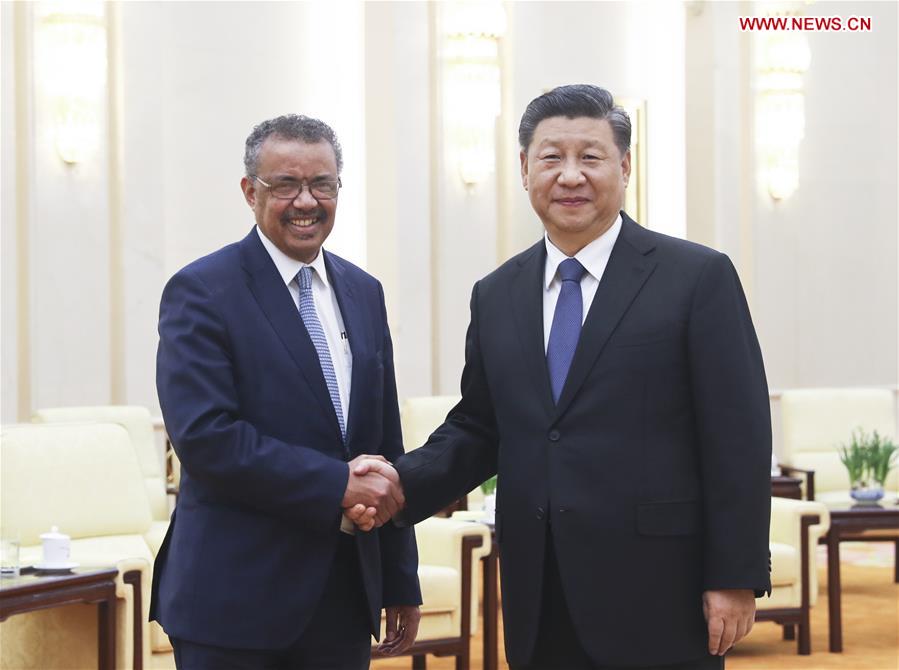
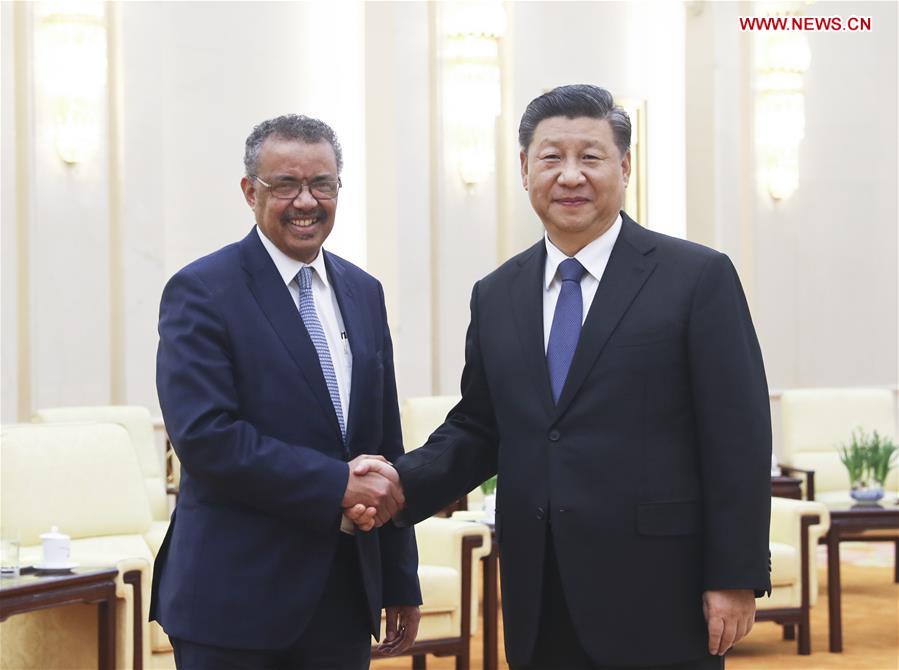
President Xi Jinping meets with World Health Organization (WHO) Director-General Tedros Adhanom Ghebreyesus at the Great Hall of the People in Beijing, on January 28.








![A Kinetica 1-Y5 commercial carrier rocket with 15 satellites onboard blasts off from a commercial aerospace innovation pilot zone in Northwest China, Nov 11, 2024. [Photo/Xinhua]](https://image.hkstandard.com.hk/f/1024p0/0x0/100/none/9d75efaf2880111bc04de3f4e79a2647/2026-04/v.jpg)