Read More
UK inflation climbed to the highest level in 10 months in January, boosted by the cost of airfares, motor fuel, food and the imposition of value-added tax on private school fees.
ADVERTISEMENT
SCROLL TO CONTINUE WITH CONTENT
Consumer prices increased 3 percent from a year earlier, accelerating from a 2.5 percent pace in December, the Office for National Statistics said Wednesday. It was above the 2.8 percent forecast by economists and the Bank of England.
The figures are likely to entrench caution at the BOE over cutting interest rates to support a moribund economy. While Governor Andrew Bailey has played down the threat from an expected surge in inflation this year, officials say they can’t rule out “second-round effects” keeping underlying pressures higher for longer. The BOE expects inflation to peak at 3.7 percent in the third quarter on the back of energy costs.
Higher inflation makes a March interest rate cut by the Bank of England “improbable,” said Suren Thiru, economics director at the Institute of Chartered Accountants in England and Wales. “These figures confirm a disheartening rebound in inflation as rising air fares and the introduction of VAT on private school fees contributed to notably widen the gap with the Bank’s 2 percent target.”
Price growth in the services sector — watched closely by the BOE for signs of domestically generated pressures — accelerated to 5 percent last month from 4.4 percent. The BOE had predicted services inflation of 5.2 percent.
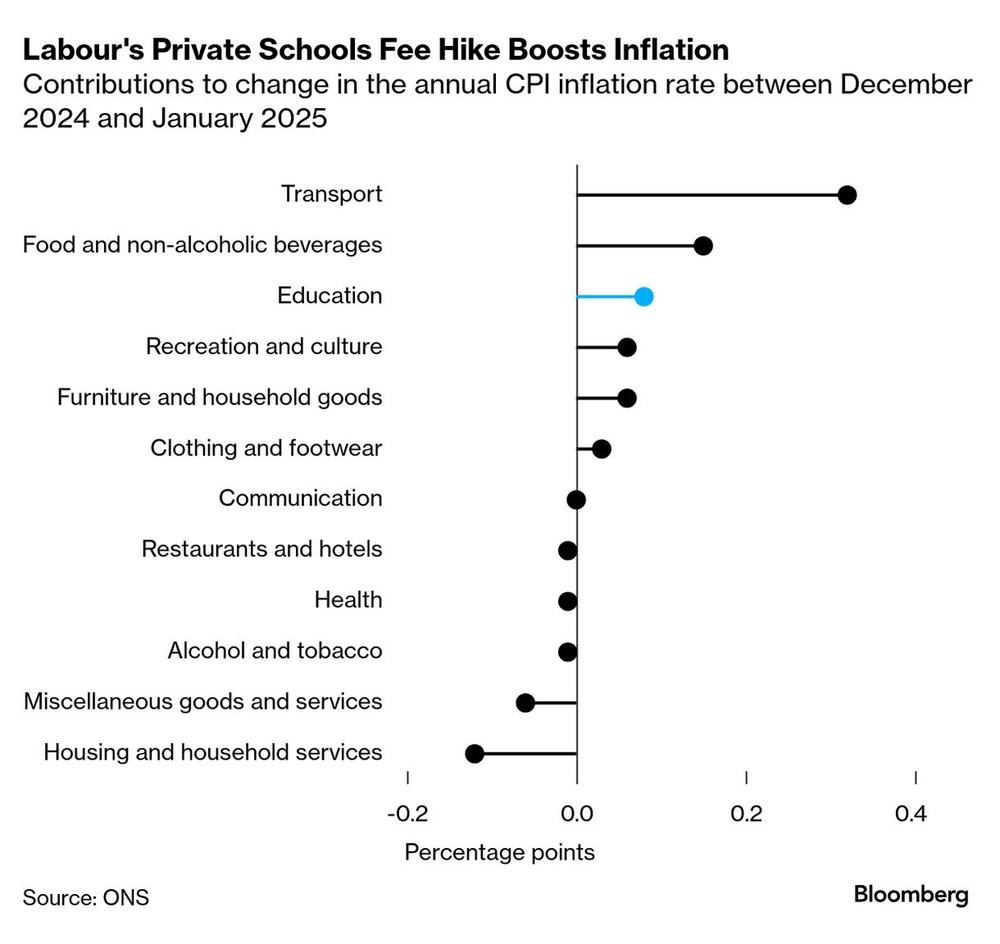
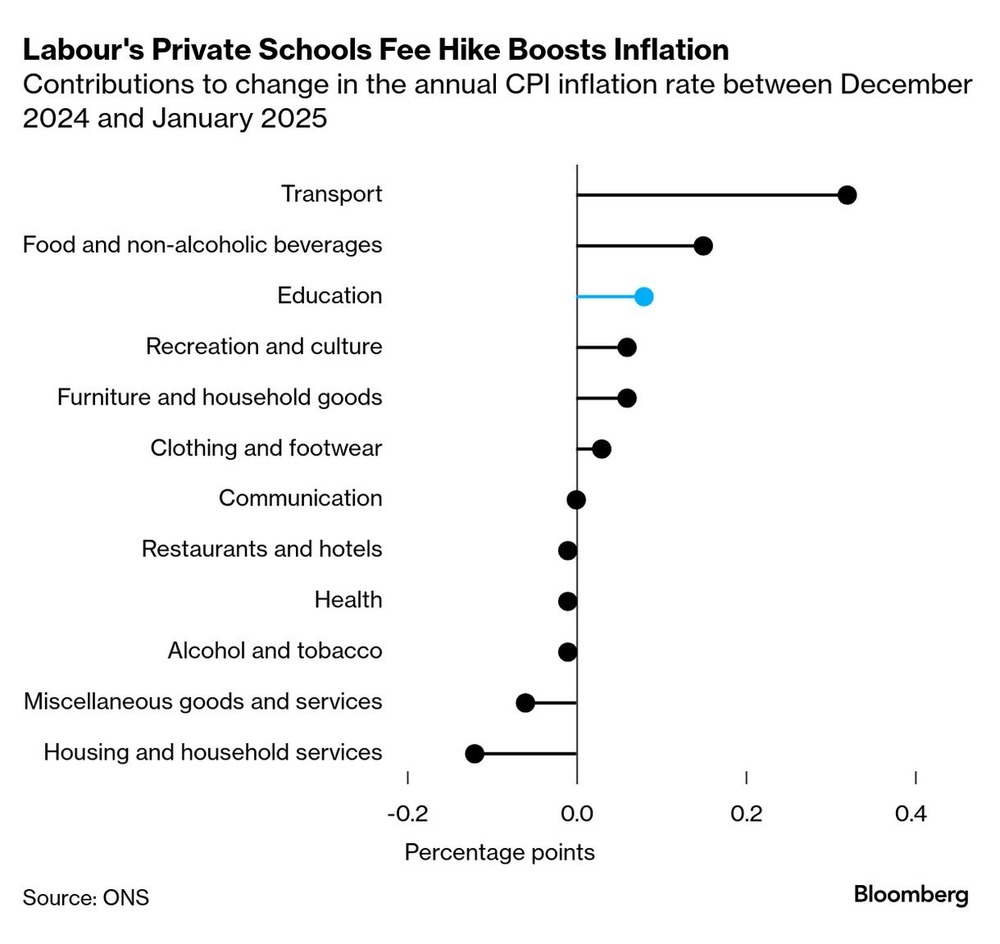
One driver of services inflation was the controversial introduction of 20 percent VAT on private school fees, a flagship policy of the Labour government designed to help fund improved public services. Private-school fees rose almost 13 percent, lifting inflation in education to 7.5 percent — the highest in almost a decade. Another was air fares, which fell by less last month than in January 2024.
Food inflation also jumped from 1.9 percent to 3.1 percent, driven by the cost of essentials such as meat, bread and cereals. Core inflation, which strips out volatile items like energy, food, alcohol and tobacco, rose to 3.7 percent, the highest since April.
“I know that millions of families are still struggling to make ends meet” despite the return of real wage growth, said Chancellor of the Exchequer Rachel Reeves. Still, higher prices will be a worry for the Labour government, which has fallen sharply in the polls since its election last July. Reeves revealed more than £40 billion (HK$392.19 billion) of tax rises at her budget in October, intensifying cost pressures for businesses and households.
The latest pickup pushes inflation away from the BOE’s 2 percent target and is expected to be followed by further increases fueled by energy bills later this year. On Tuesday, Cornwall Insight Ltd. predicted another increase in the energy-price cap in April, marking a third consecutive quarter of rising gas and electricity bills for households.
The central bank lowered interest rates for a third time since August earlier this month, but warned that further reductions would be “gradual and careful.” Money markets are pricing in just two more reductions this year to 4 percent.
The case for a cautious approach was also supported by figures on Tuesday showing wage growth picking up to an eight-month high in the fourth quarter and the jobs market holding up stronger than expected. Tax data showed that the number of payrolled employees rose in January, and is down less than 20,000 since Labour’s first budget increase national insurance for firms and the minimum wage.
The figures also showed signs of rising underlying price pressures. Factory gate prices for goods before they reach retailers were up 0.3 percent in January, faster than the 0.1 percent forecast, from a revised fall in December of 0.1 percent. Producer input prices of raw materials fell 0.1 percent in January, less than the 0.6 percent decline predicted. In December, input prices contracted by 1.5 percent, revised down from 1.3 percent.
BLOOMBERG
BLOOMBERG