Read More









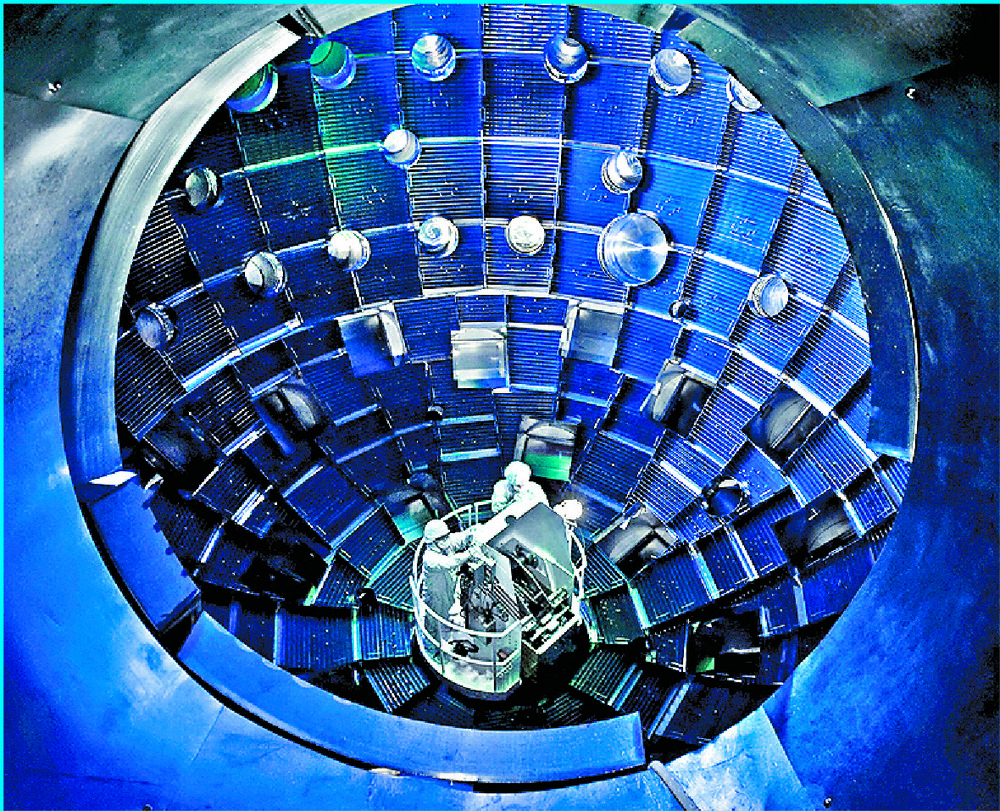
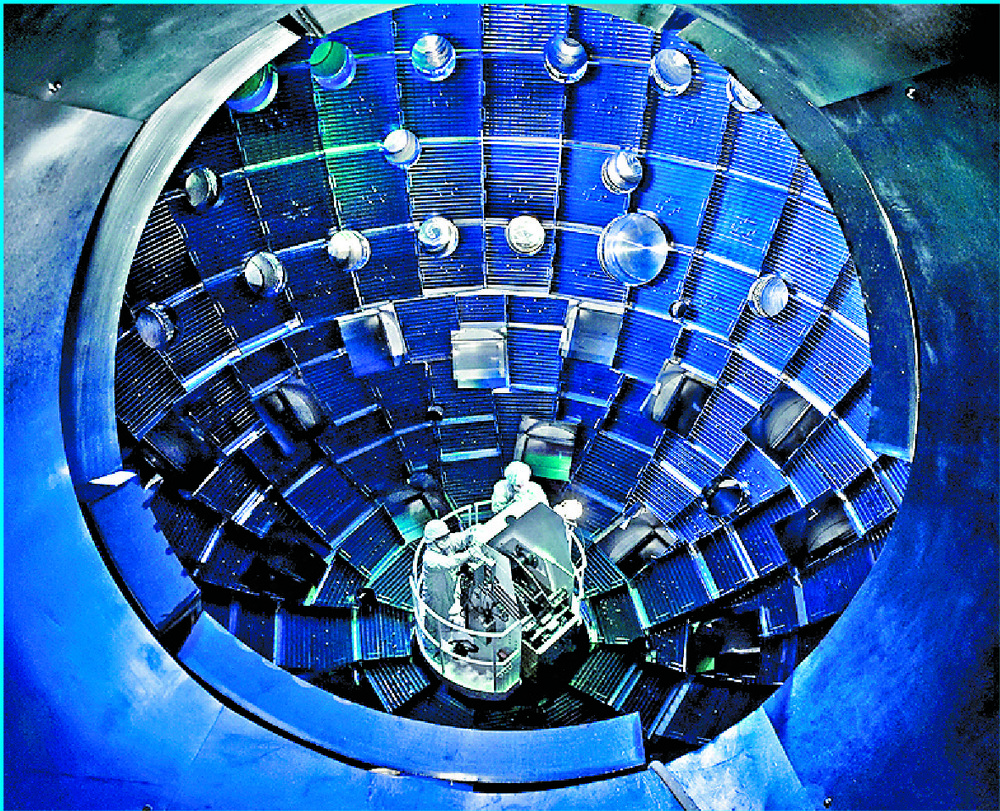
The Lawrence Livermore National Laboratory announced it had used the world's largest laser to create a fusion reaction in replicating the process that powers the Sun and generated more energy than it took to produce.
However, there is still a long way to go before fusion is viable on an industrial scale, providing power to homes and businesses.
The Livermore facility in California said a team at its National Ignition Facility had achieved what is known as "net energy gain" in an experiment this month, producing more energy from fusion than the laser energy used to drive it.
"They shot a bunch of lasers at a pellet of fuel, and more energy was released from that fusion ignition than the energy of the lasers," White House science adviser Arati Prabhakar noted.Researchers used 192 ultra-powerful lasers to deliver 2.05 megajoules of energy to a capsule smaller than a pea containing isotopes of hydrogen. It produced 3.15 megajoules of fusion energy output.
While the result was a net energy gain, 300 megajoules of energy was needed from the electrical grid to power the lasers."Our calculations suggest it's possible with a laser system to achieve hundreds of megajoules of yield," Budil said. "So there is a pathway to a target that produces enough yield, but we're very distant from that right now."
Nuclear power plants use fission - the splitting of a heavy atom's nucleus - to produce energy. But fusion combines two light hydrogen atoms to form one heavier helium atom, releasing a huge amount of energy in doing so.That is the process that occurs inside stars, including the Sun.
On Earth, fusion reactions can be provoked by heating hydrogen to extreme temperatures.Like fission, fusion is carbon-free during operation but has many more advantages: it poses no risk of nuclear disaster and produces much less radioactive waste.
AGENCE FRANCE-PRESSE