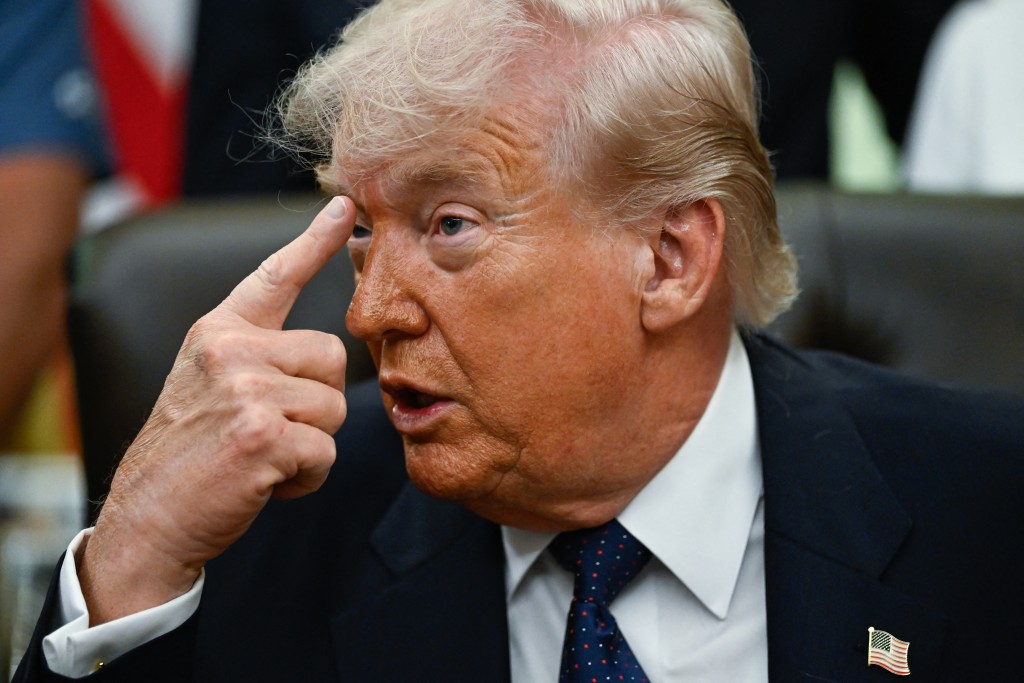
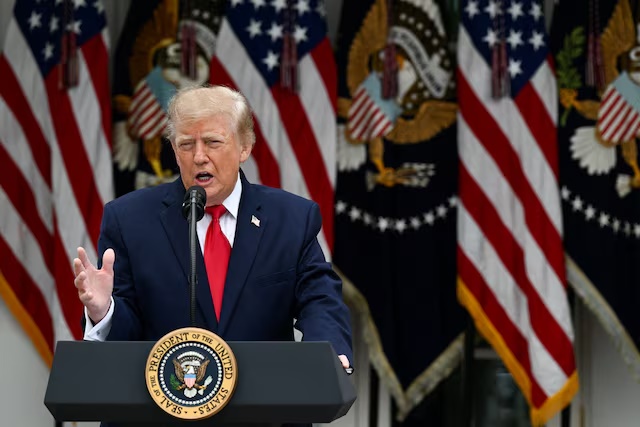
President Donald Trump issued an ultimatum Wednesday for Iran to accept a deal to end the war or face renewed, more intense US bombing, in the latest of a series of abrupt policy shifts.
"Assuming Iran agrees to give what has been agreed to, which is perhaps a big assumption, the already legendary Epic Fury will be at an end," Trump posted on his Truth Social platform," using the US name for its campaign against Iran.
"If they don't agree, the bombing starts, and it will be, sadly, at a much higher level and intensity than it was before," he added.
Trump's post came after US news outlet Axios reported that Washington and Tehran were close to agreeing on a one-page memorandum of understanding to end the war and set a framework for more detailed nuclear negotiations.
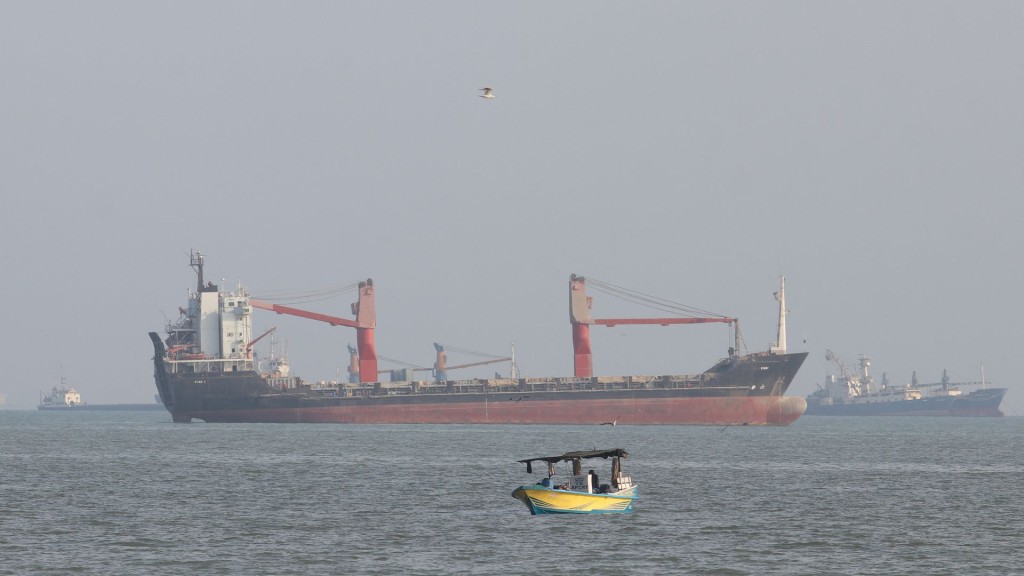
Trump late Tuesday announced a pause in a US military operation to guide stranded commercial ships through the Strait of Hormuz -- after only a day -- citing a chance to seal a deal to end the war.
The US leader said Washington's blockade of Iranian ports would remain in place as Tehran kept up its own closure of the vital trade route, which has rocked markets and spiked fuel prices.
Trump wrote on social media that the decision to halt his so-called "Project Freedom" a day after it began came after requests from "mediator Pakistan and other countries", saying "Great Progress has been made toward a Complete and Final Agreement" with Tehran.
"We have mutually agreed that, while the Blockade will remain in full force and effect, Project Freedom... will be paused for a short period of time to see whether or not the Agreement can be finalized and signed," Trump wrote late Tuesday.
Pakistani Prime Minister Shehbaz Sharif, a key figure in initial talks held in Islamabad last month, was optimistic Trump's "courageous leadership and timely announcement" could foster a deal.
"We are very hopeful that the current momentum will lead to a lasting agreement that secures durable peace and stability for the region and beyond," he said in a post on X.
Washington is now confident that it is close to reaching a deal with Tehran to reopen the crucial waterway and halt the conflict, US news outlet Axios reported Wednesday, citing two US officials.
It reported both sides are close to agreeing on a "one-page memorandum of understanding to end the war" and start a 30-day period of talks that could take place in Geneva or Islamabad.
Iranian Foreign Minister Abbas Araghchi met his Chinese counterpart Wang Yi in Beijing on Wednesday, his first trip to Tehran's close ally since the beginning of the war.
Araghchi said in an interview aired on Iranian state TV that the pair reviewed "the negotiations that are currently underway" to end the war.
After the talks, Wang called for an end to hostilities and for both countries to reopen the Strait of Hormuz "as soon as possible," his ministry said.
Before the visit, US Secretary of State Marco Rubio, a vocal China critic, called on Beijing to put pressure on Araghchi to end the blockade of the crucial waterway, which he said was leaving Iran "globally isolated."
- Oil tumbles -
Trump's conciliatory tone came hours after Rubio said the US had completed its offensive operations against Iran.
Investors welcomed those remarks and the decision to pause the ship-guiding plan, with international oil benchmark Brent and West Texas Intermediate both tumbling below US$100 a barrel as stock markets rallied.
Araghchi was in China days before Trump is also scheduled to visit on May 14 and 15 to meet President Xi Jinping -- a trip he had delayed due to the war.
The Iranian minister later held a phone call about the war with his Saudi counterpart, Iranian media said, as back-channel diplomacy to find a solution continues.
One Tehran resident told Paris-based AFP journalists that the prospect of any deal with the current government was "terrifying".
"We've gone through so much hardship and suffering, and no achievements for people?" said translator Azadeh, 43. "I honestly just hope they finish this regime."
Meanwhile, with the situation still in flux, "the psychological pressure is intense," she added.
Progress in talks has largely stalled as Tehran maintains its grip on the Hormuz strait, giving it key leverage.
Despite Rubio's announcement of the end of "Operation Epic Fury", the standoff in the vital waterway has led to claims of attacks by both sides.
Iran fired missiles and drones at US forces on Monday, while Washington said it struck six Iranian boats it accused of threatening commercial shipping.
The United Arab Emirates said it had engaged missiles and drones fired from Iran for the second consecutive day on Tuesday -- an accusation denied by Tehran.
It was the sharpest escalation since a truce took effect on April 8.
A container ship owned by major French shipping company CMA CGM was also the "target of an attack" in the Strait of Hormuz on Tuesday, the firm said.
Commodity ship traffic through the Hormuz since Monday fell to its lowest level since the beginning of the war, according to data from marine analytics firm Kpler.
- 'High alert' -
Pentagon chief Pete Hegseth said Washington was "not looking for a fight" over the waterway, while warning that any more attacks would be met with a "devastating response."
Washington and Gulf countries have drafted a UN Security Council resolution demanding Tehran halt attacks, disclose mine locations and end efforts to charge tolls, Rubio said, with a vote expected in the coming days.
On another front, Israel struck at least two villages in southern Lebanon on Wednesday, including one near a 12-century Crusader-era castle, according to AFP images.
The Lebanese health ministry said an Israeli strike killed four people in the eastern Bekaa valley.
Israel and Iran-backed Hezbollah have kept up their attacks despite a ceasefire in Lebanon.
On Iran, Israel's military chief of staff Eyal Zamir said the country would respond "with force" to any Iranian attack and remained "on high alert across all fronts".
(AFP)