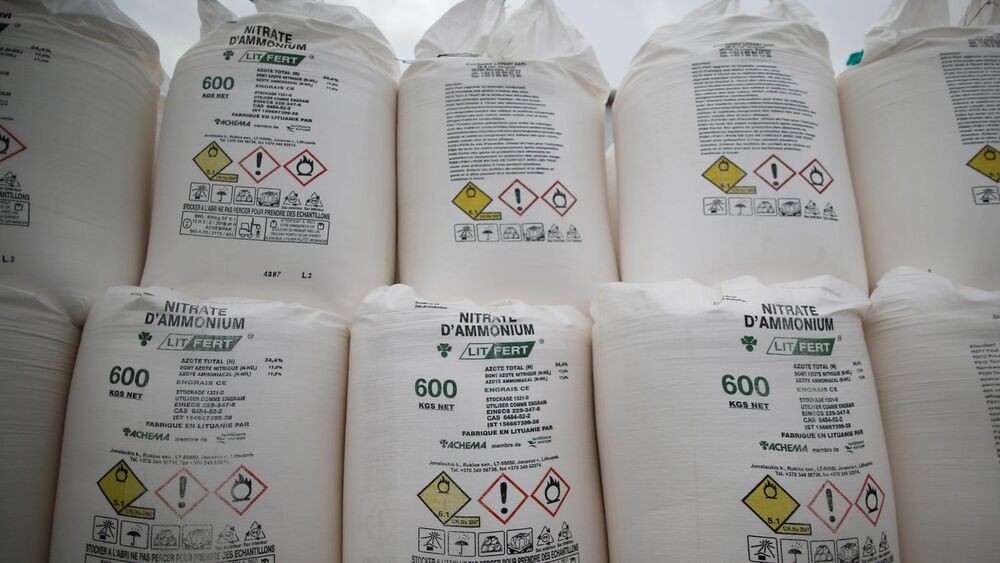
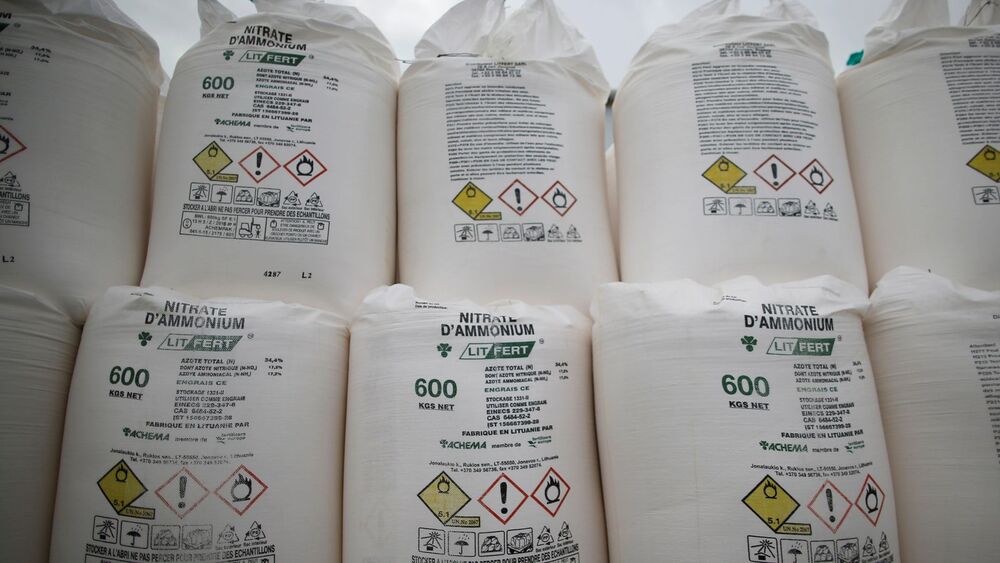
If, as seems to be the case, the Beirut explosion was caused by thousands of tons of ammonium nitrate stored in a warehouse, the blast demonstrates the deadly potential of this common agricultural chemical, Sky News reports.
ADVERTISEMENT
SCROLL TO CONTINUE WITH CONTENT
What is ammonium nitrate?
With the chemical formula NH4NO3, ammonium nitrate is a naturally occurring, highly soluble white crystalline solid, more commonly known as saltpetre.
The largest deposits are found in the Atacama Desert in Chile, from where it was mined. These days almost 100% of the chemical that is used is synthetic, produced by reacting ammonia with nitric acid.
Ammonium nitrate is predominantly used in agriculture as a high-nitrogen fertiliser. It's relatively stable under most conditions and is inexpensive to manufacture, making the chemical a popular alternative to other, more expensive nitrogen sources.
It is also a key component ofANFO, (ammonium nitrate/fuel oil), an industrial explosive used in mining, quarrying, and civil construction and accounting for 80 percent of all the industrial explosives used in US.
By itself, ammonium nitrate is not regarded as particularly volatile or dangerous, but under certain conditions it can be deadly.
Most countries have regulations controlling its storage to make sure it is safe.
What makes ammonium nitrate explode?
Particular sets of circumstances are needed to turn ammonium nitrate from a stable compound into an explosive, without any fuel or external catalyst.
It is classified as an "energetic material", one that produces heat as it decomposes, similar to the way heat is generated by rotting material in a compost heap.
If there is sufficient quantity of ammonium nitrate, it can generate enough heat to catch fire and keep the fire going, without the need for an external catalyst such as a flame.
As it burns, ammonium nitrate goes through chemical changes that lead to the production of oxygen, precisely what a fire needs to keep going and get bigger. As it heats up the chemical can fuse together, creating a seal or plug.
The space behind the plug keeps on being heated and gases form.
Hot gas expands, but, behind the plug, it has nowhere to go. Eventually, the gas will break through the seal and the force of that will trigger an explosion.-Video: CNN/Instagram