South Korea legalized tattoo artists in late September, ending a three-decade-long ban on tattooing by those without medical licenses.
This landmark progress followed the parliament's passage of the Tattooist Act with 195 votes in favor out of 202 members present, enabling non-medical professionals to obtain tattooing licenses.
The new law will take effect after a two-year grace period and is expected to significantly boost the country's tattoo industry, estimated to be valued at around HK$1 billion.
"Every minute and second waiting for the vote felt like a year, or even ten years, but now I'm thrilled," a tattoo studio owner from Daegu said.
According to East Week Magazine -- the sister publication of The Standard -- the legislation will allow tattoo artists to complete health and safety training and pass an official exam to obtain practice licenses.
During operations, tattoo artists must maintain detailed records of all procedures, including the type and quantity of dyes used, and the location of each tattoo.
While laser tattoo removal by tattoo artists remains prohibited, "reworking" existing tattoos to give them new appearances is permitted.
Tattooing others has long been stigmatized as immoral behavior in South Korea, despite tattoos themselves not being illegal.
The Supreme Court ruled in 1992 that only licensed medical professionals could legally perform tattoos, classifying tattooing as an "invasive medical procedure" that could transmit diseases such as syphilis and AIDS.
Anyone found guilty of illegal tattooing faced penalties of up to HK$28,000 in fines and five years in prison.
Due to the scarcity of medical professionals willing to perform tattoos and the specialized artistic skills required, most people turned to unlicensed tattoo artists.
Statistics from 2021 showed approximately 350,000 active tattoo artists nationwide, while a 2023 survey revealed that less than two percent of tattoos were completed in hospitals.
Operating under legal restrictions, the majority of tattoo artists worked covertly in the underground market, offering cheaper services than hospitals.
They typically charge based on design complexity, size, body location, and their reputation, with average tattoos costing several thousand dollars. Prominent artists charge hourly rates reaching HK$1,200, with higher costs for sensitive areas like fingers or neck.
Tattoo artist Doy, renowned for his exquisite techniques and unique style, attracted celebrity clients including Brad Pitt and EXO, amassing over 600,000 Instagram followers. However, his unmarked Seoul studio faced police investigation following media coverage of his work for Pitt.
Another Ulsan-based artist operating for twenty years received three convictions, including one eight-month prison sentence. Despite knowing his work was illegal, he maintained a low profile for years.
Reports indicate some tattoo artists, unable to endure the pressure, have resorted to suicide or relocated abroad.
Meanwhile, female tattoo artists face additional challenges, enduring stereotypes of being "open-minded and promiscuous" and experiencing sexual harassment.
Artist Ahnlina reported daily harassment after starting her underground business, receiving hundreds of lewd photos and insulting messages without legal recourse.
The stigma surrounding tattoos dates back to ancient Korea, when they served as punitive marks for criminals, reinforced during Japanese colonization by yakuza associations with organized crime.
Today’s mainstream media often censors celebrities' tattoos during broadcasts, while public establishments like saunas ban extensively tattooed individuals.
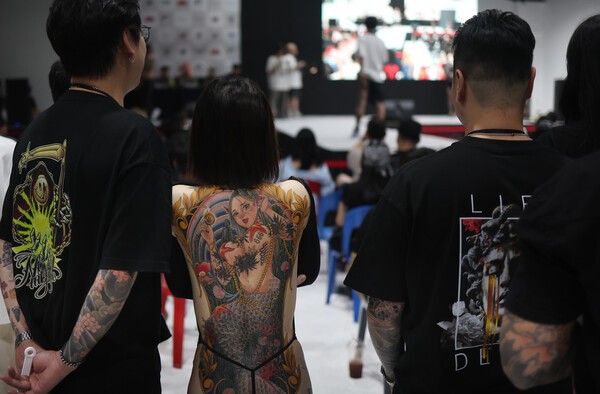
Despite restrictions, tattoos have gained popularity among younger generations, particularly with K-pop's influence. Many celebrities openly display tattoos, transforming body art from taboo to self-expression, while official statistics show that over 13 million South Koreans have tattoos.
Recent years also saw lax enforcement against underground tattoo artists, with authorities typically issuing fines rather than pursuing criminal charges.
The industry has actively promoted legalization and transparency, exemplified by the August 2022 "Inspire Tattoo Awards" in Seoul's Hongdae district, which attracted hundreds of international artists to showcase Korean tattoo art globally.
While the Korea Tattoo Association anticipates substantial economic growth and new government revenue from the legalized industry, the medical community remains opposed, arguing that tattooing's invasive nature carries health risks, including skin damage and infection.