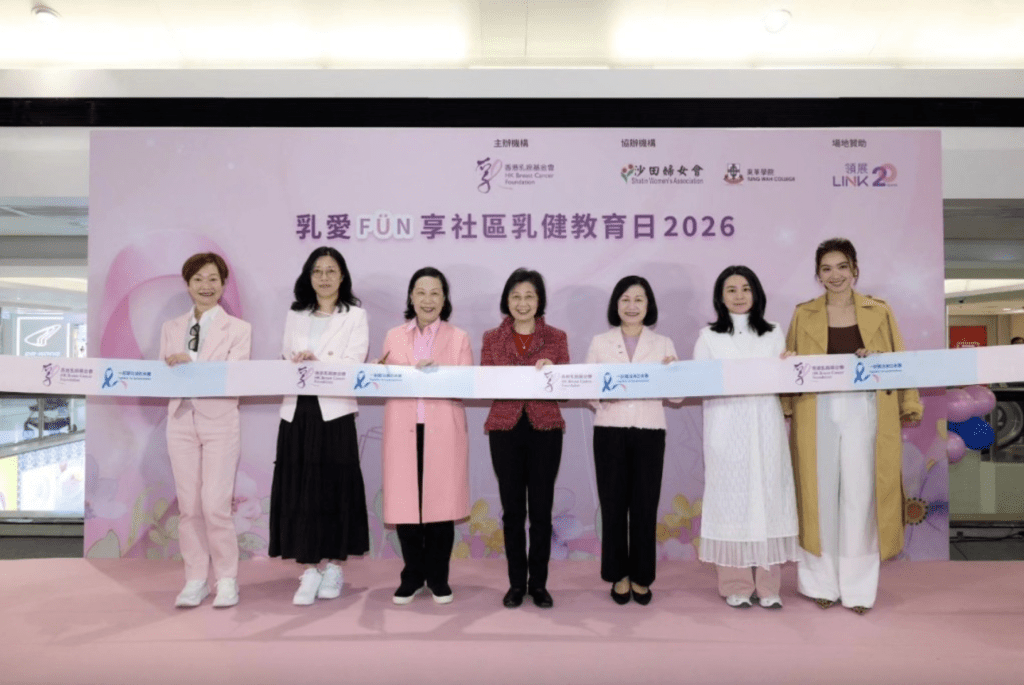


Breast cancer is the most common cancer among women in Hong Kong. Lymphedema is a common but often overlooked consequence of breast cancer treatment, which can have long-term impacts on patients' daily lives. The Hong Kong Breast Cancer Foundation recently held a two-day "Love & FUN" Community Breast Health Education Day, announcing the launch of over 600 free lymphedema measurement and care slots.
Foundation Founder Dr. Polly Cheung Suk-yee stated that many women delay breast examinations due to lack of information, financial pressure, or embarrassment. The Foundation has always urged women to undergo early breast cancer screening. She pointed out that lymphedema is a common but easily overlooked sequelae after breast cancer treatment. Therefore, the Foundation is launching free lymphedema measurement slots and related care services, hoping to help newly diagnosed patients, those undergoing treatment, and underprivileged women identify problems early and reduce the risk of complications.
Among the 600 free lymphedema measurement and care slots, 80 slots are reserved for newly diagnosed breast cancer patients or those undergoing treatment (0-6 months).
Another 403 slots will provide two free lymphedema index measurements and care services to women from low-income families aged 40 and above. Additionally, 160 underprivileged women already suffering from lymphedema will receive two sessions of guided self-treatment and personalized management plans.
Understanding Lymphedema: Symptoms and Treatment
According to the Hospital Authority, the lymphatic system is one of the body's circulatory systems, comprising lymph fluid, lymphatic vessels, lymph nodes, and other lymphoid tissues. Lymph fluid is the interstitial fluid that seeps from the blood circulatory system, containing large molecules such as proteins, water, and fats. Lymphatic vessels run alongside blood vessels and are responsible for transporting lymph fluid throughout the body. Lymph nodes filter harmful substances to protect the body from infection.
What is Lymphedema?
According to the Hong Kong Breast Cancer Foundation, lymphedema is a chronic inflammation caused by a malfunction in the lymphatic system, leading to the accumulation of lymph fluid in the interstitial spaces. Lymphedema can appear months or even years after breast cancer treatment. Breast cancer surgery or radiation therapy can damage lymph nodes, thereby obstructing the flow of lymph fluid. Studies have found that 5% to 56% of patients develop lymphedema in the upper arm within two years of breast surgery.
Symptoms of Lymphedema
Common symptoms include swelling in the affected limb, a feeling of heaviness, and aching weakness. The accumulated lymph fluid can also lead to tissue fibrosis caused by chronic inflammation of the soft tissues. Early-stage symptoms can be reversible, while later-stage symptoms tend to recur more easily. Generally, lymphedema does not cause pain in the affected limb. Pain is usually caused by soft tissue tightness, such as axillary web syndrome (cording) or nerve sensitivity.
Managing Lymphedema
Lymphedema cannot be cured, but early intervention with physical therapy such as exercise and lymphatic drainage can reduce the patient's risk of developing lymphedema after axillary lymph node dissection. Appropriate daily care can also alleviate symptoms. If left untreated properly, the swelling will persist, subsequently hindering limb mobility and causing adverse physical and psychological effects.