Written by Rachel Blois, Yew Chung International School (YCIS) Educator
“Emergent Curriculum begins with an openness to what children are doing, thinking, and saying.” (Stacey, 2009). At Yew Chung International School (YCIS), each child is treated as a unique individual, ‘with innate talents and gifts that should be nurtured to the fullest potential’. In Early Childhood Education, YCIS educators spend a long time discovering how to carefully curate a supportive, warm and holistic environment for each child.
Why is an Emergent Curriculum important?
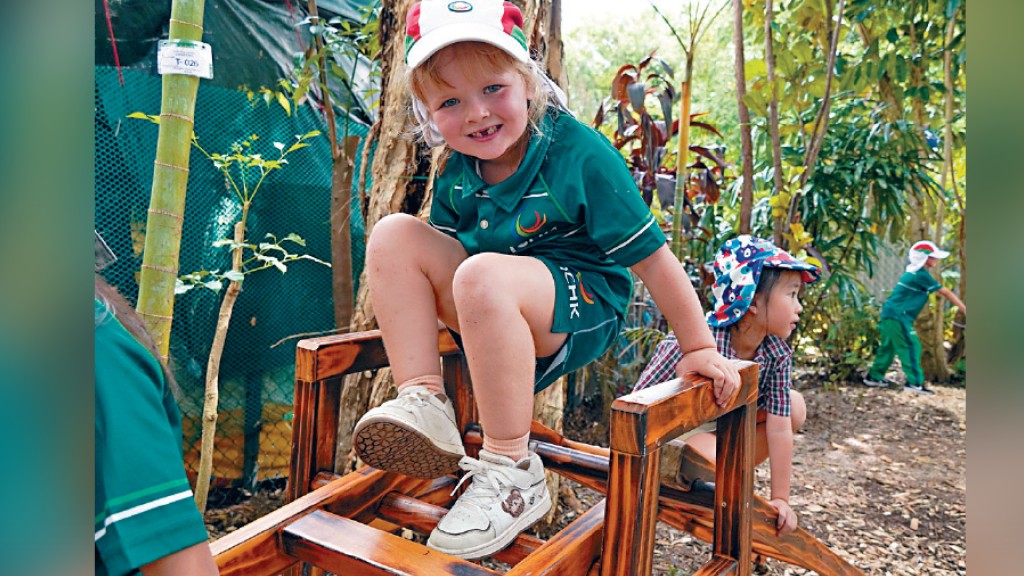
In each YCIS classroom, there is a unique group of learners, each with their own interests, passions and curiosities. One child might be fascinated by insects, big and small. Another might want to sit and paint for some time each day. While another builds imaginatively with construction toys. An Emergent Curriculum allows children to choose their own activities and resources. This child-centred approach allows children to explore, develop and grow at their own pace.
At YCIS, teachers observe the child and notice what he or she is doing in the environment. This is a complex process as the teachers have to go beyond the obvious to observe the underlying meaning behind their play. Before responding, the teachers will reflect on what they have seen as a teaching team and engage in a reflective discussion on how they can extend the learning playing out within their own classrooms. Teachers will also talk to parents about their observations of what their child has been engaging with at home. At YCIS, parent perspectives are always welcomed as it helps to give the teachers a deeper insight into the learning that is happening.
From there, the teachers respond in a way that provides opportunities to support and extend the learning. This could be a conversation with the children to find out more, adding new resources to scaffold the children’s development or creating a provocation to explore something new.
What do teachers do in class?
Each class has Co-Teachers who are able to support children by speaking English, Cantonese or Mandarin. The first priority in the class is to make every child feel safe and welcome. Relationships play a critical role within our teaching and learning (Lee, Carr & Green, 2001). YCIS teachers spend extended amounts of time observing children as they play, engaging in dialogue with them and supporting them as their relationships develop. As the teachers get to know the students and their families, they learn more about what interests the children and create learning experiences specifically for each child.
How do I know my child is learning?
A common question the teachers might be asked is “How will my child learn the alphabet if he’s only playing with trains?” YCIS teachers seek to observe a range of learning areas within children’s play, including social and emotional development, problem-solving, resilience and confidence. The development of these skills is essential in becoming a competent learner, and they start in the early years!
YCIS teachers will take observations, guided by the seven learning areas within the Early Years Foundation Stages (EYFS). This helps them ensure each child is developing holistically, and identify areas where a child might need extra support. The teachers are creative in how they observe as children have so many ways of exploring, creating and developing their knowledge. These observations may take place as they play with their friends, or in conversations with teachers. YCIS believes that each child learns at their own pace and the teachers work to provide holistic learning opportunities which cover all the learning areas within a child’s current interest and play.
YCIS teachers want to involve the parents, as much as possible in this process. As a parent, you are your child’s first teacher. You know your child the best, what makes your child excited, what frustrates your child and what their interests are at home. At YCIS, teachers will share the child’s progress as they make regular weekly contact with the parents as well as through Portfolios, Learning Journeys, Parent Teacher Conferences and Reports. YCIS values a strong Home-School Partnership and the relationships the teachers build with families.
How can I support my child at home using an emergent approach to learning?
YCIS teachers’ advice is to start slow! There are so many ways to develop your child’s emergent play at home, so take some time to figure out what might work for your family. Rather than buying specific toy sets or models, you can buy or collect ‘open-ended’ materials. Open-ended toys and resources are objects which may have many uses and are not bound to one form of play.
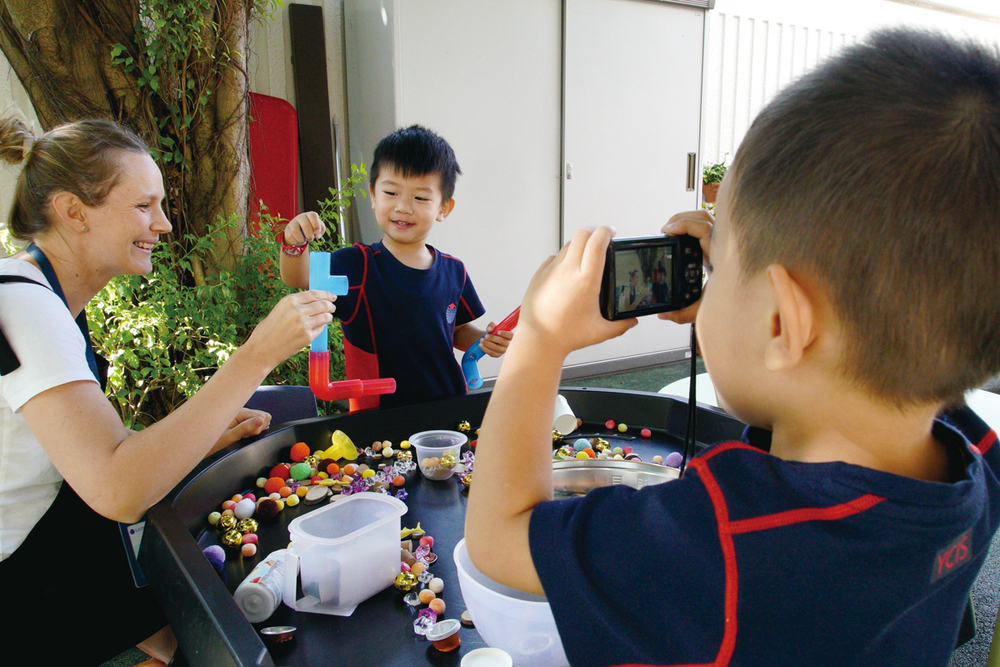
For example, plastic food items, such as fruits and vegetables, have one function – to be pretend fruits and vegetables. However, a resource such as pom-poms could be used for role-play, dramatic play, sensory play or creative play. They stimulate your child’s imagination and creativity. There are lots of open-ended materials that you can find within your home as well as in nature.
References
Lee, W., Carr, M., & Green, P. (2001). Documentation of Learning Stories?: a Powerful Assessment Tool for Early Childhood, 1–26.
Stacey, S. (2009). Emergent Curriculum in Early Childhood Settings: From Theory to Practice. Redleaf Press.
Yew Chung International School
Enquiry: 2338 7106
Email: admissions@ycef.com
Website: www.ycis-hk.com
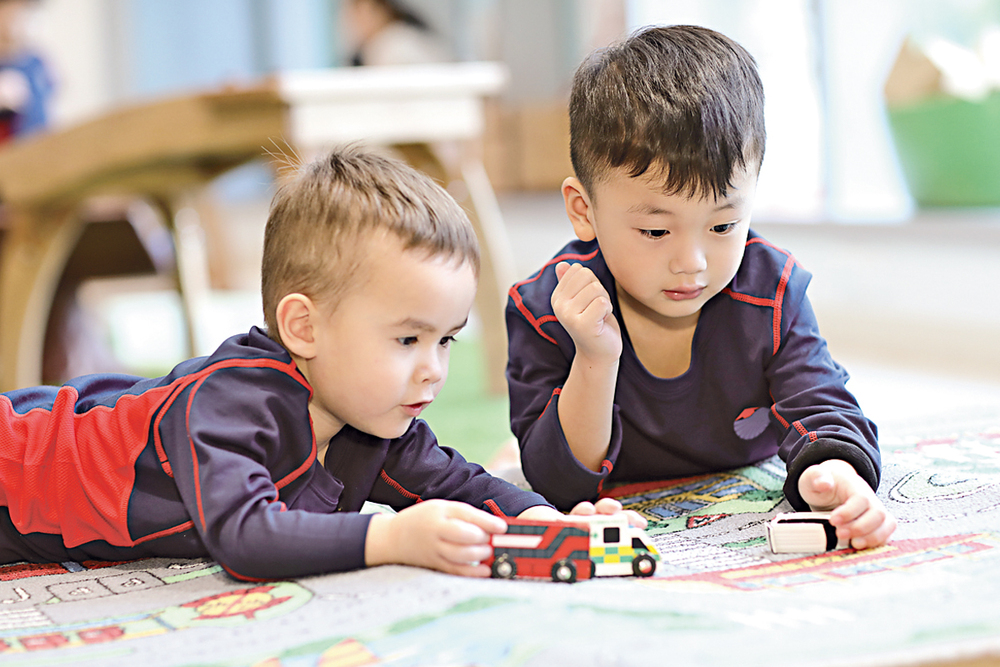
An Emergent Curriculum allows children to choose their own activities and resources.
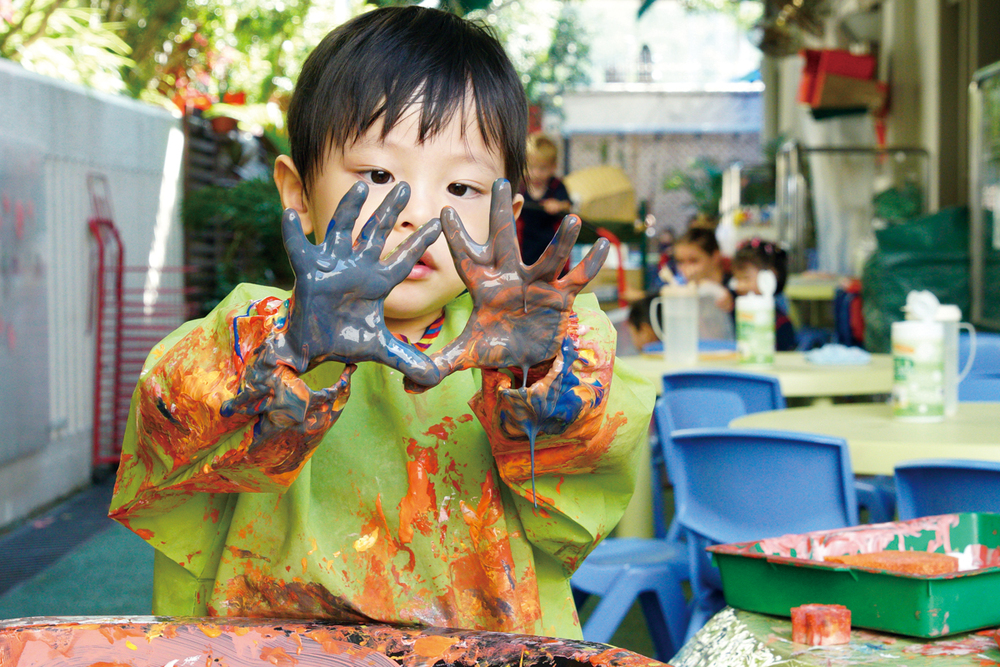
Children have daily opportunities to explore with sensory and messy play, allowing them develop a deeper understanding of the world around them while exploring with their senses.
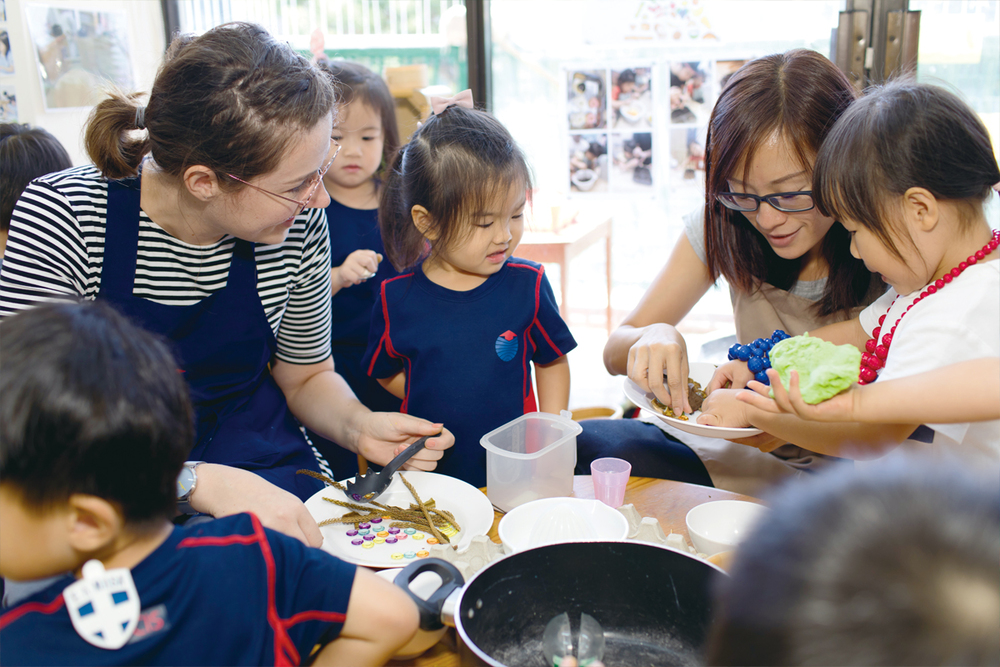
Our Co-Teachers engage with children’s interests as a way to strengthen their relationships with them.
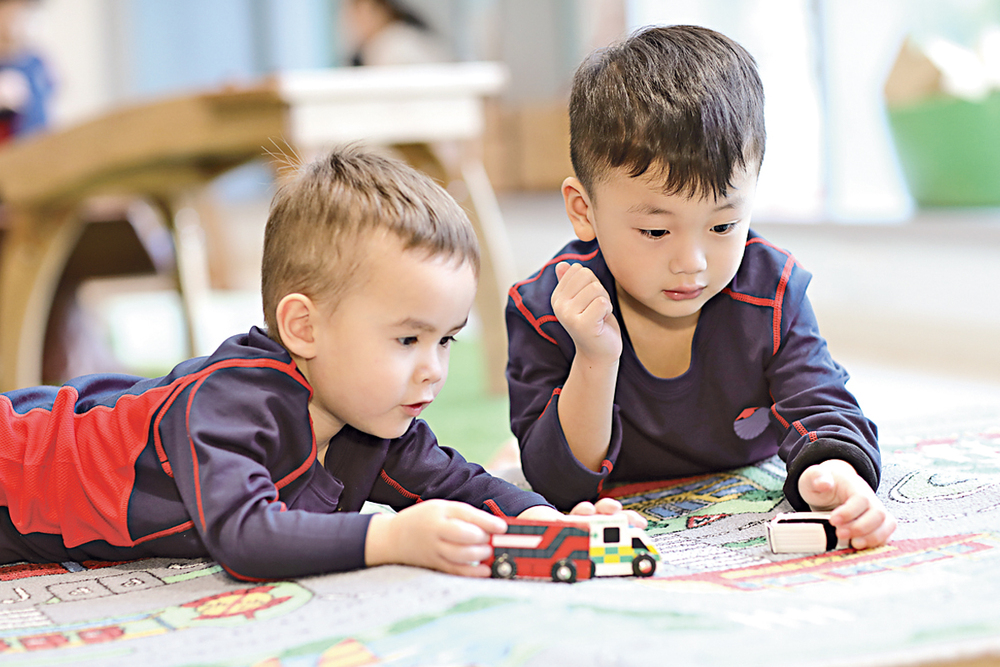
Children explore various loose parts and classroom resources to extend and solidify their learning.