Read More
Domestic travelers spent 166.9 billion yuan (HK$181 billion) during one of China's longest breaks, the May Day holiday, a rise of 13.5 percent from pre-pandemic levels, government data showed yesterday.
ADVERTISEMENT
SCROLL TO CONTINUE WITH CONTENT
But expenditure per head lagged 2019 rates.
Boosting consumer confidence has presented a key challenge for Chinese authorities this year amid a declining property market, high youth unemployment and deflation pressures.
Total spending over the period from May 1 to May 5 was 12.7 percent higher than that of last year after China lifted Covid-19 curbs.
The tourism ministry recorded 295 million domestic trips during the holiday period.
However, spending per head fell 11.5 percent to 565.7 yuan for the period from the pre-Covid levels in 2019, Reuters calculations based on official data show.
The data dampens hopes for rebounding consumption after spending strengthened during another recent holiday, the Tomb Sweeping festival, but wasn't a surprise, said Jonathan Yan, a Shanghai-based partner at consultancy Roland Berger.
"Overall, I think people are tightening their belts and confidence is subdued, but they still want experience," Yan said, adding that many travelers opted for short-haul overseas destinations such as Japan and Korea for the five-day break.
"They are not spending more money than before, but still traveling while trading down a bit or spending less on shopping," he said.
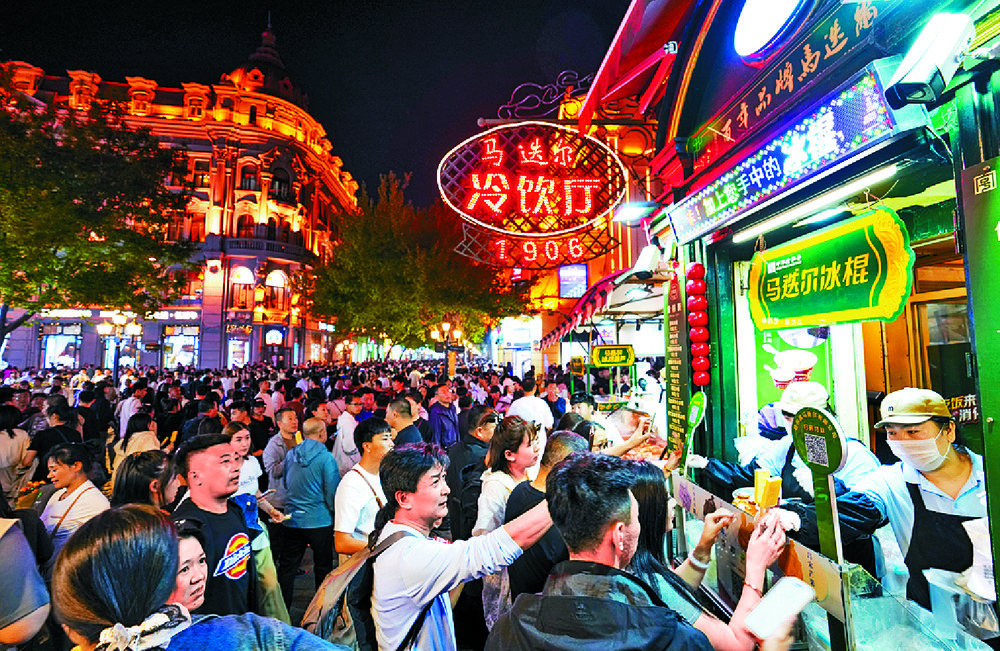
The holiday was popular with residents going on family trips due to the warm weather and blossoming flowers.
Domestic airline fares dropped in the run-up to the holiday as forecasts suggested more travelers opted to drive or had booked early to save expenses.
Growth in short trips was noticeable, Guotai Junan Securities said in a research note yesterday.
Growth in the number of trips in small cities and counties outstripped that in big cities, travel giant Trip.com added.
Box-office sales of 1.53 billion yuan roughly matched last year's figure of 1.52 billion over the corresponding period, the China Film Administration said.
Meanwhile, The Caixin/S&P Global services purchasing managers' index eased to 52.5 in April from 52.7 in March, remaining in the expansionary zone for the 16th straight month.
The 50-mark separates expansion from contraction.
But the service sector contracted for the third consecutive month as demand remained weak.
Meanwhile, a People's Bank of China survey showed that 46.5 percent of respondents said it was difficult to find a job in the first quarter and 61.8 percent planned to increase their savings.
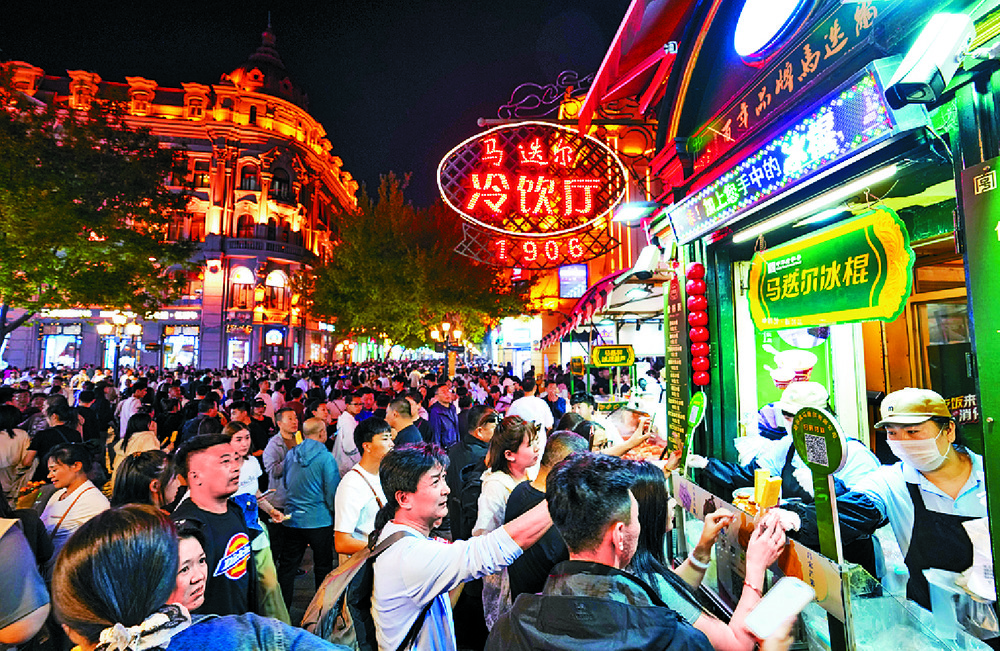
Spending per head was 11.5 percent lower than the pre-Covid level in 2019. Xinhua