Online studying and joblessness are just some of the stressors as a result of the pandemic in Hong Kong, Headwind mental-health website found in a survey of all its users between November 2020 and early this year.
Using the K-6 Distress Scale, which serves universally as the indicator of probable mental problems with 13 being the cut-off score out of 24, the survey showed that at least 15 percent of Hong Kong's youth scored above that - indicating that they are affected by possible mental illness.
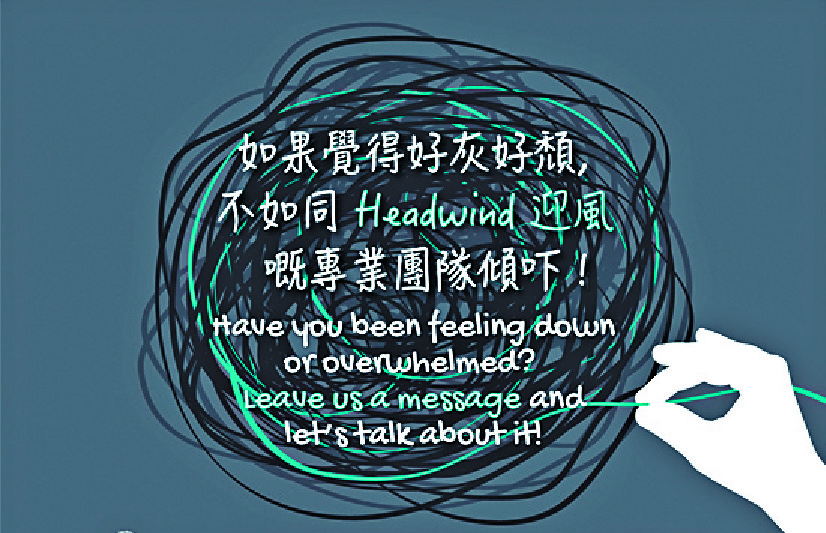
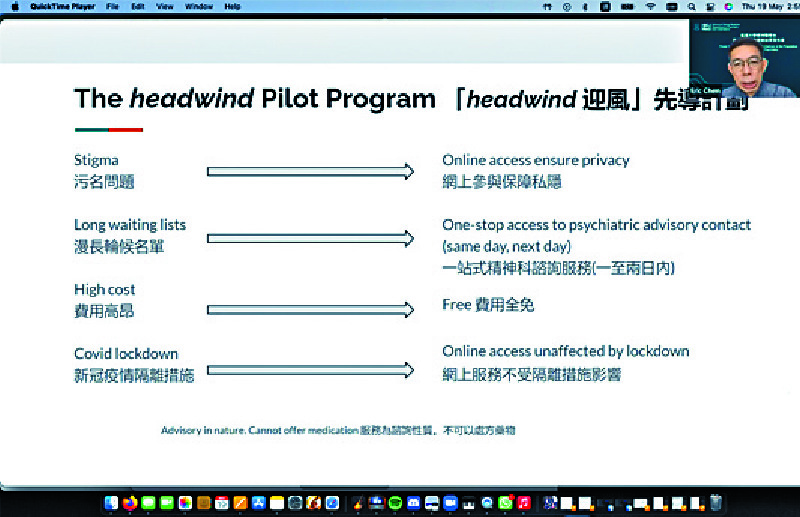
Headwind is an online help-seeking platform started by the University of Hong Kong's department of psychiatry to provide free mental-health services in a fast, easy and professional way to the public.
Since its launch in 2020, it has served more than 1,600 young people.
The program also focuses on attempting to discover the hidden mental-health distress in the city.
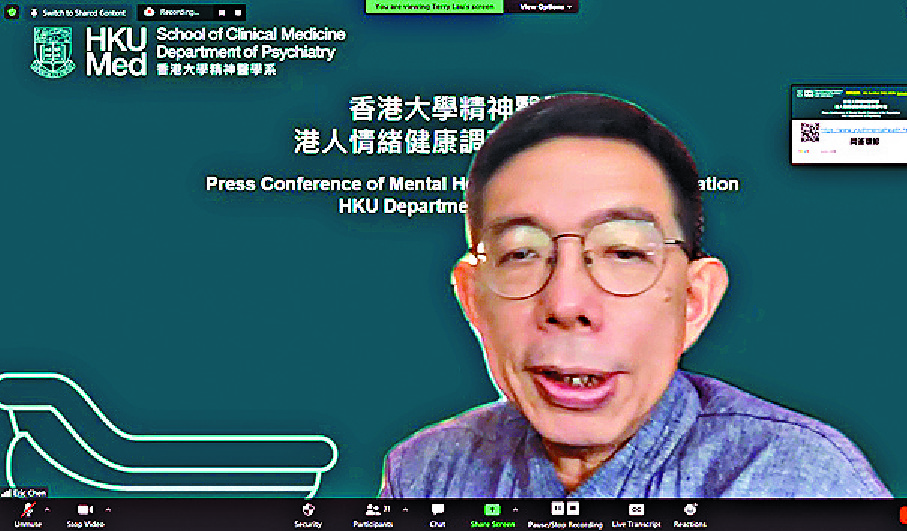
Eric Chen, the chair and clinical professor in psychiatry at HKU, said: "It's important for us, through the online way, to know the hidden people with mental problems that we can see and look for ways to tackle their problems."
For young people - ranging from school pupils to those in their 30s - their major stressors are academics- and work-related.
But there are some barriers to them seeking help.
"The most significant barrier is the expense of mental-health services," said Michael Wong, a clinical professor in the department of psychiatry at HKU.
"The second is people's uncertainties about their own psychiatric condition. There's also the unwillingness or lack of motivation to tackle the problems."
But how do people know if they have mental-health issues? Chan Kai-tai, a clinical associate professor in the department, said the two most significant indicators are anxiety and depressive symptoms.
"Anxiety symptoms include emotional, mental and bodily ones, while depressive symptoms include the loss of passion and motivation, problems of eating and drinking, and difficulties in going to sleep. If the above symptoms become apparent, it may be time to start looking for ways to tackle them step by step," Chan said..
"Within the online platform, there will be psychiatrists on the frontline, consulting the public and with the information provided by the users, psychiatrists will give them suggestions and advice based on the first impressions."
If users are willing, the platform will also provide follow-ups after two weeks.
As Headwind is an online platform, access to the program's services is simple.
The public can head to the website or send a direct message to the Headwind's Instagram and Facebook page (@headwind.hkupsychiatry).
After contacting Headwind, it usually takes only a day or two to receive the psychiatric advisory contact via an online interview, in which users have the right to take part without the camera on.
One of the service's users, a 33-year-old nicknamed Mango, said about her experience with the help of Headwind: "Originally, I didn't plan to look for a psychiatrist because it would make me doubt if I had mental health problems. So I didn't seek help from a psychiatrist even if I was feeling bad.
"But within the first 30 minutes of talking to the psychiatrist, I got to clarify my existing doubts and questions and move forward."
Mango was referred to a psychiatrist for assessment and treatment.
"My emotions became stable and the courses prepared by Headwind helped me in sleeping and stress-control, making me equipped to handle my mental problems in different ways," she said.
Another user, a 20-year-old student Amy, encountered problems with family and academics before seeking help from Headwind, which she discovered on Instagram.
She said: "There were follow-ups after the first time talking to the psychiatrist, such as a weekly online intervention of a workshop in stress-coping. In the workshop I learned how to handle stress and be more aware of the symptoms and stressors.
"One doesn't have to notice the significant emotional problems to seek help, and it's okay if you're feeling down or unhappy and look for someone to talk to through the platforms available or the consulting services provided by schools."
Mental-health issues are nothing to be ashamed of, noted Chen.
"It's totally normal for one to have mental-health problems but we should acknowledge them and try to make a change with the help of others," he said.
"We all have ups and downs but it's important to try to seek help at difficult moments, pay attention to self-care. And it's always good to be the one helping when one feels better or grows up."
Website: www.youthmentalhealth.hku.hk
charlie.ng@singtaonewscorp.com