Read More



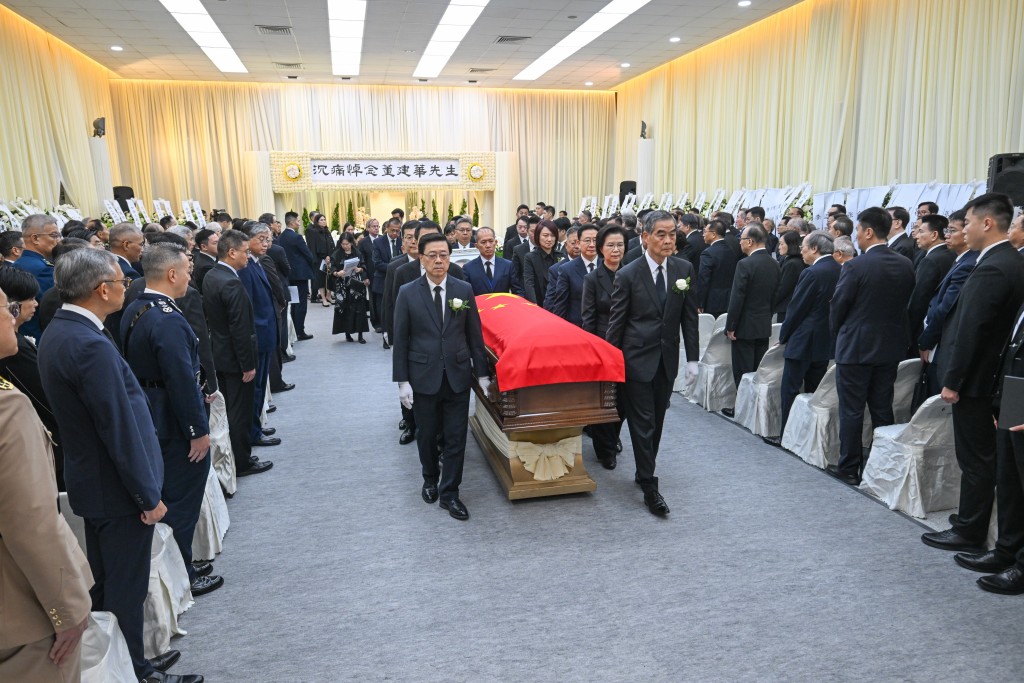
John Lee and CY Leung lead pallbearers for Tung Chee-hwa
20-09-2026 15:54 HKT

HKO forecasts showers Tuesday, tracks possible cyclone east of Philippines
21-09-2026 17:31 HKT
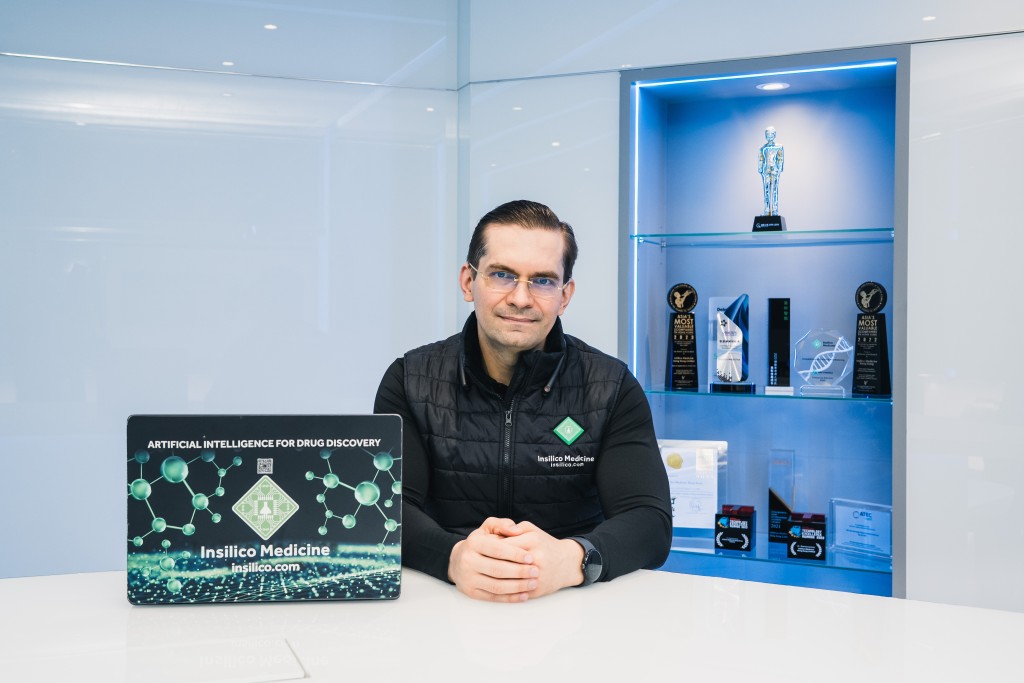
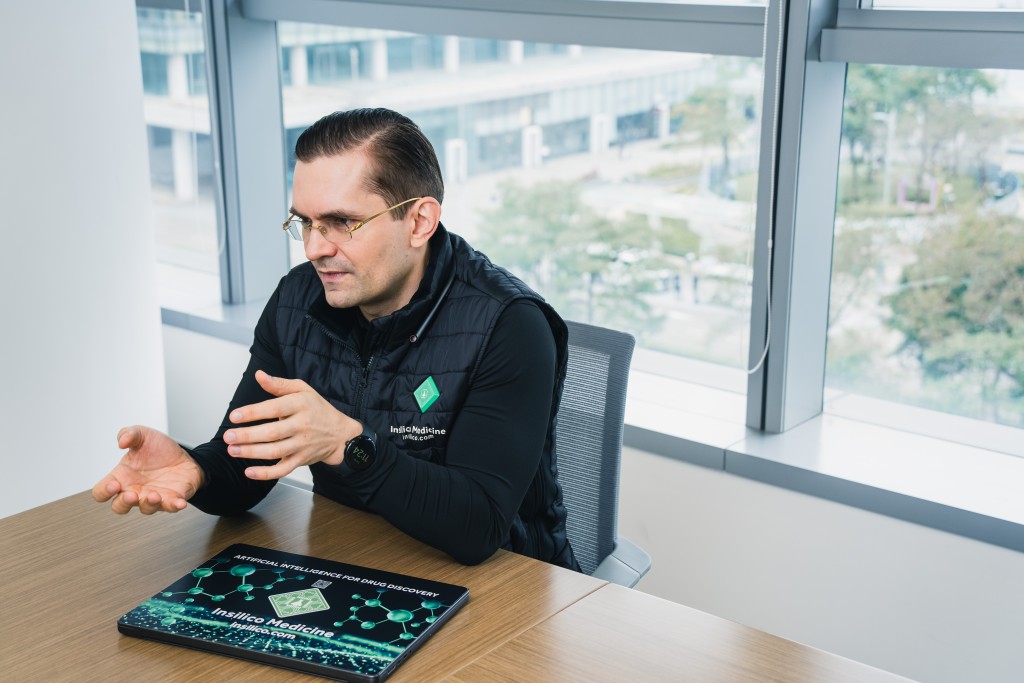
Living a long life is something we all dream of, though it often feels out of reach. Alex Zhavoronkov, founder and chief executive of Insilico Medicine, has been working toward this – pursuing longevity is not simply adding more years to lifespans, but also ensuring those years are healthier and filled with quality.
Founded in 2014 in the United States, Insilico studies the biological processes of aging, and it has now grown into a global biotechnology leader that combines artificial intelligence with automation to advance drug discovery.
Zhavoronkov describes the field of drug discovery as a war, noting the war is "with aging and diseases that kill 68 million people every year" on the planet.
Insilico’s early years were focused on developing algorithms – open source, collaborative, and published for the scientific community. By 2019, the company leaped from algorithms to software, building platforms in parallel with its drug discovery efforts.
“If you are really good at AI, you need to show that you can scale,” he said. “If you cannot scale, why call yourself AI? You are just a biotech.”
“Most companies in their history, they never got a drug approved, or they approve something that is very low novelty," he explained. “We actually invent the target, and we generate the molecule, and we take it to the clinical trials all by ourselves.”
Over 10 of Insilico’s innovative pipelines have already received Investigational New Drug, or IND, clearance – a crucial first step before human clinical trials.
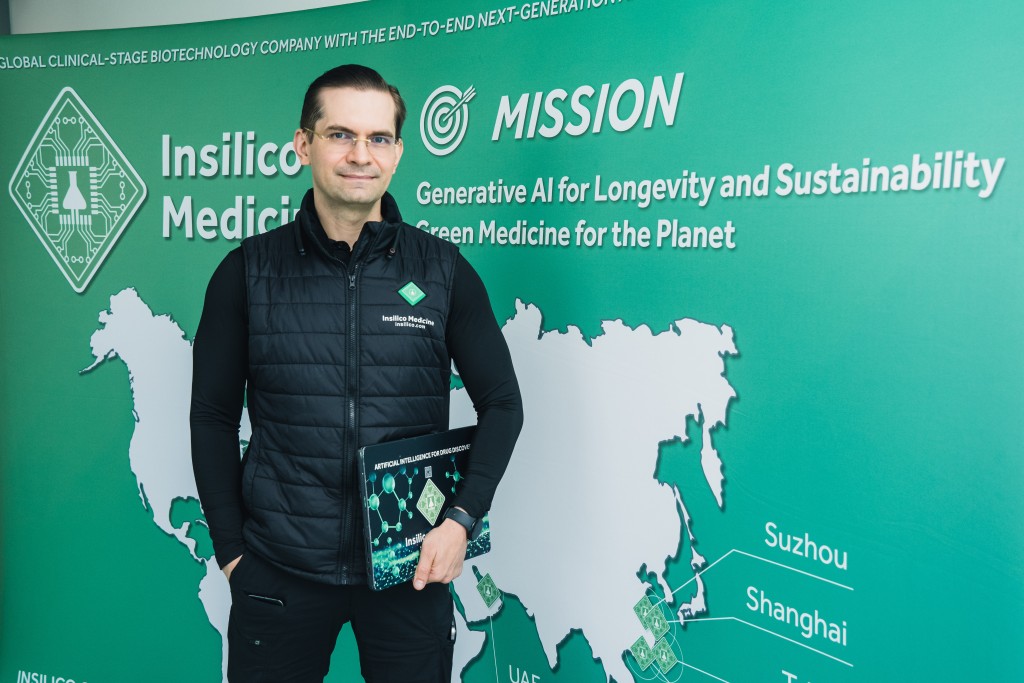
Last December, Insilico became the first AI-driven biotech to list on the Hong Kong Stock Exchange. The initial public offering raised HK$2.28 billion, marking the largest biotech fundraising in Hong Kong that year.
Zhavoronkov underscored the company’s cautious approach to financing, avoiding inflated valuations and waiting for what he called the right moment – after the biotech winter and overhype.
“I think that AI is a bubble, and this bubble can burst any time, so it’s very important to price yourself conservatively and not to dip if things go traumatic," he said.
Zhavoronkov also said the company aims to expand in China, noting that he likes mainland cities such as Chengdu, Beijing, Nanjing, Qingdao, and Dalian, which are rich in talent and eager to incubate new companies.
For the next decade, Zhavoronkov looks forward to securing several drug approvals, proving that AI can deliver breakthroughs validated from large clinical studies.
“Human life is the most valuable, precious resource to preserve,” he said. “And countries with a lot of money, they often try to diversify and go into other forms of energy, into trade, into sustainability.”
Insilico also hopes to demonstrate drug discovery in the UAE, where a small team of four to five people has already launched programs in Abu Dhabi.
“I want to create a drug discovery powerhouse there too to help them diversify the economy from oil into something that is more addictive than oil, like anti-aging drugs, so it’s good for the world," he said.
Last Thursday, the company announced a partnership with the UAE to expand AI-driven drug discovery across the region, sending its shares up 8.7 percent to HK$56.10. Its initial listing price was HK$24.05.
Picture a home that is more than just a place to live, but a space where work, play, and research flow together effortlessly.
This is what Alex Zhavoronkov shared in his ambitious dream: to create a fully integrated, longevity biotechnology ecosystem.
"You can work, and maybe you can actually get hospital treatment in one place without leaving the place," Zhavoronkov explained. "You can utilize your own data to discover drugs not only for yourself, but for everybody."
“That is a paradise for a drug discovery scientist," he added.
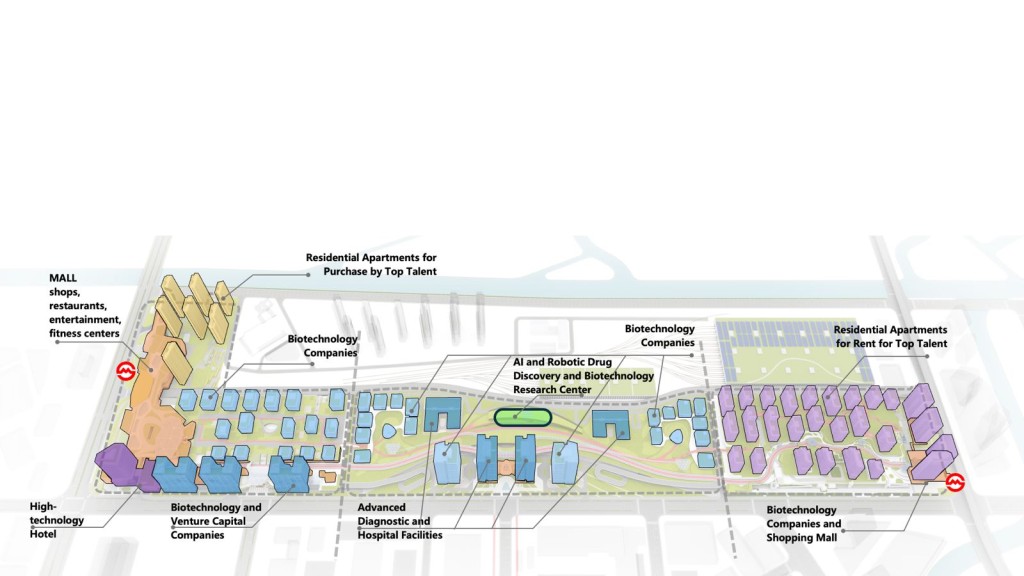
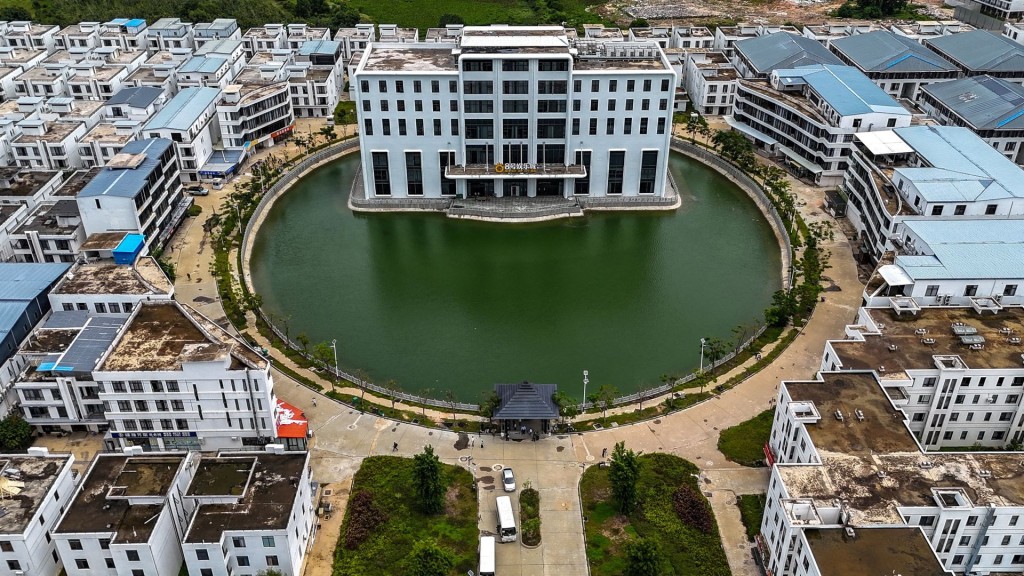
In Shanghai, the dream is already taking shape and transformed into reality. Insilico Medicine is collaborating with the local real estate development company Shanghai Pudong Development Group to pilot “SuperDNA,” a community rising beside the Shanghai Pudong International Airport.
Everyday infrastructure could be reimagined – CCTV cameras, for example, might double as healthcare tools, spotting posture issues or subtle changes in gait before they become serious, all powered by artificial intelligence.
For dense urban landscapes like Hong Kong, Zhavoronkov proposed a “DNA Tower," a vertical biotech hub rising on the West Kowloon waterfront, with the International Commerce Centre as its backdrop, making it a unique landmark in the city.
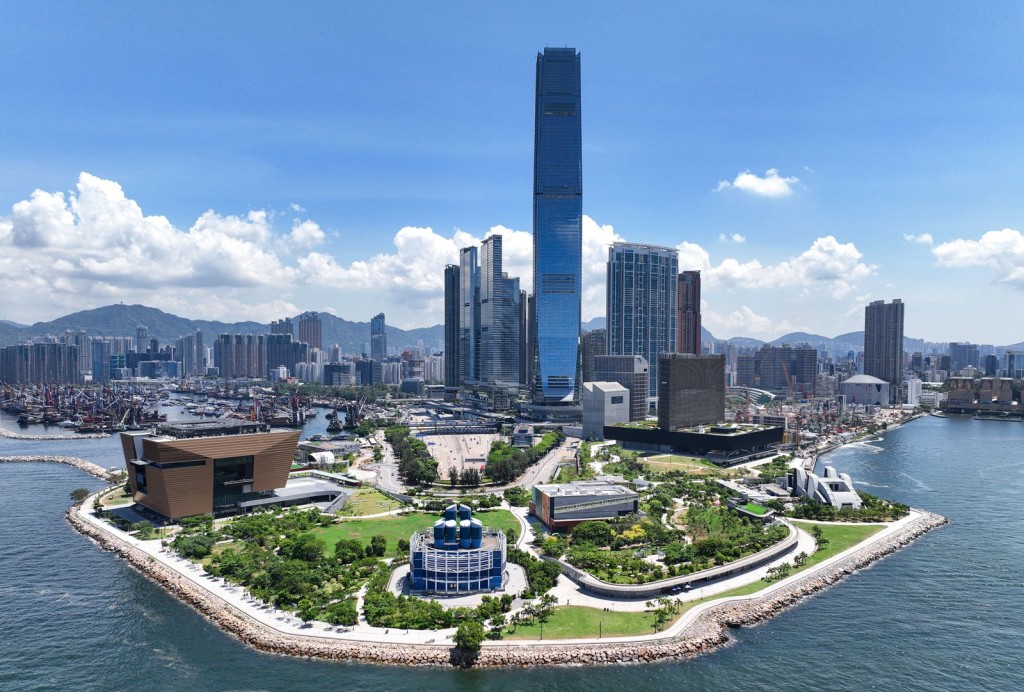
Inside, the tower would bring together living spaces, wellness facilities, corporate offices, and cutting-edge biotech labs – an all-in-one hub where science, business, and daily life coexist under one roof.
“If you want to make Hong Kong into a cultural statement that is focused on biotech and technology, you don’t need to hide it, you need to put it on the waterfront,” he said.
While the bold concept has yet to be taken and may need years for someone who recognizes its value to invest it into another landmark for the city.
Alex Zhavoronkov sees Hong Kong as “the Switzerland of China,” a "very stable, very open" place that blends East and West, welcomes business, and offers stability.
“I think China is the next big thing that’s unquestionable, and that trend, like you cannot fight it, you can only live with it," Zhavoronkov said.
Tracing back to 2019, the move to set up Insilico’s international headquarters for Greater China operations in Hong Kong was both strategic and personal. The city’s proximity to China’s vast pharmaceutical market, investors eager to support biotech innovation, and world-class research partners made it an ideal base.
Zhavoronkov praises the city’s efficient use of resources, its green spaces, and infrastructure that outperforms many global cities.
He also calls the city the best place to study aging, with the Census and Statistics Department projecting the population to hit 8.19 million by 2046, 36 percent of whom will be 65 or older.
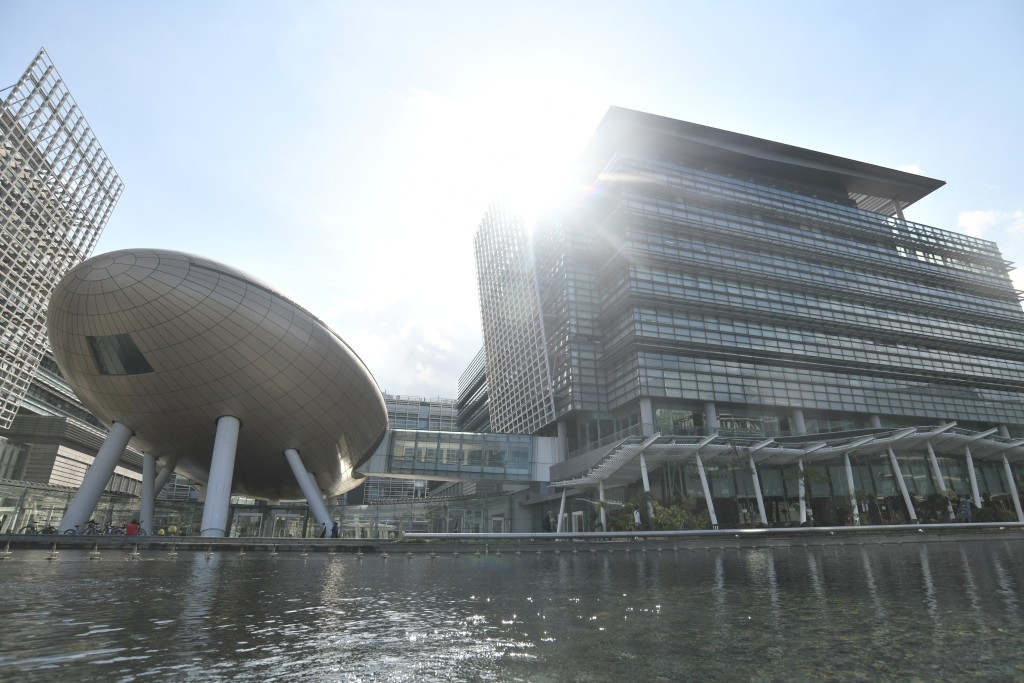
Meanwhile, the University of Hong Kong, the Chinese University, and the University of Science and Technology brought a robust talent pool for Insilico’s growth.
“If you have a company that can actually collaborate with the university and then retain talent, that is a great opportunity to build something locally,” he said.
Hong Kong’s connectivity is equally important. With high-speed rail from West Kowloon Station, Zhavoronkov noted that Shenzhen is just around 30 minutes away, giving him direct access to the mainland’s manufacturing and robotics ecosystem.
“I actually think that Hong Kong is probably the best place to live in the world because it’s very small and very compact,” he said, noting one could go hiking, wake surfing in the harbor, as well as meeting high-profile scientists.