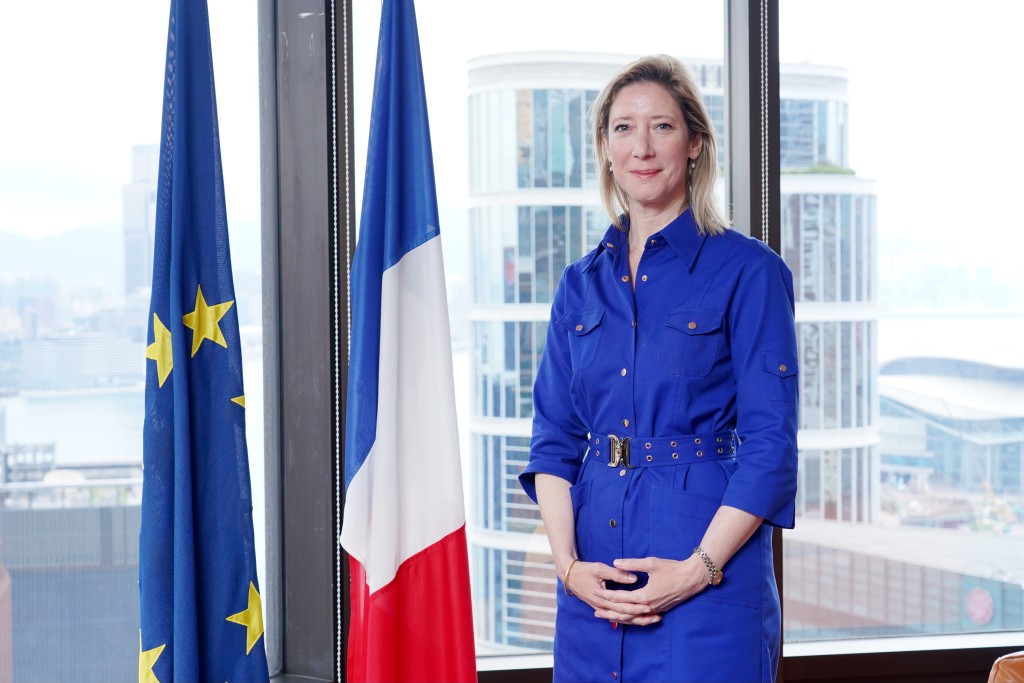
Christile Drulhe, who speaks Putonghua and majored in Chinese studies, describes herself as one of the many people in France who are attracted by Chinese culture.
“I was attracted by Chinese and Asian cultures since a young age, which is actually the case for a lot of French people,” she said. “I think there is this mutual attraction and fascination.”
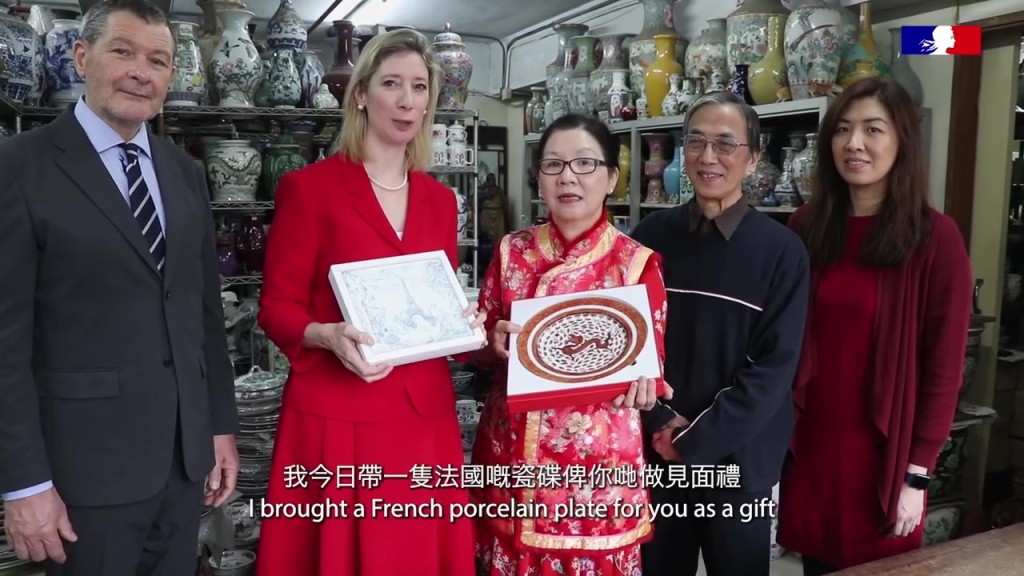
She also shows love in Chinese furniture, crafts and porcelain, adding that she has a collection at home.
Drulhe, who has over 20 years of diplomatic experience, was appointed as French consul general in the two SARs in 2022. Before that, She worked in the central administration in Paris and had served as a political counsellor at the French embassy in Beijing.
She said her first priority when she started was to relaunch France’s exchanges after three years of the pandemic, a goal that has been achieved. She pledged to continue to elevate these exchanges, including in business and culture.
Drulhe said China has long-standing history with France, while Hong Kong also has deep-rooted connections with the country and Europe which are reflected in some of the city's heritage buildings.
They include Bethanie, now the campus of the Hong Kong Academy of Performing Arts in Pok Fu Lam, and Nazareth, now University Hall, a declared monument and student residential hall of the University of Hong Kong.
The Former French Mission Building in Central and L' Asile de la Sainte Enfance, now St Paul's Convent School in Causeway Bay, are among examples of hospitals, churches, schools and orphanages that were established by French religious bodies back then.
The Former French Mission Building in Central and St Paul’s Convent School are among examples of hospitals, churches, schools and orphanages that were established by French religious bodies back then.
A recent exhibition at Hong Kong Palace Museum also explored the ties between the Forbidden City in China and the Palace of Versailles in France. It showed a letter written by King Louis XIV to Emperor Kangxi in 1688.
Composed in French, the letter conveyed the king’s wish to send Jesuits to share scientific knowledge with his Chinese counterpart, “our very dear and good friend,” and expressed his admiration and desire for cultural exchanges.
(Jamie Liu)