The artificial intelligence gap between the United States and China has been narrowed, according to a research co-conducted by Peking University.
China scored 58.01 in the latest Global Artificial Intelligence Innovation Index, while the US topped the list with 77.97, according to the report jointly released at the World Artificial Intelligence Conference in Shanghai by the Institute of Scientific and Technical Information of China and Peking University.
The gap between the two AI powerhouses narrowed from 22.02 in 2023 to 19.96 last year.
Both were listed in the first class of the index, far higher than the United Kingdom's 36.6, No.3 of the whole list and No.1 of the second class.
The report assessed the AI innovation development of 46 countries in five major aspects, the mainland media reported.
China’s open-source AI projects grew 150 percent compared with 2018, and the number of AI enterprises increased by more than 550 percent from 2013 to 2024, according to the report.
But China is still left behind the United States in terms of the number of high-value patents and the scale of venture capital investment, according to the report.
For this year, China's AI startup DeepSeek amazed the world and triggered a sell-off of Nvidia’s shares in January with its low-cost namesake AI model and the optimism about Chinese tech shares. Giants like Tencent (0700) and Alibaba (9988) also stepped up efforts in their own models and commercialization.
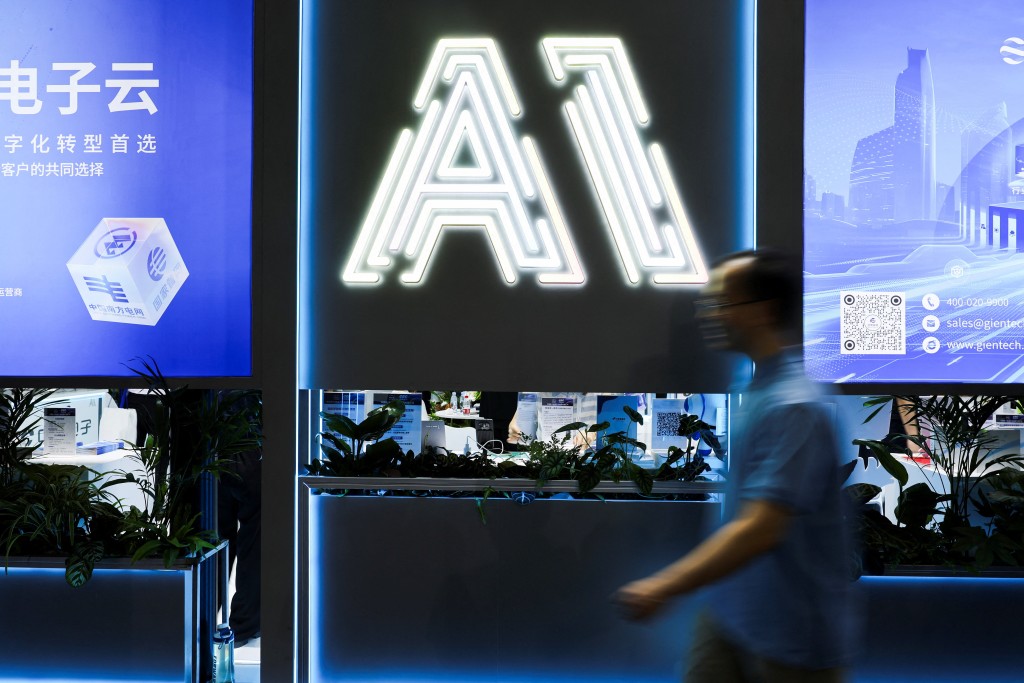
On Saturday, China's Premier Li Qiang said at the WAIC that the country proposed to set up a global AI organization to foster international cooperation in the fast-developing industry. The world's second-largest economy is also considering having the organization headquartered in Shanghai.
Shanghai's Pudong District aims to attract 1,000 more artificial intelligence companies in the coming three years, the district's government announced on Sunday, according to mainland media.
Pudong's AI goals also include having the core output value exceed 200 billion yuan (HK$219 billion).
The district will strengthen its AI infrastructure, including an intelligence computing cluster with at least 10,000 chips to be in operation by the end of the year and China’s first heterogeneous humanoid robot training field.
Currently, the scale of the AI industry in Pudong has surpassed 160 billion yuan, according to mainland media, citing Li Hui, Deputy District Magistrate of Pudong New Area.
Pudong also announced on Sunday an AI fund, involving 2 billion yuan in seed money.
At the WAIC, Baidu (9888) unveiled its next-generation digital human technology, NOVA, and plans to launch it in October. The digital human technology once powered a June debut of virtual Luo Yonghao, whose digital avatar—alongside a co-host avator—generated over 55 million yuan in gross merchandise volume during a single livestream, according to the company.
THEMIS QI