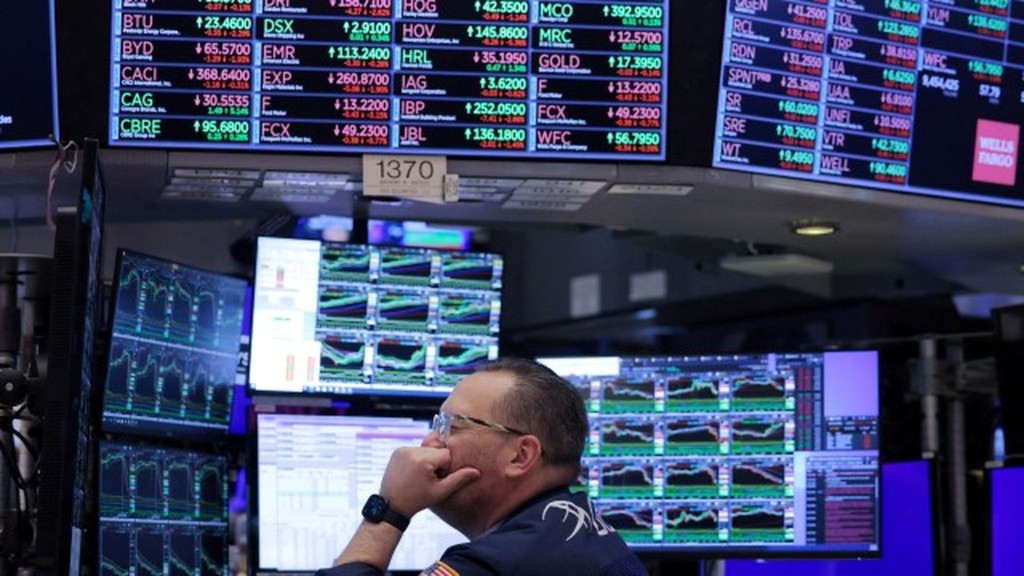
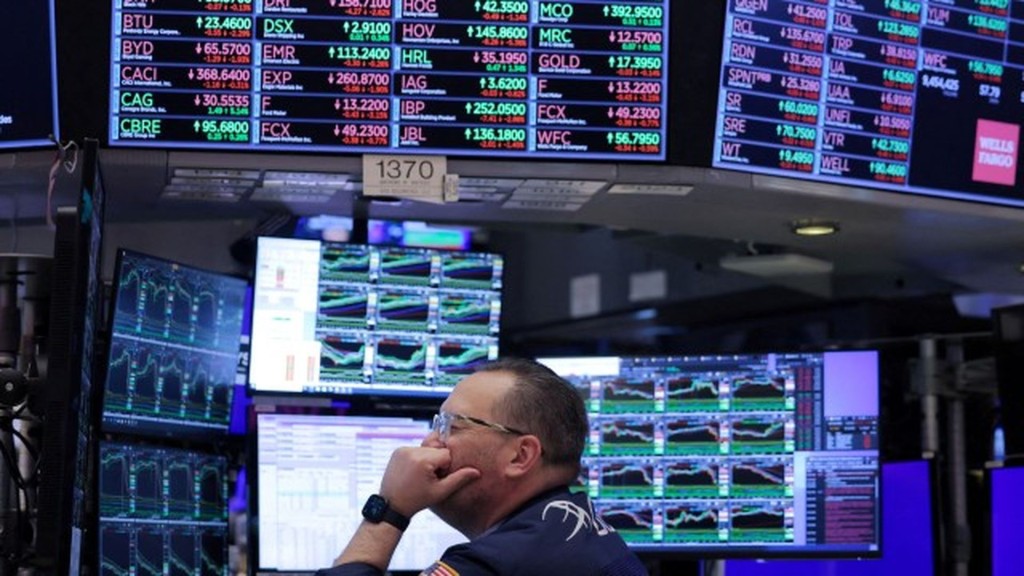
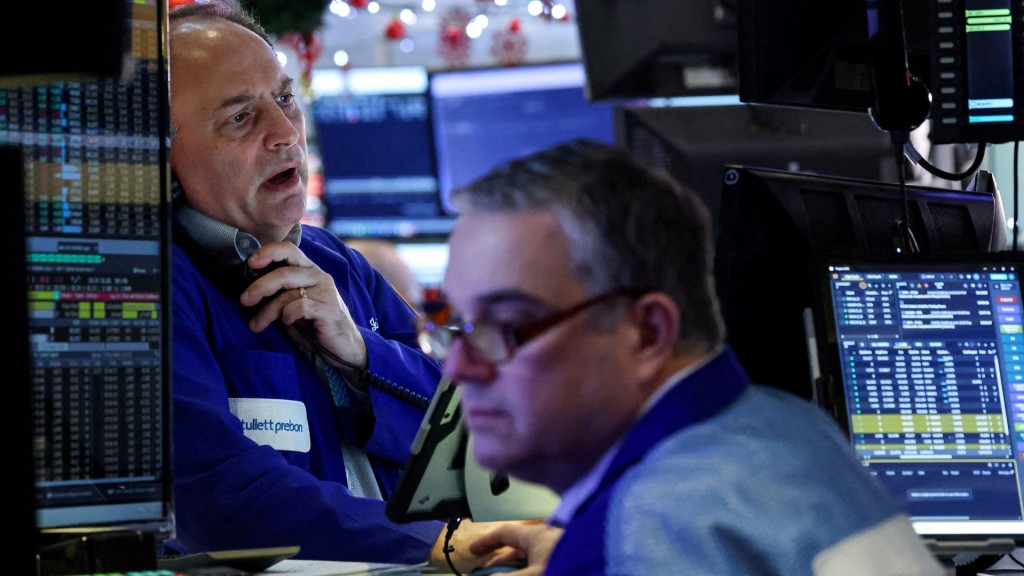
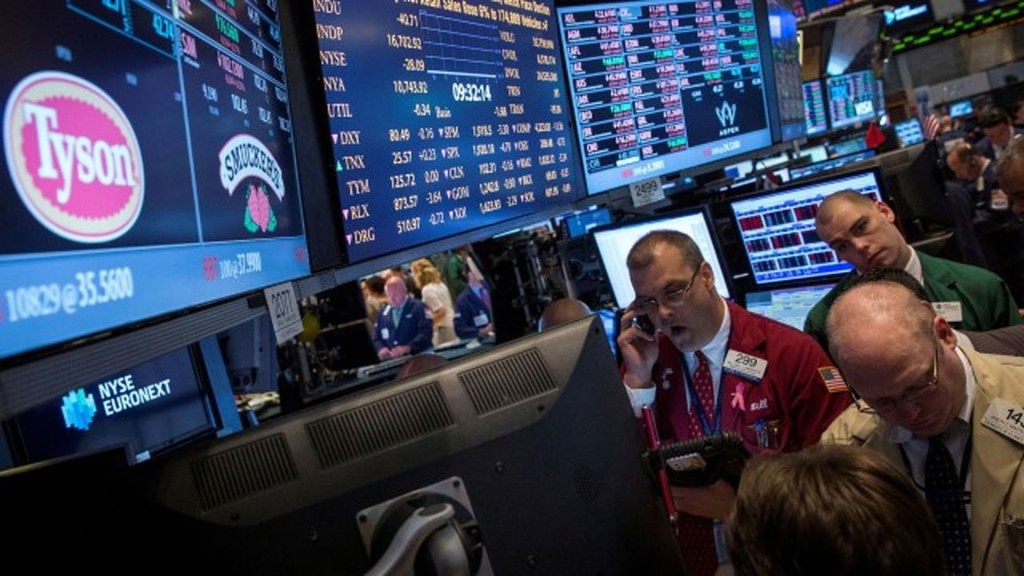
Wall Street's three major indexes finished lower on Monday while investors looked for moves toward Middle East de-escalation and waited for earnings reports due from major technology companies later in the week.
The technology-heavy Nasdaq fell less than the S&P 500 and the Dow as the chip sector recovered some of the prior week's losses and growth sectors such as communications services .SPLRCT and technology .SPLRCT gained some ground along with the energy stocks .SPNY.
The second-quarter financial reporting will pick up the pace this week, with results due from big names like Alphabet GOOGL.O, Tesla TSLA.O and Intel INTC.O, broadening the picture the earnings season provides of the health of corporate America after a week of results mostly from the financial sector.
"Everybody is waiting for earnings season to really get going," said Peter Tuz, president of Chase Investment Counsel, noting that investors may be "kind of sitting on their hands" ahead of results from sectors such as technology, energy and consumer-facing businesses.
Meanwhile, Yemen's Iran-aligned Houthis said on Monday that they were imposing a naval blockade on Saudi Arabia, opening a new front in the U.S.-Israeli war on Iranand widening the threat to global energy supplies and trade beyond the Gulf. But a senior Iranian official told Reuters that mediators have passed Iran a proposal to de-escalate the war with the U.S. that would offer a 10-day ceasefire to find ways to revive an interim deal reached last month.
After more than a week of bombing in the region, Joe Quinlan, head of CIO market strategy for Merrill and BofA Private Bank, said that investors were anxious for any efforts toward a Middle East resolution that could potentially re-open the Strait of Hormuz and improve oil supplies and prices.
"The hope is if you get some type of resolution — less bombing, more talk in the Middle East — that oil prices and gasoline prices would not go as high as we saw earlier this year and therefore, alleviate some of that pressure on consumer prices," Quinlan said, also suggesting that investors were preparing for earnings.
Markets are expecting S&P 500 earnings growth of 26% for the second quarter year on year, up from an earlier estimate of 23.7%, according to data compiled by LSEG.
In particular, investors will anxiously monitor results from chipmakers such as Intel and Texas Instruments TXN.O for any encouraging signs after the heavyweight Philadelphia SE Semiconductor Index .SOX ended Friday more than 20% below its late-June record high, confirming a bear-market decline.
After rising closer to 4% earlier in the session, the chip index closed Monday with a more modest 0.6% gain.
The Dow Jones Industrial Average .DJI fell 307.16 points, or 0.59%, to 51,839.26, the S&P 500 .SPX lost 14.41 points, or 0.19%, to 7,443.28 and the Nasdaq Composite .IXIC lost 12.17 points, or 0.05%, to 25,508.07.
In individual stocks, Apple Inc AAPL.O was the biggest drag on the S&P 500 with a 2% decline while the biggest boost came from Microsoft MSFT.O.
The benchmark index's biggest percentage gainer was Global Payments IncGPN.N, which added 5.8% after Morgan Stanley upgraded its rating for the stock to overweight and raised its price target to $100 from $65. Its biggest percentage decliner was Carvana Co CVNA.N, which fell 4.8%.
Alphabet rose 1.5%, providing the S&P's third biggest index-point boost after a report that its Google unit is developing a Gemini-integrated server chip aimed at improving AI efficiency and easing computing-capacity constraints.
Elsewhere, Domino's Pizza DPZ.Oshares finished up 2.1% after the pizza chain's quarterly revenue edged past Wall Street estimates.
Declining issues outnumbered advancers by a 1.72-to-1 ratio on the NYSE, where there were 106 new highs and 116 new lows. On the Nasdaq, 1,684 stocks rose and 3,030 fell as declining issues outnumbered advancers by a 1.8-to-1 ratio.
The S&P 500 posted 10 new 52-week highs and 6 new lows while the Nasdaq Composite recorded 46 new highs and 180 new lows.
Trading volume was light, however, with 15.50 billion shares changing hands on U.S. exchanges compared with the 19.94 billion average for the last 20 sessions.
Reuters