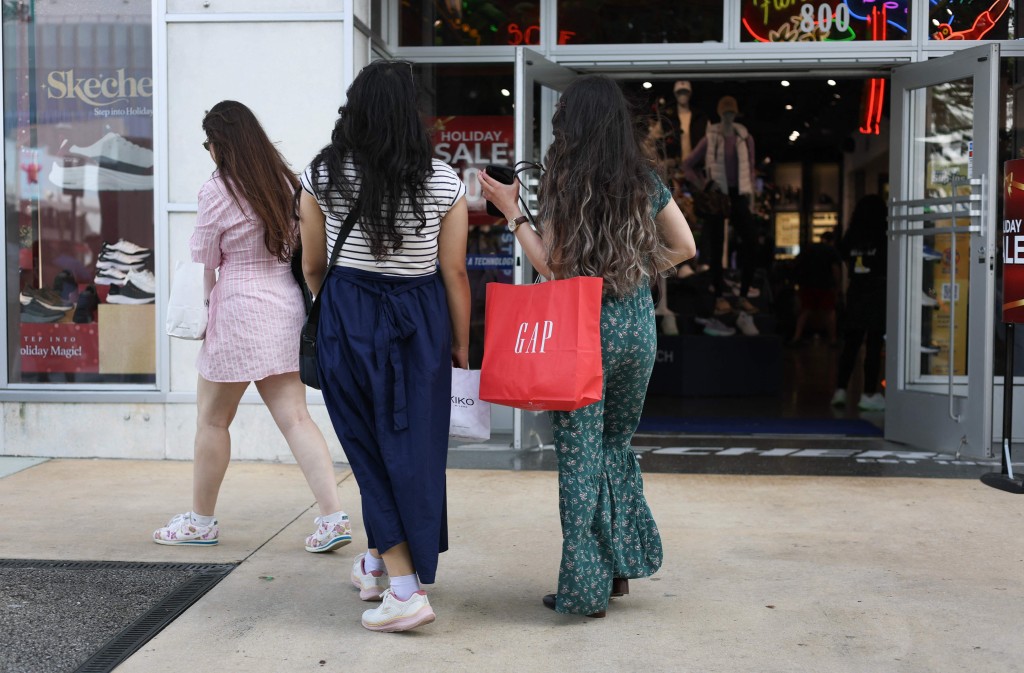
US retail sales increased marginally in June as lower gasoline prices weighed on receipts at service stations, though bargain-hunting consumers continued to support underlying spending.
Retail sales rose 0.2 percent last month after an upwardly revised 1.0 percent jump in May, the Commerce Department's Census Bureau said on Thursday. Economists polled by Reuters had forecast retail sales, which are mostly goods and are not adjusted for inflation, gaining 0.2 percent after a previously reported 0.9 percent advance in May. Estimates ranged from a 0.4 percent drop to a 1.0 percent increase.
Average gasoline prices fell to US$4.18 a gallon last month from US$4.61 in May, data from the US Energy Information Administration showed.
The modest relief at the pump, which reflected a retreat in oil prices as a shaky ceasefire between the United States and Iran took hold, freed money for spending elsewhere. But the truce collapsed last week and the renewed hostilities in the Middle East have sent oil and gasoline prices rising again.
Retail sales excluding automobiles, gasoline, building materials and food services increased 0.5 percent in June after an upwardly revised 0.8 percent rise in May. These so-called core retail sales correspond most closely with the consumer spending component of gross domestic product, and were previously reported to have advanced 0.7 percent in May.
Core retail sales were likely lifted by Amazon's Prime Day event towards the end of the month, with other retailers offering competing promotions.
The FIFA World Cup tournament also likely provided a boost to receipts at restaurants and bars.
Bank of America Institute in a report on Wednesday said an analysis of internal card data showed spending at discount clothiers and value grocers started to rise again early this year, adding that "price-conscious consumers are increasingly looking to general merchandise stores for deals and discounts."
Household budgets have been strained by higher prices from import tariffs and more recently the Middle East conflict. Spending continues to be driven by higher-income households, which have seen their wealth boosted by a stock market rally.
Bank of America Institute noted that lower-income families had traded down the most, "experiencing five times faster spending at discount apparel stores than higher-income households so far in 2026."
The Federal Reserve's Beige Book report on Wednesday described consumer spending as having edged up in early July, adding that "several districts noted declines in spending on discretionary items or trading down to more affordable varieties."
Economists expect consumer spending, which accounts for more than two-thirds of the economy, picked up in the second quarter after almost stalling in the January-March quarter. The Atlanta Fed's model is currently forecasting GDP growth at a 1.3 percent annualized rate in the April-June quarter. The economy grew at a 2.1 percent pace in the first quarter.
Reuters