China’s primary economic issue is not a "K-shaped divergence," but rather that the broader economy has been running cold for three consecutive years, an advisor to the central bank said, as he called for expanding central government debts.
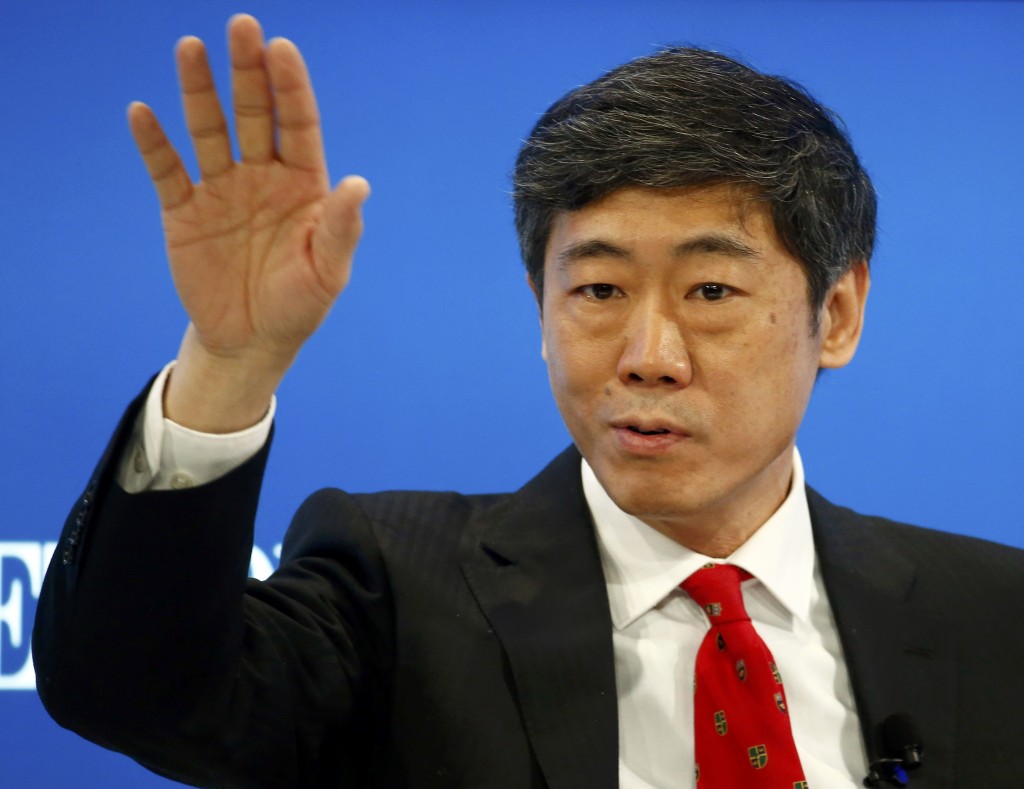
David Li Daokui , a member of the Monetary Policy Committee of the People’s Bank of China, urged policymakers not to rely solely on the better-performing sectors of a K-shaped economy, in which different segments grow at drastically different rates in an economy, but instead to cultivate new profit drivers to lift the entire economy.
Speaking at an online seminar last week, Li, also the Dean of Academic Center for Chinese Economic Practice and Thinking (ACCEPT) in Tsinghua University, warned that China's economic targets will face severe challenges if two major issues are not addressed:
- Hidden Unemployment: Citing his team's estimates, the broad unemployment rate is actually 10.2 percent (representing about 24 million people) when including "discouraged workers" who were excluded from official statistics after failing to find work over the past two years.
- Plunging Investment: In the first five months of the year, cumulative fixed-asset investment dropped by 4.1 percent, with both private and manufacturing investments contracting. Such negative growth is exceptionally rare—seen only in 1961 and 1967 since the country’s founding—and its current duration and intensity are unprecedented.
Stalled Engines and Local Debt
Li explained that the economy is operating below its potential GDP growth because new growth drivers have not yet emerged, while the past two decades' primary engines—infrastructure and real estate—have both stalled.
Historically, local government spending was China's biggest economic driver, averaging 41 percent of GDP (with over 75 percent allocated to construction and a small fraction to daily operations). Today, the situation has drastically reversed:
- Squeezing the Private Sector: Local government capital expenditures are shrinking. To alleviate financial strain, they are desperately clawing back funds from enterprises, retracting previously promised tax breaks, and even collecting taxes in advance.
- The Debt "Black Hole": Total local government debt now exceeds 100 percent of GDP. Composed largely of high-interest, short-term obligations, local governments are forced to issue new debt just to pay off the old, causing funds to circulate without entering the real economy. Consequently, local governments have morphed from economic engines into "black holes" draining economic energy.
Solutions: Expanding Central Debt
Since central government debt is comfortably below 30 percent of GDP, Li noted there is ample room for borrowing. He proposed doubling this year's planned 12 trillion yuan bond issuance, directing the funds toward three key areas:
- Property Market Commercialization: Purchasing unsold local real estate to convert into low-rent housing or homes with reasonable rent-to-sale ratios, which can then be packaged into REITs for commercial operation.
- Investing in "People": Funding central transfer payments to help integrate migrant workers into urban populations (granting them city citizenship).
- Local Debt Swaps: Allowing qualified local governments to swap their existing high-interest debt for central funds, provided they sign guarantees pledging to regulate future borrowing and stop issuing reckless new debt.
Ultimately, Li believes these funds offer vast operational flexibility. They can be utilized to stabilize the housing market, invest in human capital, boost livelihood spending, or fund local consumer subsidies, such as hosting concerts and cultural events, he said.