U.S. employment increased more than expected in April while the unemployment rate held steady at 4.3 percent, pointing to labor market resilience and reinforcing expectations that the Federal Reserve would leave interest rates unchanged for some time.
Nonfarm payrolls increased by 115,000 jobs last month after an upwardly revised 185,000 advance in March, the Labor Department’s Bureau of Labor Statistics said in its closely watched employment report on Friday. Economists polled by Reuters had forecast payrolls rising by 62,000 jobs after a previously reported 178,000 rebound in March.
Estimates had ranged from a loss of 15,000 jobs to a gain of 150,000 positions. Economists said it was too early for the effects of the U.S.-Israeli war with Iran to show in the data. The conflict has raised gasoline and diesel prices as well as the cost of other commodities shipped through the Strait of Hormuz.
Payrolls have been choppy since mid-2025, alternating between gains and losses. Economists attributed the swings partly to adjustments in the birth-and-death model, which the government uses to estimate job gains or losses from companies opening or closing. Some noted that a large turnover in firms has made it harder for the BLS to estimate job creation from new companies.
Weather, strikes, government job cuts, as well as significant changes to the labor force due to President Donald Trump’s administration cracking down on illegal immigration have also added to volatility. Economists recommended looking at the three-month moving average of payrolls.
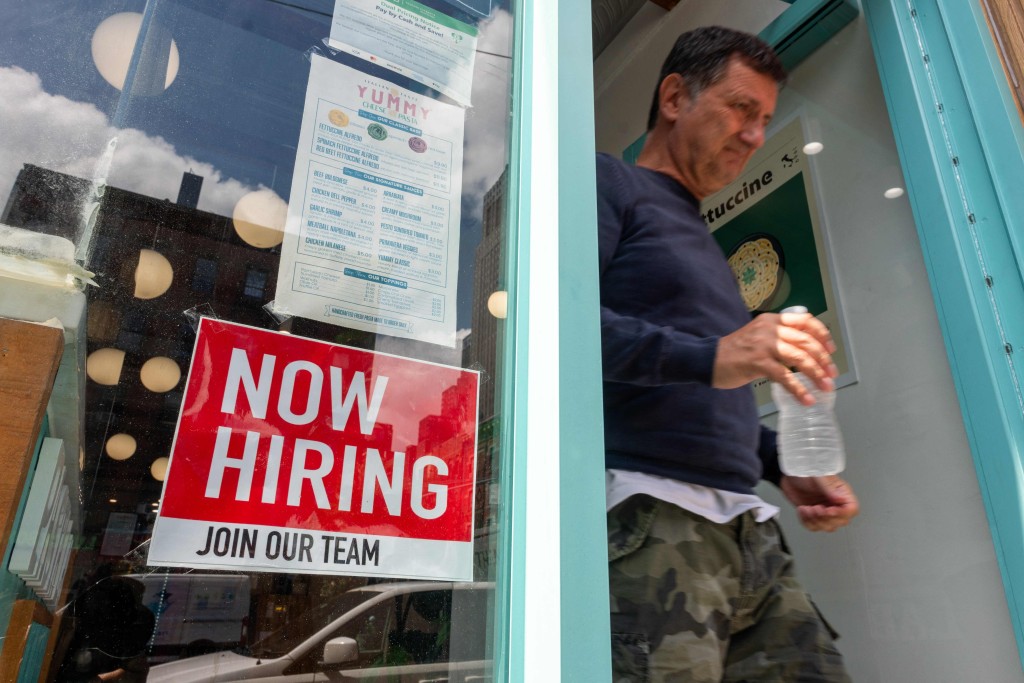
The labor market has been stuck in what economists and policymakers call a "slow hire, slow fire" zone — a paralysis partly blamed on trade and immigration policies. Lower immigration and an aging population mean the economy now needs to create only between zero and 50,000 jobs per month to keep up with growth in the working-age population.
With the so-called breakeven level of job growth much lower than in prior years, economists do not expect a surge in the unemployment rate even if employment gains slow considerably.
The report bolstered financial market views that the Fed would leave interest rates unchanged into 2027. The U.S. central bank last week kept its benchmark overnight interest rate in the 3.50-3.75 percent range, citing inflation worries.
Reuters