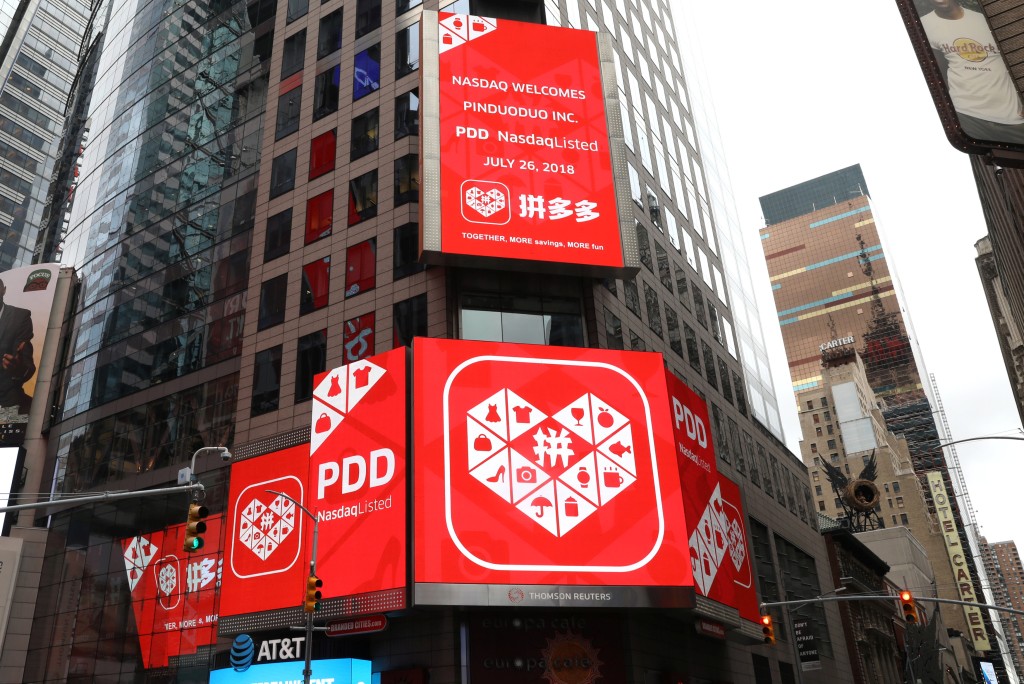
Temu owner PDD Holdings fell short of quarterly revenue and profit estimates on Wednesday and warned that increasing competition at home, combined with global uncertainty, would continue to impact its business.
While Temu maintained strong overseas growth, its low-cost model of sending cheap goods - including apparel, electronics and homewares - directly from China faces mounting regulatory pressure in key markets.
“Trade policies, taxation, data regulations, product compliance requirements and other regulatory frameworks are undergoing significant changes across different countries and regions, inevitably bringing greater challenges and uncertainty,” PDD’s co-CEO Chen Lei told analysts in a post-earnings call.
PDD said its net income fell about 11 percent to 24.5 billion yuan (HK$27.8 billion) for the quarter, from a year earlier and its adjusted profit of 17.69 yuan per American Depositary Share missed estimates of 20.76 yuan as operating expenses also increased.
“The external environment and competitive landscape are undergoing rapid changes. To meet the evolving needs of consumers, we must continually explore and make investments,” said PDD Holdings Vice President of Finance Liu Jun.
“These investments are firm and long-term, and will inevitably affect our financial performance,” Liu added.
US-listed shares rose more than 2 percent in pre-market trading, with Wall Street set for a higher opening on hopes of a de-escalation in the war with Iran. The company reported revenue of 123.9 billion yuan for the fourth quarter, compared with analysts’ average estimate of 124.4 billion yuan, according to LSEG data.
The Chinese Pinduoduo platform saw growth cool as consumers reined in discretionary purchases amid broader economic uncertainty as China’s faltering recovery and fragile household confidence eroded spending even on discount-focused sites.
Temu’s model relies on duty waivers on low value parcels in many jurisdictions, which has sparked a backlash from retailers from Germany to Argentina, who say firms such as Temu, Shein and Alibaba-owned AliExpress have an unfair price advantage.
Temu has been subject to raids and investigations in several countries, including Ireland, Turkey and Nigeria, in recent months. The company has repeatedly said it adhered to applicable laws and regulations in the markets where it operates.
The US scrapped duty-free exemption on parcels worth less than US$800 (HK$6,254.9) last year and the EU has agreed to end its duty-free allowance on parcels under 150 euros (HK$1,358.7) from July this year.
Reuters