Disu Dang
Australia has long been a premier destination for international students, with its world-class education system, vibrant cities and stunning natural landscapes making for an irresistible mix. And joining the country's most prestigious institutions is the newly established Adelaide University.
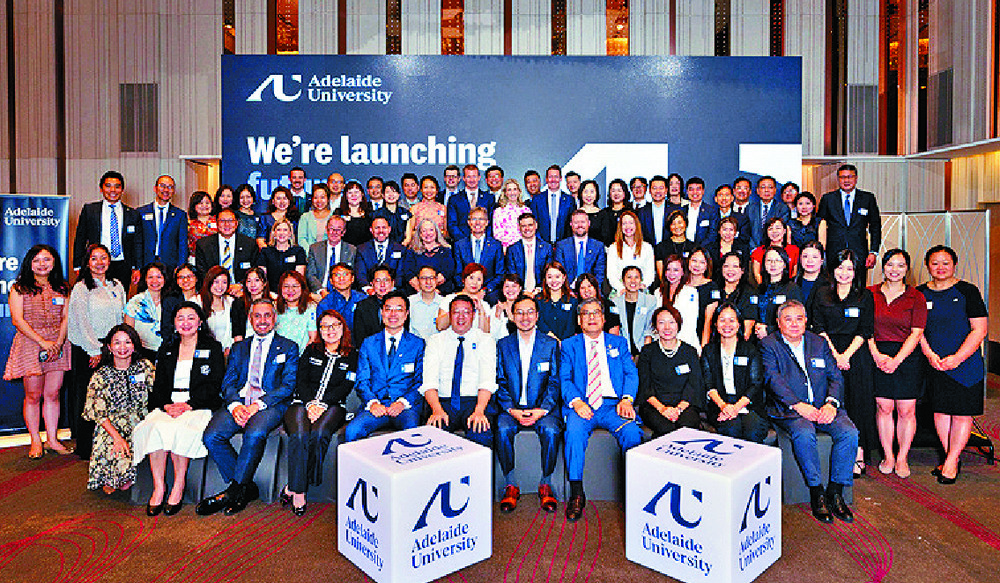
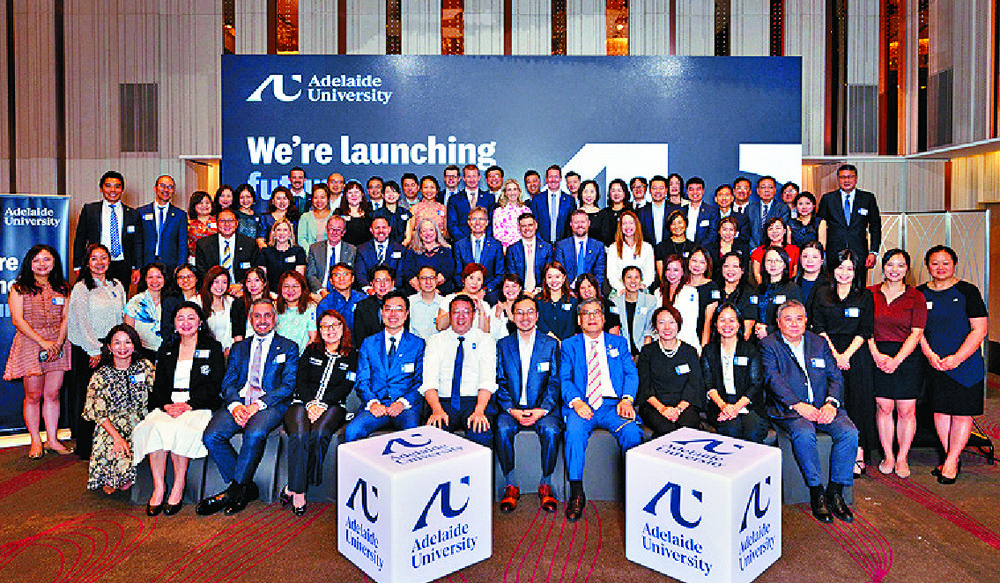
Its arrival on the Hong Kong education scene was announced in a launch on September 23 in West Kowloon.
Its pedigree, however, is proven, having been formed as a result of a merger of the University of Adelaide and the University of South Australia.
With their academic infrastructure in place, the institution has embarked on accepting admission applications for more than 200 degrees and admitting students in 2026.
Regarded as one of Australia's prestigious "Group of Eight" research-intensive institutions, Adelaide University is poised to provide a diversified curriculum for students around the world.
"It's a unique opportunity for us to take the very best educators across two institutions, put them into single programs and get the best results," said co-vice chancellor David Lloyd, who led the Hong Kong delegation alongside his new counterpart Peter Hoj AC.
The university's over 200 programs are spread over undergraduate and postgraduate disciplines in sought-after fields of study.
The initial suite of degrees spans areas such as aviation, health, engineering, finance, business management, data science and information technology.
"Adelaide University is integrating cutting-edge research, industry insights and advanced learning technologies to deliver a transformative educational experience for our students," said Lloyd.
"This includes flexible, personalized pathways, project-based learning and the development of transferable skills."
Lloyd and Hoj emphasized that the university's approach aims to set new standards for graduate employability and success.
"Our curriculum reflects the diversity of the real-world workforce and our graduates will be well prepared to lead and excel in a rapidly evolving job market," they said.
Building on the internationally recognized research of its founding institutions, Adelaide University will focus on areas of strategic global priorities, including health, artificial intelligence, financial technologies and green energy.
While the number of international students dropped off during the three-year-long Covid pandemic, Lloyd said that the recovery since those lost years has been strong and steady.
"We have seen a steady recovery in the number of Hong Kong students," he said.
"And the landscape of Australian education is that Hong Kong has always been one of the primary engagement dominated markets for us and it's an area that we believe we will see continued engagement."
Adelaide University's diverse student population is expected to include international students from more than 100 countries, as well as the largest number of Australian students in the country.
With 85 to 86 percent of international students typically returning to their home countries after completing their studies, Hoj said that the university's programs are never meant to be a migration path.
"Our ambition is that we help educate them, provide them with the best research resources and best environment, so they can contribute to their country of origin," he said.
Beyond the university's extensive curriculum and industry connections, the city of Adelaide itself is a major draw for international students.
Consistently ranked as one of the world's most liveable cities, Adelaide is Australia's fastest-growing, with close industry ties, a vibrant cosmopolitan lifestyle and a welcoming multicultural community.
"Students come here from all over the world, attracted to our vibrant cosmopolitan lifestyle, welcoming multicultural community and close proximity to beaches, wine regions and other beautiful landscapes," said Lloyd and Hoj.
Adelaide University is expected to attract a large and diverse student body, comprising international students from more than 100 countries, as well as the largest cohort of Australian students in the nation.
Its graduates will join an alumni network of more than 400,000 individuals from 150 countries worldwide.